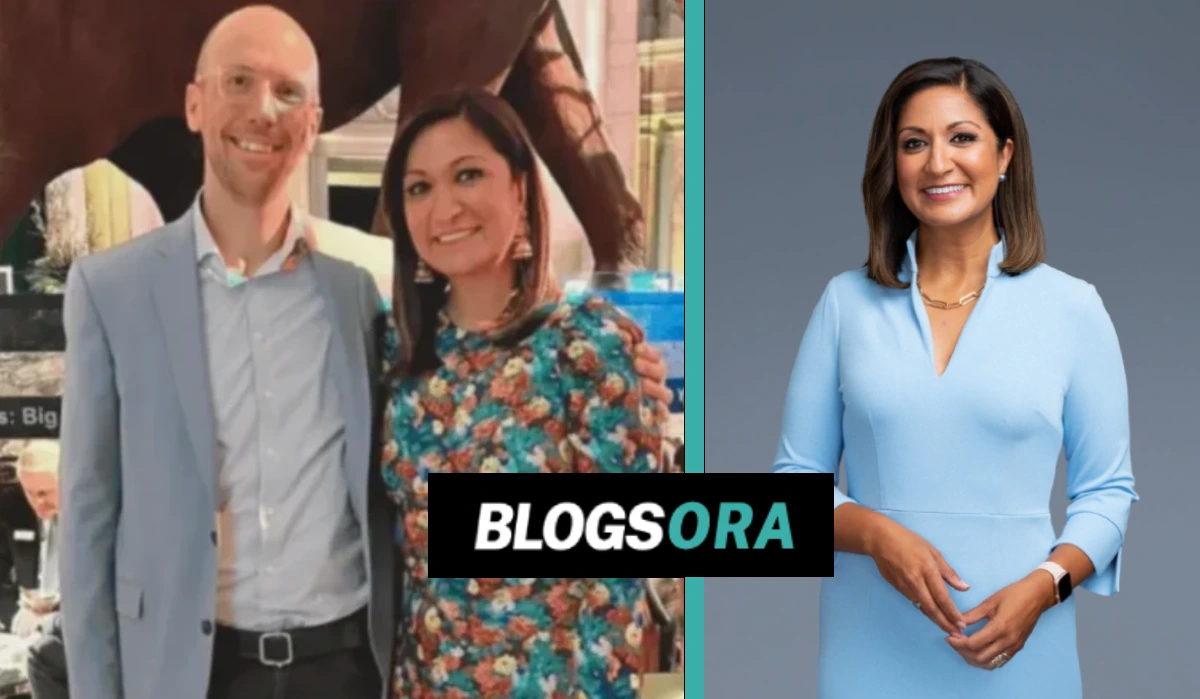
Paul Werdel is best known as the husband of Amna Nawaz, co-anchor and co-managing editor of PBS NewsHour. Before stepping back from full-time work in 2018 to become the primary caregiver for their two daughters, he built a decade-long career in digital journalism at some of the most recognizable names in international media: BBC World News, Al Jazeera English, and The New York Times, where he served as Product Director.
What makes Werdel a notable figure isn’t celebrity — he actively avoids the spotlight. It’s the deliberate choice he made at the peak of his career: to step aside professionally so his wife’s historic journalism career could grow without compromise. That decision, made when dual-career households rarely see the man take the caregiving role, has drawn genuine attention from journalists, researchers, and families navigating the same trade-offs. Much like Marcy Wudarski, whose own story became defined more by her partner’s public prominence than her independent career, Werdel occupies a space where personal choices carry public weight.
This article covers what’s verifiably known about Paul Werdel — his background, his career contributions, the 2018 transition, and his life in 2026.
Quick Bio
| Attribute | Details |
|---|---|
| Full Name | Paul Werdel |
| Date of Birth | November 17 (birth year not publicly disclosed) |
| Estimated Age | Approximately 47–49 (as of 2026, based on 1998 university enrollment) |
| Birthplace | Baltimore, Maryland, USA |
| Nationality | American |
| Education | B.A. in Journalism, University of Maryland (1998–2002) |
| Career | Digital Journalist; former Product Director, The New York Times (2012–2018) |
| Spouse | Amna Nawaz (married 2007) |
| Children | Two daughters: Karam and Lina |
| Current Role | Primary caregiver; no publicly announced return to journalism as of 2026 |
| Estimated Net Worth | $1–4 million (estimated; no verified public figure) |
Early Life
Paul Werdel was born and raised in Baltimore, Maryland. Details about his family — parents, siblings, and childhood — remain private by his own preference. He has consistently kept his personal background away from public scrutiny, a pattern that extends into his adult life.
What’s clear from his career trajectory is that he developed a strong early interest in both storytelling and the technical side of media production. Baltimore’s proximity to Washington, D.C., and its established media ecosystem likely shaped his awareness of broadcast journalism from a young age.
His birthday, November 17, has been confirmed through biographical sources, though the exact birth year has never been publicly disclosed. Based on his enrollment at the University of Maryland in 1998, he was likely born in the late 1970s.
Education
Werdel enrolled at the Philip Merrill College of Journalism at the University of Maryland in 1998, graduating with a Bachelor of Arts in Journalism in 2002. The Philip Merrill College is one of the more well-regarded journalism programs in the United States, with strong ties to the Washington D.C. media market.
During his time there, he worked at UMTV, the university’s student television station, where he gained hands-on production experience in live studio broadcasting. Biographical sources indicate his work contributed to broadcasts that achieved industry recognition, though the specific awards and years have not been independently confirmed.
This practical focus — learning production by doing it, not just studying it — appears to have been the foundation for the technical fluency he later applied to digital product work at the NYT.
Career in Journalism and Digital Media
Teaching and Production Coordination, University of Maryland (2003–2004)
After graduating in 2002, Werdel returned to the University of Maryland as a Lecturer and Production Coordinator. In this role, he trained students in live studio production and broadcast journalism fundamentals — passing on practical skills rather than theory alone.
This one-year stint before moving into professional media work suggests a genuine investment in journalism education, not just a transitional stop.
BBC World News (2004–2007)
Werdel joined BBC World News in 2004 as a producer and director for U.S.-targeted programming. His responsibilities included:
- Producing and directing twice-nightly BBC World News broadcasts for American audiences
- Writing and editing scripts and news packages
- Building running orders and scheduling on-air guests
- Adapting internationally sourced reporting for domestic relevance
Working at the BBC during this period — when American audiences were consuming more international news in the post-9/11 environment — gave Werdel early experience in audience segmentation: understanding that the same story requires different framing for different viewers.
Al Jazeera English (2008–2011)
From July 2008 to February 2011, Paul Werdel served as a News Editor at Al Jazeera English. This was a significant period for the network: Al Jazeera English had launched its global broadcast in 2006 and was working to expand its digital and U.S. presence through the late 2000s.
In this role, Werdel developed editorial judgment across stories that required bridging Middle Eastern and Western perspectives — a genuinely complex editorial skill that goes beyond writing and into cultural interpretation and news judgment under pressure.
His more than three years at Al Jazeera English rounded out an international perspective that few American journalists of his generation had: he had now worked inside the editorial cultures of British public broadcasting, a Qatari-funded international network, and (soon) America’s most prestigious newspaper.
TPM Media (2011–2012)
Before joining The New York Times, Werdel worked as a Senior Associate Editor at TPM Media (Talking Points Memo) for approximately two years. TPM is a digital-native political news outlet known for long-form investigative reporting and breaking political news online. This role placed him squarely at the intersection of digital publishing and political journalism — an important bridge between his broadcast background and the product-focused work he would do next.
The New York Times (2012–2018)
Werdel joined The New York Times in 2012 — a critical period in the publication’s digital history. The NYT had published its internal “Innovation Report” in 2014, which acknowledged that the organization needed to restructure significantly around a digital-first strategy. Werdel was inside that transformation.
Over six years, he held three distinct roles that tracked the NYT’s shift from print-first thinking to mobile product development:
- Senior Editor of Platforms — overseeing how editorial content was distributed and formatted across digital channels
- Senior Product Manager for Mobile — developing the mobile reader experience at a time when smartphone news consumption was becoming the primary mode for most users
- Product Director (October 2014 – April 2018) — leading product strategy across digital properties
The NYT’s mobile audience grew substantially during this period, and the publication launched several notable digital products between 2014 and 2018 — including an expanded NYT Cooking experience and new briefing formats. While Werdel’s specific contributions to individual launches have not been publicly attributed, his role as Product Director placed him in the leadership structure overseeing these initiatives.
His value during this period was the combination of genuine editorial experience (he had been a working journalist and editor) with the product management skills required to build digital tools. That pairing — journalist who understands product, not just a technologist handed an editorial brief — was relatively rare and in high demand.
Why Paul Werdel Left The New York Times in 2018
In April 2018, Paul Werdel stepped away from his position as Product Director at The New York Times. The reason was deliberate: the family was relocating to Washington, D.C., where Amna Nawaz had accepted a position at PBS NewsHour — and someone needed to be the primary caregiver for their two young daughters.
Werdel took on that role.
This was not a reluctant compromise or a gap year. By available accounts, it was a considered choice by two professionals who assessed whose career trajectory was at a more critical inflection point, and what their daughters needed. Amna Nawaz had been building toward a major anchoring role. Paul Werdel had the flexibility, the willingness, and — perhaps — the editorial satisfaction of having already done significant work at the top of the industry.
The timing proved significant. Nawaz went on to become one of the most prominent anchors in American public broadcasting. Spouses who step into supporting roles to enable a partner’s career — like Tara Renee Schemansky — often do so without public acknowledgment, yet the structural impact on the prominent partner’s career is real and measurable. In January 2023, Nawaz became co-anchor of PBS NewsHour, succeeding the legendary Judy Woodruff. In March 2025, she was named co-managing editor alongside Geoff Bennett.
Whether that trajectory would have been possible on the same timeline without Werdel’s caregiving role is impossible to say, but the structural reality of their arrangement — one partner carrying domestic responsibilities so the other can pursue a demanding public role — is exactly what made it possible.
Personal Life and Family
Paul Werdel and Amna Nawaz met through mutual connections in the journalism world and married in 2007. They have been together for nearly two decades, making theirs one of the more durable relationships in a profession not known for stable home lives.
They have two daughters: Karam and Lina. The family lives in Washington, D.C. The children’s ages have been referenced in passing in public profiles of Nawaz, though the family has generally kept the girls out of media coverage.
Werdel himself maintains no meaningful public social media presence. He does not have an active public Twitter/X profile, and his LinkedIn activity has been minimal since he departed from the NYT. This is a deliberate choice, consistent with how he has handled his public profile throughout his career.
Nawaz, by contrast, maintains a visible public presence as her role requires. She has spoken in various interviews about the importance of having a stable family structure as she navigated the demands of live national news anchoring — references that underscore how central Werdel’s caregiving role has been to her professional life.
Stay-at-Home Fathers in Dual-Career Households: The Broader Picture
Paul Werdel’s choice sits within a measurable but still relatively rare demographic. According to Pew Research Center data, approximately 7% of fathers in the United States with children under 18 were stay-at-home dads as of the most recently analyzed period — a figure that has grown slowly but steadily over the past two decades, up from around 4% in the early 1990s.
What distinguishes cases like Werdel’s from the broader statistic is the professional context. The majority of stay-at-home fathers in Pew’s data cited job loss or inability to find work as contributing factors. Fathers who voluntarily step back from senior professional roles to enable a partner’s career advancement represent a much smaller, less-studied subset.
In journalism and media specifically — an industry with demanding hours, irregular travel, and live production schedules — the primary caregiver role almost universally falls to women, even in dual-journalist households. Werdel’s arrangement inverts that pattern, and does so at a level of professional seniority that makes it more visible as a choice rather than a necessity.
For families and professionals weighing similar decisions, the Werdel-Nawaz arrangement offers a concrete, documented example of a framework that appears to have worked: defined roles, genuine career support, and a willingness to let one partner’s trajectory take priority for a defined period.
Paul Werdel’s Net Worth
Paul Werdel’s net worth is estimated at $1 million to $4 million as of 2026, accumulated through his journalism and digital product career at BBC World News, Al Jazeera English, TPM Media, and The New York Times.
No verified compensation figures for Werdel have ever been publicly disclosed. Salary estimates circulating on some biography sites are not traceable to credible sources and should be treated as speculation. Product Director roles at major U.S. media companies during the 2014–2018 period commanded competitive salaries by industry standards, but publishing a specific figure for Werdel without a primary source would be inaccurate.
His wife, Amna Nawaz, as a senior anchor and managing editor at PBS NewsHour, earns a professional salary appropriate to her role — though public broadcasting compensation is generally lower than commercial network equivalents.
Notable Career Contributions
- International editorial experience across three major media cultures: BBC (British public broadcasting), Al Jazeera English (global international news), and The New York Times (American prestige journalism) — a combination that is genuinely rare among journalists of his generation.
- Mobile product leadership at a critical inflection point: His work at the NYT from 2014–2018 coincided with the period when mobile became the dominant news consumption platform in the United States.
- Broadcast journalism education: His return to the University of Maryland as a lecturer after graduation reflects an early investment in passing on practical skills, not just pursuing career advancement.
- Normalization of male primary caregiving in professional settings: By making a public (if quiet) choice to step back from a senior role for family reasons, Werdel has become a reference point in conversations about gender roles in dual-career households — without having sought that status.
What Is Paul Werdel Doing Now (2026)?
As of 2026, Paul Werdel has not announced a return to full-time journalism or digital media work. No new employer, consulting arrangement, or public project has been reported or attributed to him. Men who build distinguished careers and then step away from them to support a family — as Rahaman Hudson did in his own context — rarely make headlines for that choice, yet the decision shapes everything around them.
He continues to maintain a low public profile. His social media presence remains minimal, and he has not given public interviews. All available indicators suggest he remains in a primary caregiving role, though whether that continues full-time as his daughters move through their teenage years is not publicly known.
It is worth noting that a return to digital media or product leadership — should he choose it — would not require starting from scratch. His combination of editorial background and product management experience at the NYT remains highly relevant to the current media landscape, and his network in journalism is substantial.
Disclaimer: This article is based on publicly available information, professional records, and verified biographical sources. Where specific facts could not be independently confirmed — including certain salary estimates — this is stated explicitly. Net worth figures are estimates only. This article was last reviewed in June 2026.