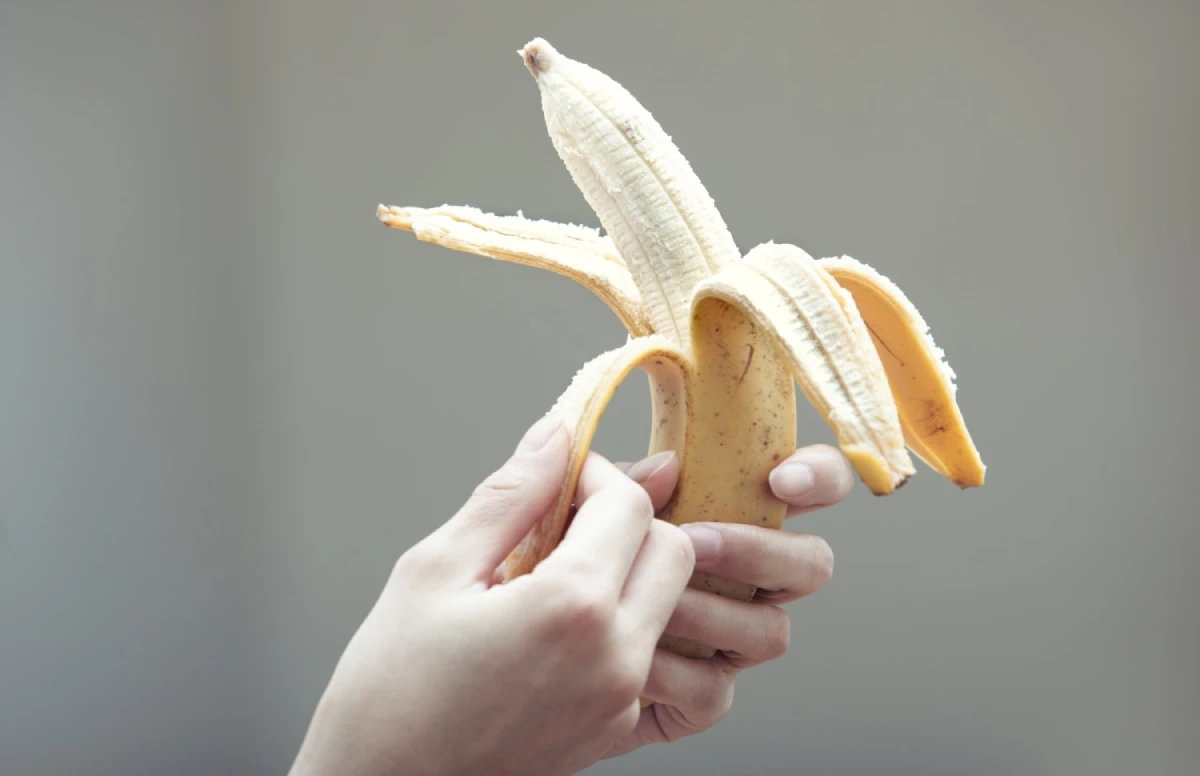
Banana strings are phloem bundles — vascular tissue that transports water, sugars, and nutrients from the plant to the growing fruit. They run through the flesh from the stem to the tip. They’re completely edible, primarily insoluble fiber, and part of the banana’s normal structure.
Those pale, thread-like strands you peel off a banana? They’re called phloem bundles — and they’re completely safe to eat. Most people remove them out of habit, but there’s no good reason to. Here’s what they actually are and what, if anything, they add to your diet.
What Are Banana Strings (Phloem Bundles)?
Banana strings are part of the fruit’s vascular system. The scientific term is phloem bundles — phloem being the plant tissue that moves sugars, water, and nutrients from leaves to the growing fruit.
As a banana develops, these bundles run from the stem through the flesh, feeding the fruit as it matures. They’re tougher than the surrounding pulp because they need to hold up under continuous nutrient flow. In wild banana varieties, they’re thicker and more obvious. In the Cavendish — the variety sold in most stores — they’re finer and easier to miss.
Think of them as the banana’s delivery system. Without them, the fruit couldn’t ripen properly or develop its characteristic sweetness.
Are Banana Strings Safe to Eat?
Yes. There’s nothing in phloem bundles that makes them unsafe. They’re the same plant material as the rest of the banana — just with a different texture. No allergy concerns specific to the strings have been documented separately from banana allergies in general.
If you’re sensitive to high-fiber foods, eating more fiber from any source (including banana strings) could cause minor digestive discomfort if your intake jumps suddenly. That’s not unique to the strings — it applies to any fibrous food.
Do Banana Strings Have Nutritional Value?
They do, though not dramatically more than the rest of the banana.
A medium banana (about 118g) provides roughly:
- 422mg of potassium — around 9% of the daily recommended intake
- 3g of dietary fiber
- 0.4mg of vitamin B6 — about 25% of daily needs
- Small amounts of magnesium, vitamin C, and folate
(Source: USDA FoodData Central)
The strings themselves are primarily insoluble fiber — the kind that adds bulk to digestion and helps food move through the gut efficiently. This is the same type of fiber found in wheat bran and vegetable skins.
Whether the strings contain meaningfully higher concentrations of any nutrient compared to the pulp isn’t well-documented. The honest answer: they contribute to the banana’s overall nutrition, but don’t treat them as a separate superfood. They’re part of the whole, not a bonus on top of it.
How Banana Strings Change with Ripeness
One useful observation: the strings behave differently depending on how ripe the banana is.
- Underripe (green): Strings cling firmly to the fruit and are harder to peel off
- Ripe (yellow): Strings loosen and come off more easily
- Overripe (spotted/brown): Strings can become mushy alongside the softening pulp
This happens because ripening breaks down the cell structure throughout the fruit, including the phloem tissue. It’s not a precise ripeness test, but it’s a reasonable indicator.
Underripe bananas also contain more resistant starch — a type of carbohydrate that resists digestion and feeds gut bacteria. As the banana ripens, that starch converts to sugar, which is why ripe bananas taste sweeter and digest faster.
Should You Actually Eat Them?
If you like the taste and texture, yes — there’s no reason not to. If you find the texture off-putting, you’re not losing a significant portion of the banana’s nutrition by removing the tit
The strings aren’t a separate health product. They’re a small part of the fruit. Eating them means you’re consuming the banana whole, which is a reasonable approach to whole-food eating — but skipping them doesn’t meaningfully change your nutritional outcome either.
Where they do disappear entirely: blended into smoothies or mashed into baked goods. If texture is your objection, that’s the workaround.
Banana Storage (Brief, Practical)
- Store at room temperature until ripe — refrigerating unripe bananas stops the ripening process
- Once ripe, refrigerating extends shelf life by a few days; the peel darkens, but the flesh stays fine
- Freeze overripe bananas, as a whole or peeled, for use in smoothies or banana bread.
- Keep bananas away from other fruits where possible — they release ethylene gas, which speeds ripening of nearby produce.e

FAQs
What are banana strings made of? Phloem tissue — the vascular plant tissue that transports nutrients to the fruit while it is growing. Same as the rest of the banana, just structurally different.
Are banana strings edible? Yes, fully edible. No preparation needed.
Do banana strings have more nutrients than the pulp? Not in any well-documented way. They’re primarily insoluble fiber. They contribute to the banana’s overall nutritional profile but aren’t dramatically superior to the pulp.
Can banana strings indicate ripeness? Loosely. Tight strings suggest the banana is underripe; strings that pull away easily suggest it’s ripe or past its prime. It’s a rough guide, not a precise method.
What if I don’t like the texture? Blend the banana whole in smoothies or mash it into oatmeal or baked goods. The strings become undetectable.
Do different banana varieties have different strings? Yes. Wild banana varieties and plantains tend to have thicker, more prominent phloem bundles. The Cavendish variety has finer strings because it’s been cultivated for texture and ease of eating.
Banana strings are a normal, edible part of a normal fruit. They serve a real biological function, contribute modest fiber and nutrients, and don’t need to be removed. Whether you eat them or not won’t change your health in any measurable way — but now you know what they actually are.