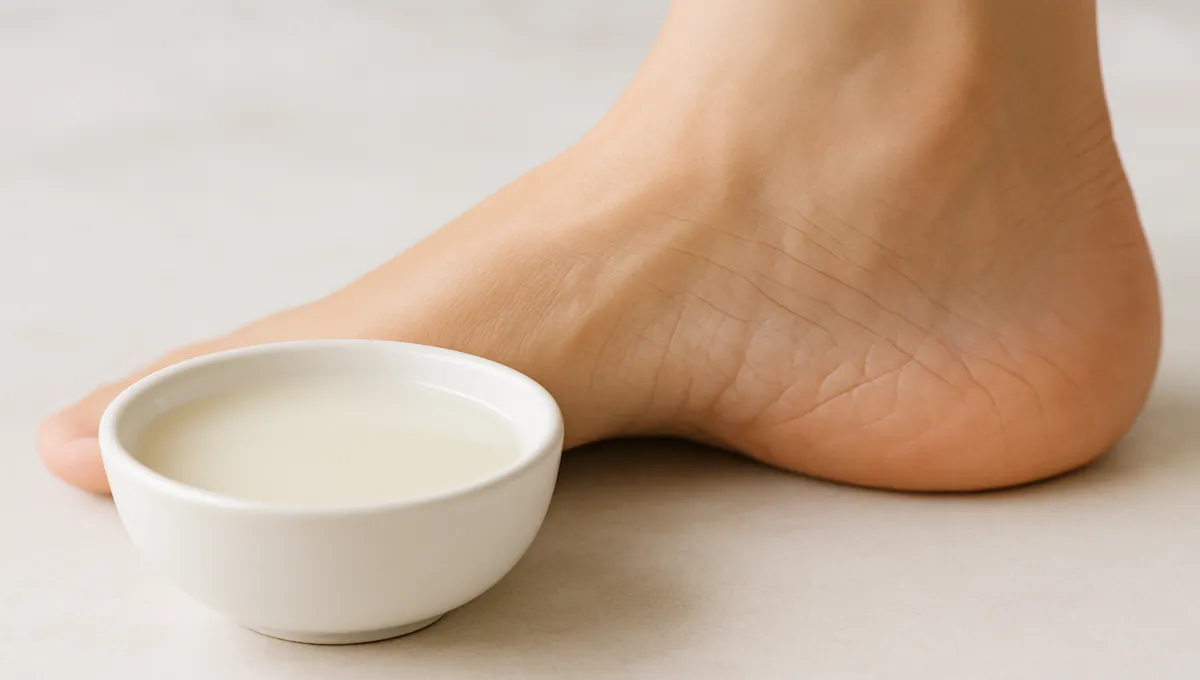
Papaya sap from unripe green papayas contains papain, an enzyme that breaks down the protein bonds in dead skin cells. Applied to cracked heels 2–3 times per week for 15–20 minutes, it loosens and removes hardened calluses, allowing moisturiser to penetrate more effectively. Most people see improvement within 2–4 weeks.
Cracked heels are usually not a moisture problem. They’re a buildup problem.
The thick, hardened skin that forms around the heel — the kind that splits open and resists every cream you try — is dead tissue layered over healthy skin. Most foot creams try to hydrate through that layer. That’s why they take forever to work, if they work at all.
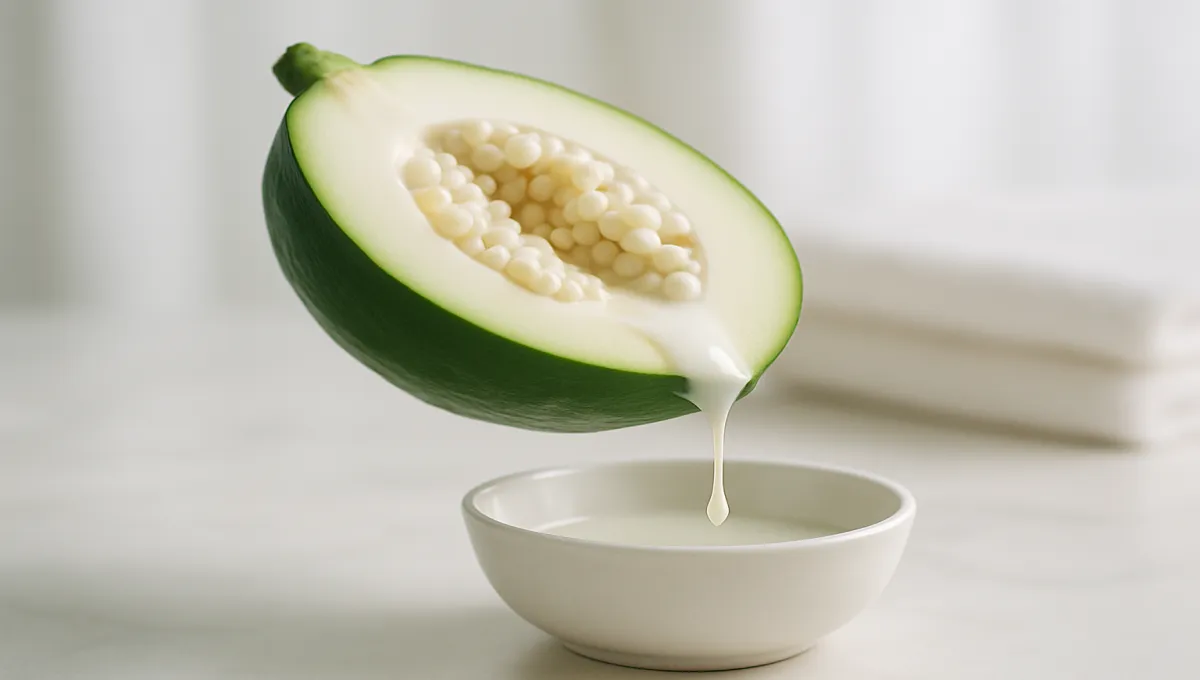
Papaya sap works differently. The white milky liquid inside a green, unripe papaya contains an enzyme called papain, which breaks down dead skin directly. Families across the Caribbean, Southeast Asia, and Latin America have used it for generations, and the underlying science is real — papain is a well-studied keratolytic agent, meaning it chemically loosens dead skin cells.
Here’s what you need to know: how it works, how to use it correctly, who should avoid it, and what realistic results look like.
Why Cracked Heels Form (and Why Most Products Miss the Point)
Cracked heels develop when the skin around the heel becomes thick, dry, and inflexible. Pressure from standing or walking causes that hardened skin to split.
The buildup happens when the outer layer of skin (the stratum corneum) accumulates faster than it sheds. Factors that speed this up include:
- Standing for long hours
- Walking barefoot on hard floors
- Low humidity or dry climates
- Certain health conditions, like hypothyroidism or diabetes
- Footwear that puts pressure on the heel edges
Most moisturising creams work by softening existing dry skin — useful for mild cases, but not effective once the buildup is significant. To actually clear it, you need a keratolytic: something that breaks down the protein bonds holding dead skin cells together.
That’s what papain does.
How Papaya Sap Works on Cracked Heels
Papain is a cysteine protease enzyme — it breaks down proteins. Since dead skin cells are made largely of a protein called keratin, papain dissolves the bonds that hold them together, allowing them to shed.
Think of it like this: moisturiser softens dead skin around the edges. Papain breaks it down from the inside. It’s the difference between chipping at a wall and dissolving the mortar.
The enzyme is most concentrated in unripe, green papayas. As the fruit ripens and yellows, papain levels drop significantly — which is why green papaya is the only useful source for this purpose.
A note on medical context: Papain has been studied and used in clinical wound care, particularly for removing dead tissue from wounds (debridement). However, the FDA withdrew approval for over-the-counter papain-urea debriding products in 2008 due to reports of serious allergic reactions in some patients. This doesn’t mean raw papaya sap is equally risky for intact callused skin — the concentrations and delivery methods are very different — but it does mean you should treat this as an active substance that requires a patch test, not a gentle cosmetic.
What You Need Before You Start
- One firm, fully green papaya (from an Asian or Latin grocery store, or a backyard tree)
- A clean, sharp knife
- A small glass or ceramic bowl (not plastic — papain can react with some plastics)
- Cotton swabs or a clean finger for application
- A good moisturiser or plain coconut oil
- Cotton socks
That’s it.
How to Harvest the Sap
The sap flows most freely in the morning. To collect it:
- Hold the green papaya over your bowl
- Make a shallow cut about 2 inches long in the skin — don’t cut deep into the flesh
- Let the white sap drip into the bowl
- One papaya typically yields 1–2 tablespoons, enough for several treatments
Use the sap within 4 hours. It loses enzyme activity as it oxidises. If it turns brown or smells sour, throw it out. Store it in a sealed glass container at room temperature — not in the fridge, which slows enzyme activity without preserving it well.
How to Use Papaya Sap on Cracked Heels
Step 1: Prepare your feet. Wash your feet with warm water and soap. Dry them completely. Any remaining lotion or moisture dilutes the enzyme.
Step 2: Apply the sap.p Use a cotton swab to apply a thin layer of sap only to the callused, cracked areas. Avoid healthy skin and the spaces between your toes. The sap sticks well to rough patches.
Step 3: Wait 15–20 minutes. A mild tingling is normal — it indicates the enzyme is active. If you feel burning or stinging, rinse immediately and stop. Don’t exceed 20 minutes, and don’t apply this daily. The skin needs recovery time between treatments.
Step 4: Rinse thoroughly. Hly Use lukewarm water to rinse the sap off completely.
StepMoisturiserize immediately. Apply a thick moisturiser or coconut oil while your feet are still slightly damp. The enzyme treatment loosens the outer skin layer, which allows moisturiser to absorb more deeply than usual. Wearing cotton socks overnight helps lock it in.
How often: 2–3 times per week, with at least one full day between sessions. Daily use causes irritation. Less frequent use slows progress.
What Results to Expect (and When)
Results are gradual, not dramatic.
- After 3–4 treatments, Heels feel noticeably softer. Some surface dead skin begins to shed.
- After 2 weeks: Visible improvement in shallow cracks. Skin texture is noticeably smoother.
- After 4–8 weeks: Deeper, older cracks show meaningful improvement with consistent use.
Dead skin loosens and sheds on its own — you don’t need to scrub aggressively. Let the process happen. Using a pumice stone gently after a treatment can help remove loosened skin, but don’t force it.
If you see no change after 3–4 weeks of consistent use, your cracked heels may have an underlying cause (circulation issues, skin conditions, nutritional deficiency) that needs a doctor’s attention, not more sap.
How It Compares to Commercial Products
| Papaya Sap | Urea Creams (25–40%) | Salicylic Acid Foot Creams | |
|---|---|---|---|
| Mechanism | Enzymatic (protein breakdown) | Keratolytic (moisture + softening) | Keratolytic (cell bond breakdown) |
| Cost | $2–5 per papaya | $10–25 per tube | $8–20 per tube |
| Speed | Moderate | Slow (daily use needed) | Moderate |
| Availability | Asian/Latin grocery stores | Drugstores | Drugstores |
| Purity | No additives | Often contains preservatives | Often contains preservatives |
Urea creams at 25–40% concentration are the most clinically studied option for calluses and cracked heels. Papaya sap is a reasonable alternative — especially if commercial products have caused irritation — but it’s not categorically superior. It’s a different mechanism that works well for many people.
Who Should Not Use Papaya Sap
This is not optional reading. Papaya sap contains natural latex compounds and is an active enzyme. The following groups should avoid it or consult a doctor first:
Avoid completely if you have:
- A latex allergy
- Allergies to kiwi, avocado, or banana (latex-fruit syndrome — cross-reactivity is common)
- Open, bleeding, or infected skin in the treatment area
- Active foot wounds or ulcers
Consult your doctor first if you have:
- Diabetes
- Poor circulation
- Peripheral neuropathy (nerve damage in the feet)
- Any condition that slows wound healing
Pregnancy: Unripe papaya contains compounds that have shown uterine-stimulating effects in animal studies. Topical application on the feet at low concentrations is unlikely to be absorbed systemically, but no clinical safety data exist for pregnant women. Ask your doctor before using it.
How to test for allergy: Apply a small amount of sap to your inner wrist. Leave it for 20 minutes, rinse, and wait 24 hours. Redness, itching, or swelling means stop — don’t use it. Mild tingling during the test period is normal. Burning is not.
Common Mistakes That Undermine Results
- Using ripe or yellow papaya, the enzyme content is too low to work
- Leaving sap on for more than 20 minutes causes irritation without added benefit
- Applying daily, the skin needs recovery time between treatments
- Skipping the moisturiser step — the enzyme opens the path; the moisturiser does the healing
- Using sap on broken or infected skin — this is a risk, not just an inefficiency
- Expecting results in one or two sessions — this is a weeks-long process
Long-Term Foot Health
Papaya sap treats the buildup, but doesn’t fix what caused it. For lasting results:
- Moisturise feet every night, not just after treatments
- Wear shoes that fit properly — pressure on heel edges accelerates callus formation
- Use a pumice stone weekly for light maintenance exfoliation
- Stay hydrated — chronic dehydration shows up in skin quality
- If cracked heels keep returning despite consistent care, get bloodwork to check thyroid function and nutrient levels (zinc, vitamin E, and essential fatty acid deficiencies can all contribute)
Frequently Asked Questions
How long does it take to see results? Most people notice softer skin after 3–4 treatments (roughly 1.5–2 weeks). Deep or long-standing cracks typically take 4–8 weeks of consistent use. Progress is gradual — you’ll likely notice it most clearly if you compare photos from week one to week four.
Does it work on long-standing heel cracks? Yes, but it takes longer. Very established calluses have multiple thick layers. The enzyme works through them over time. Consistency matters more than frequency — twice a week for 6–8 weeks is more effective than daily use for two weeks.
Is it safe during pregnancy? No clear safety data exists for topical use during pregnancy. The systemic risk from foot application is probably low, but “probably low” is not medical clearance. Ask your doctor.
What if I can’t find green papayas? Asian grocery stores and Latin supermarkets are the most reliable sources. If not available locally, commercial papain enzyme products (powders or gels) are an alternative — but check the concentration and follow those products’ instructions, as they’re more potent than raw sap.
Can I use it on other rough skin? Yes — elbows, knees, and rough heel patches on the hands can all be treated the same way. Always do a patch test first, avoid broken skin, limit to 20 minutes, and moisturise after. Don’t use it on your face — the skin is thinner and more reactive.
How do I know if I’m having an allergic reaction? During a patch test or treatment: burning, stinging, or spreading redness beyond the application area means stop immediately and rinse. After rinsing: if itching, hives, or swelling develop within 24 hours, don’t use it again. If you experience difficulty breathing or swelling of the lips or tongue, seek emergency medical care — this is a rare but possible severe allergic response.