To grow hydrangeas in the South, choose heat-tolerant varieties like oakleaf or panicle types, plant in a spot with morning sun and afternoon shade, and water deeply 2–3 times per week. Prune old-wood bloomers right after flowering in summer, and prune new-wood bloomers in late winter.
Southern summers kill hydrangeas that were never meant to grow here. Pick the wrong variety, plant it in the wrong spot, and no amount of watering will save it. But pick the right one, put it in filtered shade with decent soil, and you’ll have armfuls of blooms from late spring through fall — year after year.
This guide is built specifically for Southern conditions. You’ll find variety recommendations with [LINK: USDA zone guidance → USDA Plant Hardiness Zone Map], step-by-step planting instructions, and a clear answer to the pruning question that trips up most gardeners.
Know Your Southern Growing Conditions Before You Buy
Your yard’s conditions dictate which hydrangeas survive — and which ones slowly die despite your best efforts.
Soil
Southern soil is typically heavy clay. It holds water well during dry spells but drains poorly after heavy rain, which suffocates roots. Before planting, work 3–4 inches of compost or aged pine bark into the top 12 inches of your planting area. This improves drainage without stripping the soil of its moisture-holding ability.
If water pools in a spot for more than an hour after rain, don’t plant there. No hydrangea handles standing water.
Sun and Heat
Afternoon sun in July and August is the primary reason Southern hydrangeas fail. The leaves are large and thin — they wilt fast when temperatures climb past 90°F with no shade relief.
Look for spots with morning sun and afternoon shade:
- East-facing beds along your house
- Under tall trees with high canopies (avoid dense shade — that causes weak stems and fewer blooms)
- On the north side of structures that block the western sun after 1 p.m.
Best Hydrangeas for Southern Heat: Varieties That Actually Perform
[LINK: Hydrangea variety comparison → internal variety guide or related post]
Not all hydrangeas are built for Southern summers. Here are the ones that are.
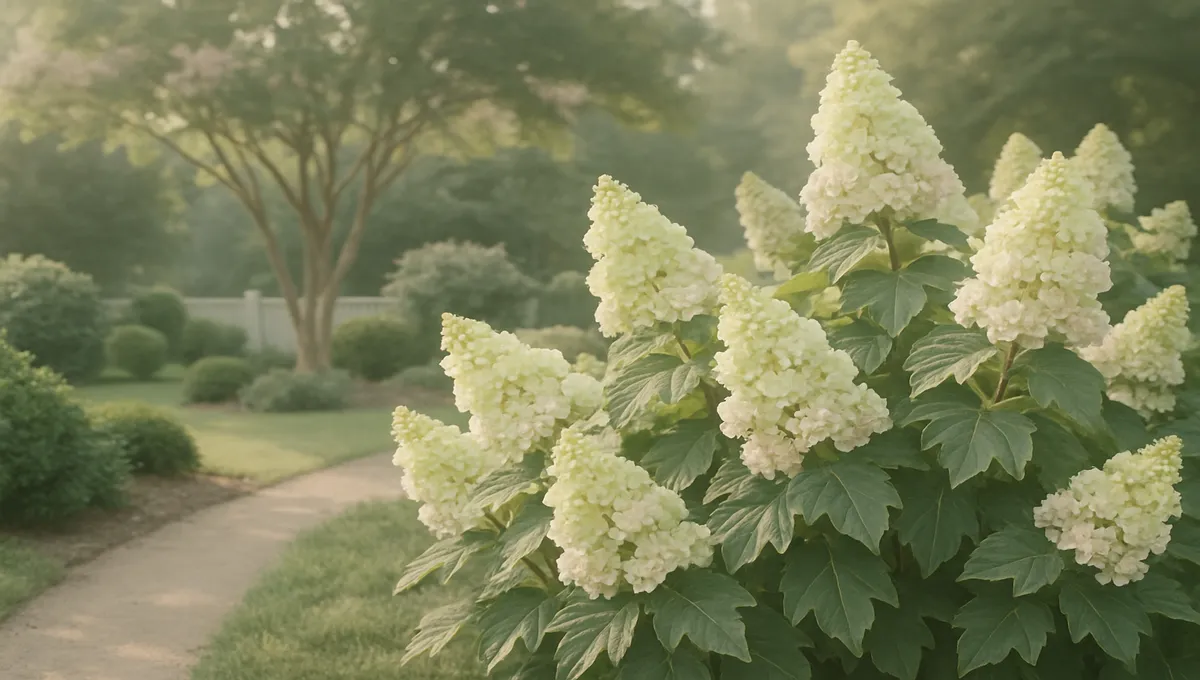
Oakleaf Hydrangea (Hydrangea quercifolia) — Zones 5–9
The most heat-tolerant option and the only hydrangea native to the southeastern US. Oakleaf produces large, cone-shaped white blooms that age to dusty pink and parchment. The leaves turn burgundy and orange in fall, making it a four-season plant.
It blooms on old wood — meaning buds formed last season. Don’t prune in late winter or you’ll cut off this year’s flowers. Prune right after blooms fade in summer.
Best for: Low-maintenance gardens, partial shade, large spaces (mature size: 6–8 feet wide)
Panicle Hydrangea (Hydrangea paniculata) — Zones 3–8
The most forgiving type for heat and sun. Varieties like [LINK: ‘Limelight’ → product or nursery page] and ‘Little Lime’ handle more direct sun than any other hydrangea. Flowers open lime-green, mature to cream, and blush pink in fall.
Panicle types bloom on new wood, so you prune them in late winter before growth starts. You can cut them back hard without losing any flowers.
Best for: Sunny spots, beginners, reliable annual blooms
Bigleaf Hydrangea (Hydrangea macrophylla) — Zones 6–9
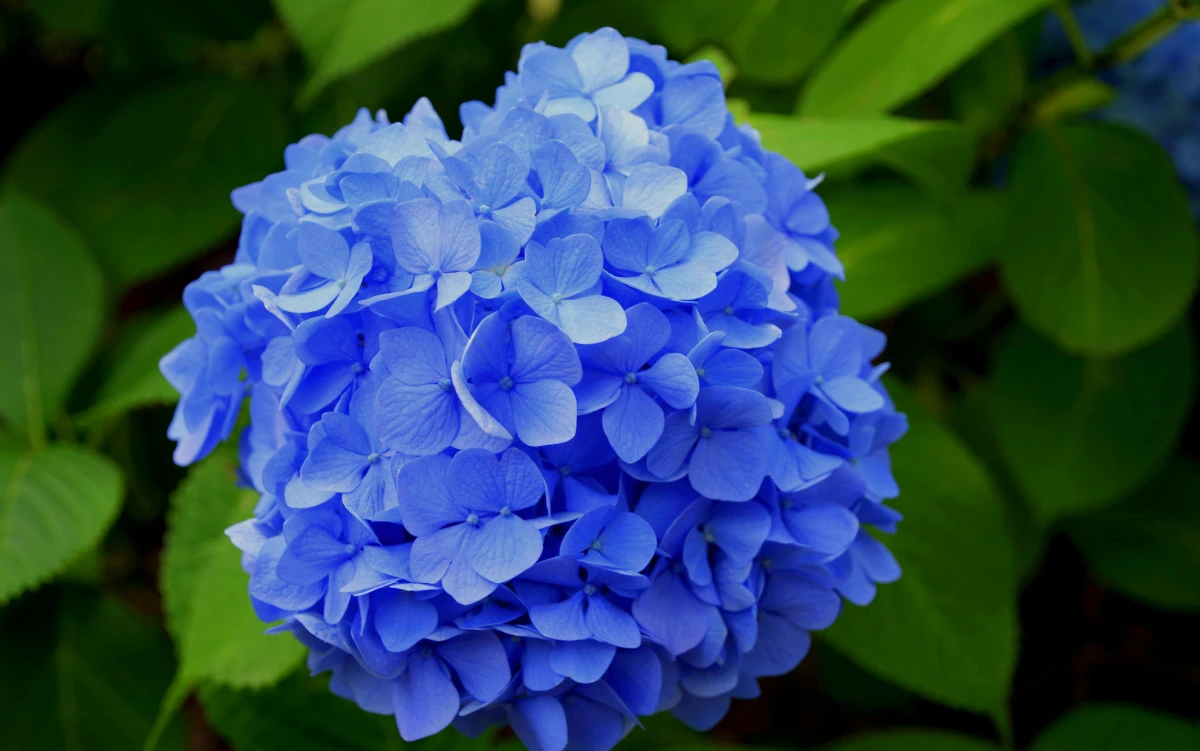
The classic round-headed bloomer in blue, pink, or purple. Also, the most heat-sensitive of the group — it needs consistent afternoon shade and will wilt dramatically during heat waves.
If you want bigleaf, look for reblooming cultivars like ‘Endless Summer’ or ‘Incrediball Blush.’ These flowers are on both old and new wood, so a late freeze or wrong pruning cut doesn’t wipe out the whole season.
Bloom color and soil pH: Blue flowers require acidic soil (pH 4.5–5.5). Pink flowers come from more alkaline soil (pH 6.0–6.5). To shift toward blue, add aluminum sulfate. To shift toward pink, add garden lime. Always test your soil before amending — [LINK: how to test soil pH → related guide or extension service].
Best for: Gardeners who want classic hydrangea color and can provide afternoon shade
Smooth Hydrangea (Hydrangea arborescens) — Zones 3–9
Often overlooked in Southern gardens, smooth hydrangeas like ‘Annabelle’ and ‘Incrediball’ produce enormous white blooms and handle heat reasonably well with afternoon shade. They bloom on new wood, so late-winter pruning is safe.
Best for: Large blooms, cut flowers, spots with partial shade
How to Plant Hydrangeas in the South: Timing and Technique
When to Plant
Fall (September–November) is the best planting window in the South. Cooler temperatures reduce transplant stress, and roots have several months to establish before summer heat arrives. Early spring works too, but avoid planting after April — the plant won’t have enough time to root before summer.
Step-by-Step Planting
- Dig the hole twice as wide as the root ball, but no deeper than the root ball’s height.ht
- Mix your native soil with equal parts compost or aged pine bark
- Set the crown (where stems meet roots) exactly at soil level — not below, not above
- Fill the hole halfway and water slowly until the water absorbs
- Finish filling and water again
- Spread a 3-inch layer of mulch (pine straw, shredded bark, or wood chips) in a 2-foot ring around the plant, keeping mulch 2–3 inches away from the stems
Space plants according to their mature size. Oakleaf needs 6–8 feet of width. Panicle varieties range from 3 feet (‘Little Lime’) to 8 feet (‘Limelight’). Bigleaf typically spreads 4–6 feet.
Watering in Southern Humidity: More Specific Than You Think
Hydrangeas need consistent moisture — but Southern humidity means the soil stays wetter longer than it would in drier climates.
General guidelines:
- Water deeply 2–3 times per week during the growing season (roughly 1 inch of water per session)
- Check soil moisture before watering — push your finger 2–3 inches into the soil. If it’s still moist, wait
- Always water at the base, not overhead — wet foliage in humid air is an open invitation to fungal disease
- Water in the morning, then any splashed leaves dry before nightfall
During heat waves above 95°F, even well-established plants may wilt by mid-afternoon. This is normal — check them in the morning. If they haven’t recovered overnight, they need more water.
Pruning: The One Thing Most Southern Gardeners Get Wrong
Wrong pruning timing is the most common reason hydrangeas don’t bloom. The rule depends entirely on when your plant forms its flower buds.
Old Wood Bloomers (prune right after flowering — summer)
- Oakleaf hydrangea
- Bigleaf hydrangea (most varieties)
These set buds for next year immediately after this year’s blooms fade. Prune in late summer, right after flowers are spent. Never prune in fall, winter, or early spring — you’ll remove next year’s buds.
New Wood Bloomers (prune in late winter — before growth starts)
- Panicle hydrangea
- Smooth hydrangea
These form buds on whatever new growth they put out each spring. Cut them back in February or early March. You can prune them hard — down to 12–18 inches — without losing any flowers.
Not sure which type you have? Watch it for one season. If it blooms before July, it’s likely an old wood bloomer. If it blooms from July onward, it’s likely a new wood bloomer. When in doubt, just remove dead stems and wait.
Feeding and Mulching: What Helps and What Hurts
Fertilizing
Apply a balanced, slow-release fertilizer (such as 10-10-10 or one labeled for flowering shrubs) once in early spring as new growth appears. A second light application after the first flush of blooms is optional but can extend flowering.
Do not fertilize after August. Late feeding pushes soft new growth that won’t harden before the first frost — and in the South, that late growth is also more susceptible to fungal issues.
Avoid high-nitrogen fertilizers. They produce lush leaves and very few flowers.
Mulching
Refresh mulch every spring to a 3-inch depth. Pine straw is the traditional Southern choice and works well. Shredded bark and wood chips are equally effective.
Mulch does three things that matter here:
- Keeps soil temperature stable during summer heat spikes
- Retains moisture between waterings
- Suppresses weeds that compete for water and nutrients
Pests and Diseases in Southern Hydrangeas
Southern humidity creates ideal conditions for fungal problems. Knowing what to look for saves plants before damage spreads.
Cercospora Leaf Spot
Brown or purple circular spots on leaves usually appear in late summer. Caused by a fungus that spreads in wet conditions. Remove affected leaves, avoid overhead watering, and improve air circulation by not planting too close to other shrubs.
[LINK: Cercospora leaf spot treatment → LSU AgCenter or Clemson Extension]
Powdery Mildew
White powdery coating on leaf surfaces is more common in bigleaf varieties. Appears when nights are cool and days are warm — typically late summer into fall. Improve air circulation and avoid overhead watering. Severe cases can be treated with neem oil or a copper-based fungicide.
Aphids
Clusters of small insects on new growth and flower stems. Knock them off with a strong stream of water or treat with insecticidal soap. Rarely a serious problem in established plants.
Common Mistakes That Hurt Southern Hydrangeas
| Mistake | What Happens | Fix |
|---|---|---|
| Planting in full afternoon sun | Leaves scorch; plant stays stressed | Move to a spot with morning sun only |
| Poor drainage | Yellow leaves, root rot | Amend the soil or choose a new location |
| Pruning at the wrong time | No blooms that season | Know your type; prune old wood bloomers in summer |
| Skipping mulch | Soil dries out fast; roots overheat | Apply 3 inches every spring |
| High-nitrogen fertilizer | Lots of leaves, few flowers | Switch to a balanced or bloom-specific formula |
| Overhead watering | Fungal disease spreads fast | Water at the base, in the morning |
What to Do When Your Hydrangea Struggles
If your plant looks bad but isn’t dead, run through this checklist:
- Wilting midday but recovered by morning → Normal heat stress; check that afternoon shade is adequate
- Yellow leaves → Likely poor drainage or overwatering; check soil moisture before your next watering
- No blooms → Pruning at the wrong time is the most likely cause; skip pruning next season
- Brown leaf edges → Sun scorch or inconsistent watering; increase mulch and check soil moisture
- Spots on leaves → Fungal disease; remove affected leaves and stop overhead watering
Putting It Together
Growing hydrangeas in the South comes down to three decisions made early: the right variety, the right location, and the right pruning timing. Get those right, and the rest — watering, feeding, mulching — is straightforward maintenance.
Start with an oakleaf or panicle hydrangea if you’re new to this. They’re the most forgiving in Southern heat and give you room to learn before you try the more demanding bigleaf types.
Check your USDA hardiness zone, pick a variety rated for your zone, find a spot with afternoon shade, and plant this fall. That’s the whole plan.