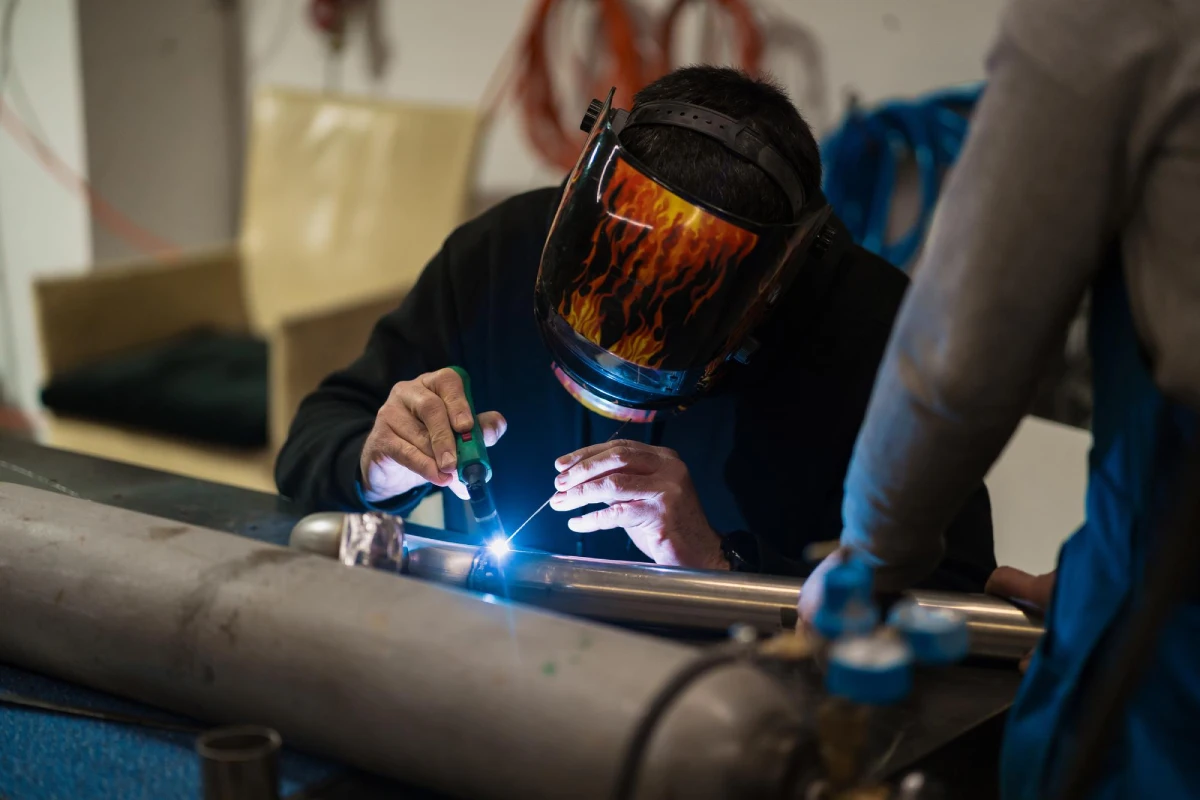
You’ve seen the polished demos—flawless beads, perfect penetration, and sales teams promising plug-and-play automation. Then you bring the system to your floor, and it can’t weld aluminum without porosity, struggles with thin materials, or requires constant manual tweaking. The problem isn’t the robot arm—it’s the TIG welding controls and the lack of actual welding expertise behind the system.
What makes a robotic TIG welding system production-ready? A true production robotic TIG welding system uses purpose-built TIG controls designed for aluminum and thin metals, integrates adaptive arc technology, and comes with support from welding engineers who understand your application—not just programmers who can demonstrate a robot.
Why Most Robotic TIG Systems Fail in Production
Many systems use generic MIG controls adapted for TIG, which can’t handle the precision aluminum and thin-gauge materials demanded. TIG welding requires exact heat control, proper arc starting, and the ability to manage thermal input on materials that distort easily.
Demo environments use ideal conditions—clean base metal, controlled thickness, and pre-programmed paths. Your production floor deals with material variation, fit-up issues, and real-world constraints.
Systems sold by robotics companies often lack welding-specific support. You get help programming the robot, but not optimizing weld parameters or troubleshooting porosity in aluminum welds.
Prevention: Before purchasing, ask if the system uses dedicated TIG controls (not adapted MIG systems), whether it includes pre-tested aluminum welding parameters, and if welding engineers—not just robotics technicians—support implementation.
What a Production-Ready TIG Welding Robot Actually Needs
Real production systems start with controls designed specifically for TIG processes. These controls manage arc starts without tungsten contamination, adjust heat input dynamically, and handle aluminum’s unique challenges—oxidation, thermal conductivity, and porosity risks.
Automated TIG welding for aluminum requires pulsing capability, AC balance control, and the ability to manage shielding gas flow precisely. Standard robotic welding packages rarely include these.
The robot itself must maintain a consistent torch angle and travel speed, but the welding power source does the heavy lifting. If the power source can’t deliver a stable AC TIG with adaptive pulse control, the robot can’t compensate.
System components that matter:
- Dedicated TIG power source with AC/DC capability
- Adaptive arc length control
- Wire feeder integration for hot-wire TIG (if needed)
- Torch with proper cooling capacity
- Shielding gas monitoring and backup systems
Cost range: Production TIG welding robots typically cost $80,000–$250,000, depending on payload, reach, welding controls, and integration complexity. Implementation time ranges from 4–12 weeks, including parameter development and operator training.
Robotic TIG Welding for Aluminum and Thin Materials
Aluminum welding separates demo systems from production tools. Aluminum oxidizes instantly, conducts heat rapidly, and forms porosity if shielding gas coverage breaks down or moisture contaminates the weld zone.
Your system needs AC TIG capability with adjustable balance control. This allows you to manage cleaning action (oxide removal) and penetration independently. Too much cleaning wastes tungsten and overheats thin material. Too few leaves oxides that cause porosity.
Thin materials—under 0.125 inches—require precise heat control. Pulse TIG helps by reducing overall heat input while maintaining good fusion. A robotic TIG welding system for aluminum should include pre-programmed pulsing parameters based on material thickness and alloy.
1. Real example
A manufacturer producing aluminum bicycle frames needed consistent welds on 0.065-inch tubing without burn-through. Their first robot used adapted MIG controls and failed 40% of quality checks. After switching to a system with true AC pulse TIG controls and support from welding engineers, reject rates dropped to under 3%.
2. Maintenance schedule
Check tungsten condition every 8 hours of arc time, verify shielding gas purity weekly, and clean contact tips daily when running filler wire.
How to Evaluate a TIG Welding Robot for Your Application
Start with your base metal and thickness range. If you weld aluminum, stainless, or titanium regularly, verify the system includes AC TIG with the specific pulse and balance controls those materials require.
Ask about application testing before purchase. Production-ready suppliers will run samples using your actual material and joint configuration, then provide documented weld parameters.
Check who provides welding support—not software support or robot programming help, but actual parameter development and troubleshooting from people who understand TIG metallurgy.
Questions to ask suppliers:
- Can you weld our actual parts during evaluation?
- What TIG-specific controls are included?
- Who develops welding parameters—robotics engineers or welding engineers?
- What’s included in training beyond robot operation?
- How do you handle aluminum porosity or thin-material distortion?
Request documentation of previous installations in similar applications. Demo videos prove the robot moves—production case studies prove it welds consistently under real manufacturing conditions.
Implementation timeline: Expect 2–4 weeks for system installation, 3–6 weeks for parameter development and fixture integration, and 2–3 weeks for operator training. Total time from order to production typically runs 8–12 weeks.
What Real Welding Support Looks Like
True support means access to welding engineers who can adjust parameters when you change materials, troubleshoot defects specific to TIG processes, and help you improve cycle times without sacrificing quality.
If the company selling you the robot built their reputation on welding equipment—not just robot integration—they likely have the expertise you need. Companies that started with TIG welding and added automation understand the process first.
Support should include parameter libraries for common materials, remote troubleshooting capability, and on-site assistance during implementation. After installation, you should be able to call someone who understands why you’re getting porosity in your aluminum welds—not just someone who can debug the robot program.
These recommendations follow widely accepted manufacturing practices and input from automated welding system integrators.
Tools and Resources for Implementation
You’ll need proper fixturing to hold parts consistently within the robot’s repeatability tolerance (typically ±0.1mm). TIG welding can’t compensate for poor fit-up the way MIG or flux-cored processes can.
Invest in material preparation equipment—wire brushes, degreasers, and dedicated storage for aluminum to prevent moisture absorption. Robotic TIG welding for aluminum requires a cleaner base metal than manual welding because the robot can’t visually assess and adapt to contamination.
Include shielding gas monitoring in your system. Automated processes run longer than manual welding, increasing the risk of gas supply issues. A monitoring system prevents scrapping entire production runs due to depleted gas cylinders.
Safety note: Robotic TIG welding produces UV radiation, ozone, and metal fumes in enclosed work cells. Ensure proper ventilation, install safety interlocks, and provide appropriate PPE for operators entering the cell. Follow OSHA guidelines for automated welding equipment (29 CFR 1910 Subpart Q).
FAQs
Can a robotic TIG welding system handle both aluminum and steel?
Yes, if it includes AC/DC capability. Aluminum requires AC TIG; steel uses DC. The system must switch modes and adjust parameters automatically. Most production systems include this, but verify it’s standard, not an expensive add-on.
How long does it take to program a new part?
Simple parts with basic joint types take 2–4 hours. Complex assemblies with multiple weld types might require 1–2 days, plus parameter optimization time. Offline programming software can reduce this significantly.
What’s the minimum production volume that justifies a TIG welding robot?
Generally, 500+ identical parts annually, though this depends on part complexity and current labor costs. Complex parts with difficult-to-weld joints may justify automation at lower volumes due to quality improvements.
Do I need a welding engineer on staff to run the system?
Not for daily operation, but having someone with TIG welding knowledge helps. Your supplier should provide parameter development and troubleshooting support, especially during the first 6–12 months.
Can the robot weld thin materials without burn-through?
Yes, with proper pulse TIG controls and heat management. The robotic TIG welding system should include adaptive controls that adjust in real-time based on material response, not just follow fixed parameters.
What happens if I need to weld a new alloy or thickness?
Contact your supplier’s welding engineers for parameter development. Production-ready systems include this support, often remotely. You provide sample materials, they develop parameters, and you test on your system.
Conclusion
Choosing a robotic TIG welding system means evaluating welding capability first, automation second. Look for suppliers with actual TIG welding expertise, not just robot integration experience. Request application testing with your materials, verify the system includes production-ready TIG controls, and confirm you’ll have access to welding engineers after installation. Your investment should deliver consistent production results—not just impressive demonstrations.