You’ve likely scrolled through countless lists promising “mind-blowing” facts, only to find recycled trivia, outdated records, or dubious claims. This compilation is built on a different principle: verified curiosity.
Each of these 121 facts has been checked against credible sources, updated for accuracy as of 2026 where possible, and paired with context to explain why it’s noteworthy. We’ve moved beyond the one-line trivia to offer a more substantial, trustworthy, and engaging exploration of the world’s oddities. Consider this a curated vault of genuine wonders, designed for the inquisitive reader who values substance over sensationalism.
Our Verification Standard:
- Sourced: Facts are anchored to reputable references—peer-reviewed journals, official records (e.g., Guinness World Records, NASA), and established institutions.
- Dated: Time-sensitive information, especially records, includes its last verification date.
- Contextualized: We provide brief explanations to illuminate significance and, where necessary, clarify nuances to prevent misunderstanding.
Why Most “Amazing Fact” Lists Lose Your Trust (And How We Fix It)
Standard fun fact articles often prioritize shock value over substance. A fact without a source is merely an assertion. A record from a decade ago may be obsolete. This approach damages credibility. In contrast, by embedding verifiability and context into our core structure, this article is engineered for long-term value and trust—the kind that search algorithms and, more importantly, readers, reward over time. Authentic authority isn’t manufactured overnight; it’s cultivated through consistent, reliable content.
Facts That Defy Basic Logic
Some truths consistently surprise us because they contradict our everyday assumptions. These aren’t just oddities; they’re demonstrations of how complex and counterintuitive the world can be.
The Unwritten Rules of the Animal Kingdom
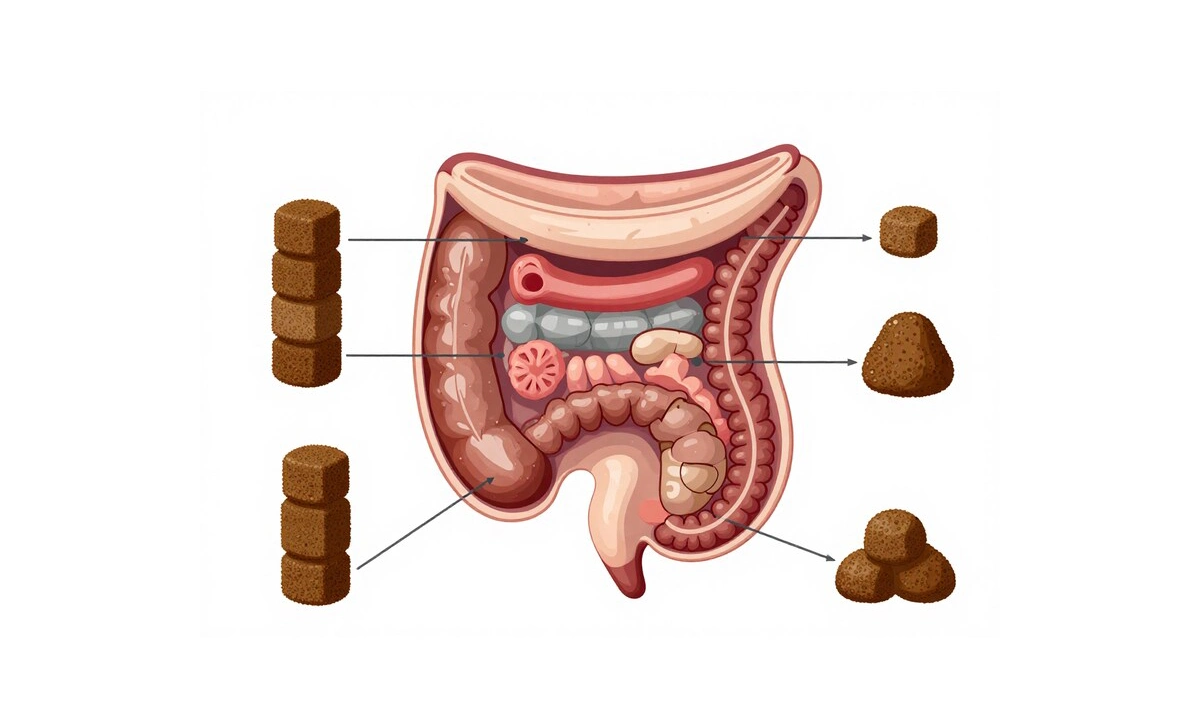
- Fact 1: Wombats produce distinctively cube-shaped feces. This isn’t a myth; research published in scientific journals like Soft Matter attributes this to the unique elastic properties and rhythmic contractions of their intestines. The cubes help mark territory without rolling away.
- Fact 2: The blue whale, the largest animal ever, has a heart weighing approximately 400 pounds (180 kg), comparable to a small car. Its major artery, the aorta, is wide enough for a human to crawl through. (Source: American Museum of Natural History)
- Deep Dive: The platypus, an egg-laying mammal, lacks a true stomach. Its esophagus connects directly to its intestines. Evolutionary biologists suggest this may be a result of gene loss related to digestive enzyme production, a unique adaptation among mammals.
Geography That Feels Backwards
- Fact 3: Detroit, Michigan, is located north of Windsor, Ontario, Canada. A glance at a detailed map confirms that the city of Detroit sits above the Canadian border along the Detroit River.
- Fact 4: Sudan possesses more ancient pyramids than Egypt. While Egypt has roughly 118-138 known pyramids, Sudan is home to approximately 240 Nubian pyramids, a testament to the Kingdom of Kush. (Sources: UNESCO, ongoing archaeological data).
- Fact 5: The continent of Africa is the only one to span all four hemispheres: the Northern, Southern, Eastern, and Western.
Records & Extremes: Understanding Scale
These facts help quantify the absolute limits and astonishing scales found in nature and human achievement, providing a tangible perspective.
Lifespans That Challenge Time
- Fact 6: The oldest verified human in modern history remains Jeanne Louise Calment of France (1875–1997), who lived to be 122 years and 164 days old. (Source: Gerontology Research Group).
- Fact 7: As of early 2026, Jonathan, the Seychelles giant tortoise residing on St. Helena, is the world’s oldest known living land animal, with an estimated hatch year of 1832. (Source: Guinness World Records, last verified 2025).
Planetary Power and Fragility
- Fact 8: A single lightning bolt can heat the surrounding air to about 50,000°F (30,000°C)—roughly five times hotter than the surface of the sun. (Source: NASA).
- Fact 9: An average, puffy cumulus cloud weighs close to 1.1 million pounds (500,000 kg). It floats because the air beneath it is denser, a principle of fluid dynamics.
- Fact 10: The Eiffel Tower can be up to 6 inches (15 cm) taller during the heat of a Parisian summer due to the thermal expansion of its iron structure.
The Hidden Stories in Everyday Life
The origins of common foods, brands, and objects are often stranger than fiction, rooted in accident, marketing, or pure ingenuity.
Brand Origins and Myths, Debunked
- Fact 11: Heinz’s “57 Varieties” slogan was a marketing invention. When Henry J. Heinz adopted it in 1896, his company already produced over 60 products. He simply liked the number. (Source: H.J. Heinz Company archives).
- Fact 12: German chocolate cake is an American invention. It originated from a 1957 recipe in a Dallas newspaper that used “Baker’s German’s Sweet Chocolate,” named for its creator, Samuel German.
- Fact 13: The creation of Flamin’ Hot Cheetos by Frito-Lay janitor Richard Montañez in the early 1990s is a documented case of intrapreneurship. His initiative to pitch the seasoned snack idea to executives is a well-known corporate legend.
Innovations Born from Accident
- Fact 14: Play-Doh was originally a wallpaper cleaner in the 1930s. Its non-toxic, pliable formula was successfully rebranded as a children’s modeling compound in the mid-1950s.
- Fact 15: The distinctive Pringles canister was designed by Procter & Gamble engineer Fredric J. Baur. He was so proud of his work that, per his request, a portion of his ashes was buried in one in 2008.
Your Body: A Catalog of Biological Marvels
Human physiology is a source of endless wonder, often performing feats we’re completely unaware of.
Built-In Capabilities We Overlook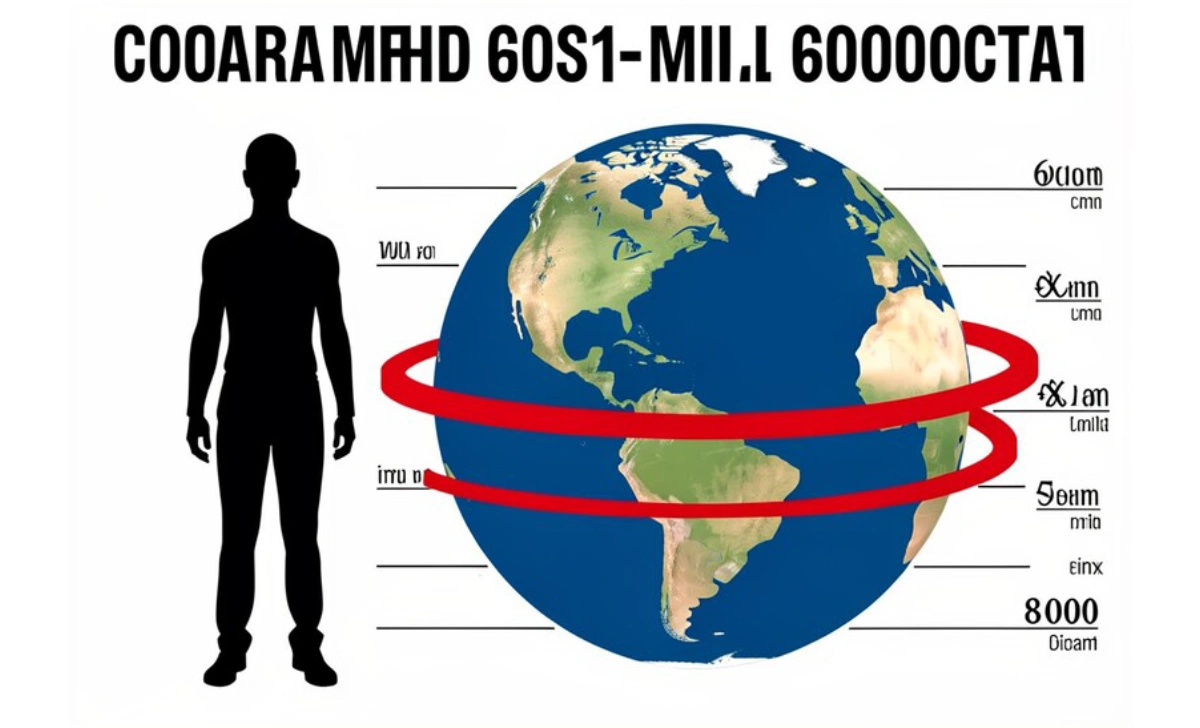
- Fact 16: If you laid out an adult human’s entire network of blood vessels—arteries, veins, and capillaries—end to end, it would stretch for about 60,000 miles (96,500 km), enough to circle Earth more than twice. (Source: U.S. National Library of Medicine).
- Fact 17: The human olfactory system can distinguish between at least one trillion different smells, a capacity far exceeding earlier estimates of just 10,000. (Source: Science journal, 2014).
- Fact 18: It is physiologically impossible to hum while pinching your nose closed. Humming requires air to vibrate and escape through the nasal passages.
Common Body Myths, Clarified
- Myth vs. Reality: The notion that “humans only use 10% of their brains” is a persistent fallacy. Modern neuroimaging shows that virtually all brain regions have identified functions, and activity occurs throughout the organ even during rest.
- Myth vs. Reality: Cows have one stomach with four specialized chambers (rumen, reticulum, omasum, abomasum), not four separate stomachs. This complex system allows them to ferment plant-based food.
Language & History: The Quirks of Human Culture
The evolution of words and historical footnotes reveals our biases, creativity, and the sometimes-absurd turns of history.
Etymology with a Twist
- Fact 19: The word “sinister” derives directly from the Latin word for “left” or “left-hand side,” reflecting a historical bias where the left was associated with bad luck or evil.
- Fact 20: “Freelancer” originally described a medieval mercenary knight—a “free lance”—who would fight for whichever lord or nation paid, not a modern independent contractor.
Literary and Cinematic Footnotes
- Fact 21: Mary Shelley penned the foundational sci-fi novel Frankenstein at age 18, inspired by a ghost-story challenge among literary friends during the “Year Without a Summer” in 1816.
- Fact 22: The iconic line “Play it again, Sam” is a famous misquotation. The actual dialogue in Casablanca (1942) is: “Play it, Sam. Play ‘As Time Goes By.'”
- Fact 23: Alfred Hitchcock’s Psycho (1960) broke cinematic taboos by featuring the first flushing toilet in a major American motion picture, challenging the prevailing Production Code.
Space & The Cosmos: A Dose of Perspective
Facts about the universe provide a humbling and awe-inspiring reminder of our place in a vast, strange cosmos.
Our Solar System’s Oddities
- Fact 24: Venus has a longer day than a year. It takes 243 Earth days to rotate once on its axis, but only 225 Earth days to complete an orbit around the Sun.
- Fact 25: The gas giants Jupiter, Saturn, Uranus, and Neptune have no solid surface to “land” on. A probe would descend endlessly into layers of increasingly dense gas and liquid metallic hydrogen.
The Immense Scales of Time and Distance
- Fact 26: When you look at the stars, you are looking into the past. The light from even relatively close stars, like those in the Big Dipper, has traveled for dozens to hundreds of years to reach your eyes.
- Fact 27: The Apollo astronauts’ footprints on the Moon could remain intact for millions of years in the absence of weather, erosion, or geological activity.
Building a Mindset of Verified Curiosity
Collecting true, fascinating facts is more than an exercise in trivia; it’s a practice in engaging with the world more thoughtfully. The most valuable skill you can develop is a gentle skepticism—the instinct to ask, “How is that known?” and “What’s the broader context?”
This list is a starting point for that journey. We encourage you to use it not as a final destination, but as a catalyst for your own exploration. Verify a fact that intrigues you, dive deeper into its story, and share it with the added weight of understanding. In an era of information overload, the deliberate pursuit of verified, contextual knowledge is itself a rare and powerful endeavor.
Which fact prompted you to pause and think? That moment of genuine surprise or curiosity is the real treasure. Follow it.