Your home needs a refresh, but you’re not ready to hire contractors or commit to a full renovation. You want improvements that don’t require advanced skills, won’t destroy your security deposit, and actually deliver visible results.
The problem? Most “beginner” guides skip the honest parts. They don’t tell you when a hack won’t work for your specific situation, what commonly goes wrong, or how to know if you’re in over your head before you start.
This guide gives you 10 practical home improvement hacks with the context you actually need. You’ll learn what works, what doesn’t, and how to avoid the mistakes that turn quick fixes into expensive problems.
Why Surface Prep Matters More Than the Hack Itself
Most beginner projects fail during preparation, not execution. You can buy the best peel-and-stick wallpaper available, but it won’t adhere to dusty, textured, or freshly painted walls. The viral videos skip this part because cleaning walls isn’t exciting content.
Before starting any adhesive-based project, wipe down surfaces with a damp cloth and let them dry completely. For walls, use a mild detergent solution to remove oils and dust. This 10-minute step prevents the frustration of products peeling off within days.
Test small areas first. Apply a sample piece of wallpaper or an adhesive hook in an inconspicuous spot. Wait 24 hours. If it holds firmly, proceed. If it lifts at the edges, your surface needs different prep or a different product.
Temperature and humidity affect adhesives significantly. Most require an application between 50°F and 90°F with moderate humidity. Installing peel-and-stick products in a cold garage or humid bathroom right after a shower leads to poor adhesion.
Peel-and-Stick Wallpaper: When It Works and When It Doesn’t
Peel-and-stick wallpaper transformed rental decorating, but it’s not universally foolproof. It works best on smooth, non-porous surfaces like primed drywall or sealed wood. It struggles on textured walls, fresh paint (wait 30 days minimum), and some flat paints that pull off when you remove the wallpaper.
Choose one accent wall rather than attempting an entire room for your first project. This limits your financial risk and gives you experience before scaling up. Measure carefully and add 10% extra material for pattern matching and mistakes.
The repositioning claim needs context. Most products allow adjustment for 10-15 minutes after application, not indefinitely. Once the adhesive sets, forcing repositioning can tear the paper or damage the walls.
Removal varies by product quality and wall type. High-quality options peel off cleanly from properly prepared walls. Budget products may leave residue requiring additional cleaning. On older plaster walls or walls with multiple paint layers, any peel-and-stick product carries some risk of surface damage during removal.
Expect wallpaper to last 1-3 years, depending on location and handling. High-traffic areas, direct sunlight, and humidity shorten lifespan.
Command Hooks: Understanding Weight Limits and Real-World Performance
Command hooks work through a specific adhesive chemistry that requires correct application technique. The “press firmly for 30 seconds” instruction isn’t optional. Inadequate pressure prevents proper bonding, leading to failure under load.
Wait the full recommended time before hanging items. Most products require 1 hour minimum; some need 24 hours. Hanging items immediately is the most common cause of hook failure.
Weight limits assume ideal conditions. A hook rated for 5 pounds works reliably at that capacity on smooth, clean walls in moderate temperatures. But that same hook in a steamy bathroom or on a textured wall may fail at 3 pounds. Build in a safety margin by using the next size up from what the weight alone would require.
Remove hooks correctly by pulling the tab straight down, not out from the wall. Pulling outward can remove paint or drywall paper. If a tab breaks during removal, use fishing line or dental floss to carefully work behind the adhesive pad.
For renters, photograph hook installations and proper removal. Documentation protects you if disputes arise about wall damage.
Strategic Storage Solutions That Don’t Require Drilling
Vertical space offers storage potential that most homes underutilize. Tension rods, freestanding shelf units, and over-the-door organizers create organization without permanent installation.
Tension rods work through compression force. They need solid mounting surfaces (wall to wall, inside cabinet frames) to function safely. A rod spanning a doorway handles lightweight curtains. The same principle won’t support heavy hanging plants without sagging or falling.
Freestanding ladder shelves and corner units provide visible storage while maintaining rental compliance. Look for units with a low center of gravity and a wide base for stability. Anchoring to walls increases safety, but it isn’t always possible in rentals.
Over-the-door organizers distribute weight across the door’s top edge. They work best on solid-core doors. Hollow-core doors may not support heavy loads, and the constant weight can damage door hinges over time.
Clear storage bins and labeled baskets make open shelving functional rather than cluttered. The visibility forces regular organization, but choose this approach only if you’re realistically willing to maintain it.
Window Insulation Using Plastic Film Kits
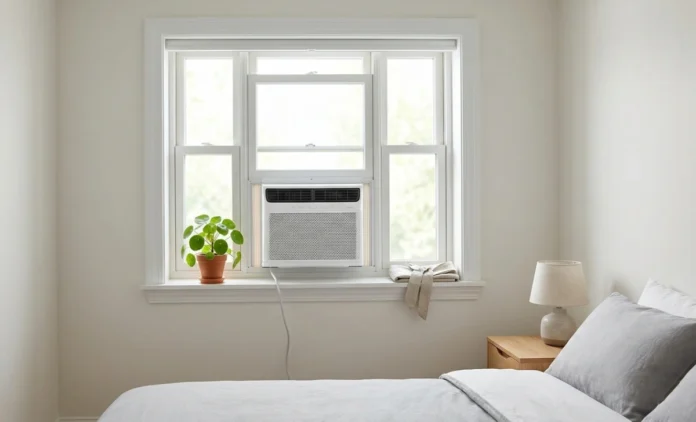
Drafty windows increase heating costs and create cold spots near the glass. Plastic insulation kits provide temporary weatherization using clear film and double-sided tape.
This solution works best as a seasonal fix, not a permanent repair. Apply kits in the fall before heating season begins. Remove them in spring when heating demands decrease. Leaving film up year-round makes windows appear dingy as dust accumulates.
Clean window frames thoroughly before applying tape. Remove old paint chips, dust, and cobwebs. The tape only bonds as well as the surface allows.
Apply film with slight looseness, then use a hair dryer on medium heat to shrink it taut. Work systematically from edges to center to avoid wrinkles. The goal is transparency, not complete invisibility. Some minor distortion is normal and doesn’t affect insulation performance.
These kits reduce drafts but won’t fix fundamental window problems like broken seals, rotted frames, or missing weatherstripping. If windows have serious issues, plastic film becomes a temporary band-aid on problems requiring professional attention.
Cabinet Hardware Swaps for Instant Visual Updates
Replacing cabinet knobs and pulls ranks among the highest-impact, lowest-skill improvements available. You need only a screwdriver and 30 minutes for an average kitchen.
Measure existing hardware before buying replacements. Note the distance between screw holes (called the boring spacing). Standard sizes are 3 inches (76mm) or 3.75 inches (96mm) for pulls. Matching existing spacing avoids filling old holes and drilling new ones.
If you want different spacing or to change from knobs to pulls, you’ll need wood filler for the old holes. This adds complexity and drying time but remains beginner-manageable.
Hardware finish significantly affects appearance. Brushed nickel and matte black suit contemporary spaces. Oil-rubbed bronze works in traditional kitchens. Chrome appears clinical and works best in modern designs. Buy one piece first to confirm the finish matches your expectations before ordering full quantities.
Tighten new hardware firmly but not aggressively. Overtightening can crack cabinet faces or strip screw holes in particleboard cabinets.
Contact Paper for Cabinet Interiors: Managing Expectations
Lining cabinet interiors with contact paper refreshes the appearance and makes cleaning easier. It’s also tedious work that tests patience.
Measure interior surfaces carefully. Contact paper doesn’t stretch to cover measurement errors. Buy 20% more than your measurements suggest to account for pattern matching and cutting mistakes.
Work in a clean, dust-free space. Any debris trapped under contact paper creates permanent bumps. Remove items from cabinets completely and vacuum interiors before starting.
Apply contact paper slowly, smoothing from the center outward to prevent air bubbles. A credit card or plastic scraper helps press paper flat. Small bubbles can be punctured with a pin and smoothed flat. Large bubbles require peeling up the section and reapplying.
This project suits detail-oriented personalities. If precision work frustrates you, the visual improvement may not justify the installation hassle. Consider whether your cabinet interiors are actually visible enough to warrant the effort.
Contact paper lasts 2-5 years, typically. Moisture from spills or humidity can cause edges to lift over time.
Painter’s Tape Techniques for Clean Lines
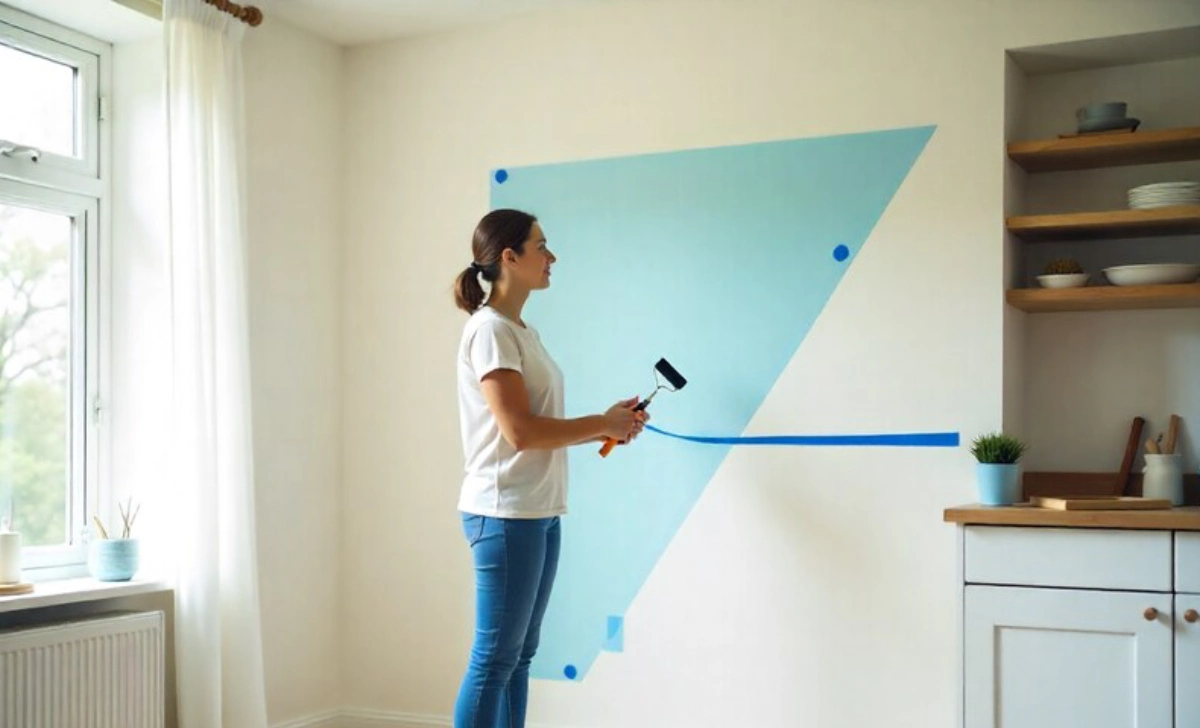
Painter’s tape creates professional-looking boundaries between colors, but technique determines results. Simply applying tape and painting produces mediocre outcomes.
Press tape edges firmly with a finger or plastic card to seal them completely. Paint can seep under even small gaps, creating ragged lines. This sealing step separates amateurs from clean results.
For best outcomes, paint over the tape edge first with your base color (the color already on the wall). Let this dry, then apply your new color. This technique seals the tape edge with the base color. Any seepage matches the existing color, making the final line crisp.
Remove tape while paint is still slightly damp, not fully dry. Pull at a 45-degree angle slowly and steadily. Removing dried paint can tear the paint film or remove paint from unintended areas.
Different tape grades exist. Standard blue tape works for most projects. Delicate surface tape prevents damage to fresh paint or wallpaper. Premium tape costs more but delivers cleaner lines through better adhesive formulation.
Re-Caulking Bathrooms to Prevent Bigger Problems
Cracked or moldy caulk around tubs and showers isn’t just ugly. It allows water infiltration that causes hidden damage to subfloors and wall structures. Re-caulking prevents minor issues from becoming expensive repairs.
Removing old caulk completely is mandatory. Use a utility knife or specialized caulk removal tool to cut away existing material. Leaving old caulk underneath new caulk prevents proper adhesion and creates failure points.
Clean the joint thoroughly with rubbing alcohol or a mildew remover. Let surfaces dry completely before applying new caulk. Caulking over damp surfaces leads to poor adhesion and rapid mold growth.
Choose silicone caulk for bathrooms. It resists mold better than acrylic latex and maintains flexibility in wet environments. The tradeoff is cleanup difficulty. Keep rubbing alcohol and rags nearby for finger smoothing and immediate cleanup.
Apply caulk in one smooth, continuous bead. Use steady pressure on the caulk gun trigger. Smooth the bead immediately with a dampened finger or caulk smoothing tool.
Most caulks need 24-48 hours to cure fully before water exposure. Plan bathroom projects around shower schedules.
When Simple Hacks Signal Bigger Issues
Some visible problems indicate underlying issues that DIY hacks can’t address. Recognizing these situations prevents wasting time on surface fixes that fail quickly.
Persistent moisture problems require investigation before covering them with paint or wallpaper. Water stains that return after painting suggest active leaks. Peeling paint in bathrooms might indicate ventilation problems, not just old paint.
Drafty windows benefit from plastic film, but if frames are rotted or glass panes are cracked, insulation film becomes a short-term patch. Budget for eventual professional repair while using temporary fixes.
Multiple coat hooks falling from the walls suggest the wrong anchor type for your wall material. Switching from adhesive to screw-mounted hooks might solve the problem, but plaster walls or hollow doors need specific anchor types.
Persistent organization problems may require professional space planning rather than more storage products. Adding shelves to an inefficiently arranged room creates more places to accumulate clutter.
Prioritizing Projects for Maximum Impact
Not all home improvements deliver equal results. Focus your limited time and budget on changes that affect your daily experience or spaces visible to guests.
Entryway improvements create strong first impressions. A fresh door color, new house numbers, or organized coat storage affects how you feel entering your home daily.
Kitchen updates deliver high perceived value. New cabinet hardware, under-cabinet lighting, or organized pantry systems make frequently used spaces more pleasant.
Bathroom re-caulking and updated lighting prevent problems and improve daily routines in spaces you use multiple times daily.
Storage solutions for chronic clutter spots reduce daily frustration more than decorative updates in rarely used rooms.
Consider your actual behavior patterns. Open shelving only works if you maintain organization consistently. Glass-front cabinets require tidy interiors. Choose improvements that match your realistic maintenance commitment.
Start with one room or one type of improvement rather than attempting everything simultaneously. Completing projects fully builds skills and confidence for subsequent projects. Leaving multiple projects half-finished creates visual chaos and maintenance headaches.
Your home improvement journey should build competence gradually. These 10 hacks offer practical starting points that respect your time, budget, and skill level while delivering real improvements you’ll appreciate daily.