Have you ever felt the frustration of watching your website traffic climb while your client list stays stubbornly flat? You’re not alone. A staggering 64% of small businesses report that generating leads and clients is their biggest challenge, despite active marketing efforts. The hard truth is that in 2024, and looking ahead to 2026, more traffic doesn’t automatically mean more clients. The digital marketing landscape has evolved, and yesterday’s strategies are quietly hemorrhaging your most valuable asset: paying customers.
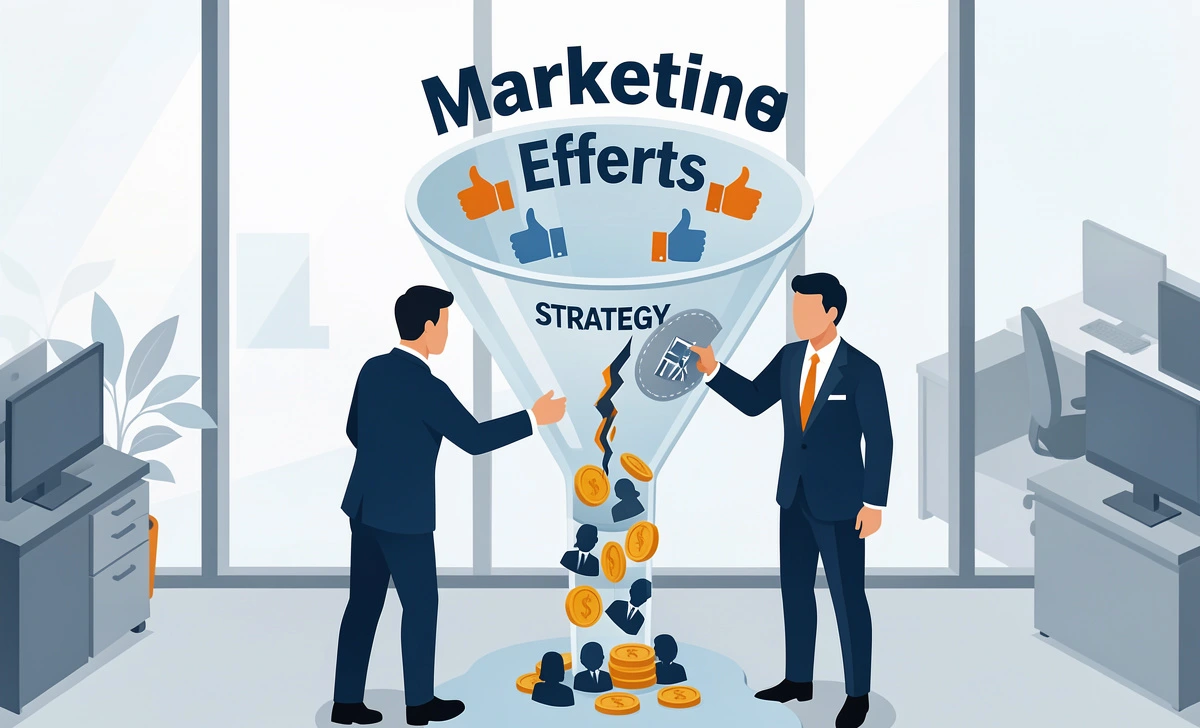
The problem isn’t that you’re not marketing—it’s that you’re making costly, invisible errors that signal to potential clients to look elsewhere. These aren’t minor technical glitches; they are fundamental strategic missteps that break trust, erode credibility, and destroy conversions at the moment of decision. From over-reliance on crumbling data sources to ignoring the human need for connection, these mistakes create a leaky funnel where prospects enter, but clients never emerge.
In this guide, you’ll learn the seven critical digital marketing mistakes costing you clients, specifically framed for the realities of 2024 and the approaching 2026 landscape. You’ll discover not just what you’re doing wrong, but how to conduct a “client leakage” audit on your own strategy, implement priority fixes based on your budget, and rebuild a marketing engine designed for client retention and growth. We’ll move beyond theory into actionable steps, complete with tools and timelines, to help you stop the revenue bleed and start converting your audience into a loyal client base. Expect a direct, no-fluff diagnosis and a clear repair plan you can start implementing in the next week.
The High Stakes of Modern Marketing Mistakes
Before we dive into the specific mistakes, it’s crucial to understand why the cost of error is higher than ever. The digital marketing world is shifting from a broadcast model to a conversation and proof model. Clients are savvier, have more choices, and their patience for irrelevant or clumsy marketing is zero. A single poor post-click experience or a generic piece of content isn’t just a missed opportunity—it’s a brand reputation hit that spreads via reviews and social chatter. Furthermore, with rising advertising costs and increased competition, the Customer Acquisition Cost (CAC) for a new client is climbing. Losing a client due to a preventable marketing mistake means you must spend that much more to replace them, creating a dangerous cycle that impacts your bottom line. Fixing these errors is no longer about optimization; it’s about survival and sustainable growth in a crowded market.
Mistake #1: Ignoring First-Party Data & Over-Reliance on Vanishing Cookies
The Problem: You’re basing your targeting and strategy on third-party data (like that collected by now-deprecated cookies) that is becoming obsolete. Browsers like Safari and Firefox have already limited tracking, and Google’s phased retirement of third-party cookies in Chrome is underway. If your marketing relies on “set it and forget it” ad audiences or you don’t actively collect your own customer data, you’re essentially marketing blind.
How It Costs You Clients: Your ads and content miss the mark, serving generic messages to broad audiences. A potential client who needs a specific solution sees an ad for a basic service, assumes you don’t understand their depth of need, and clicks away. The conversion rate plummets as relevance decreases, wasting your ad spend and failing to attract qualified leads.
The 2024 Fix & 2026 Preparation:
- Build Your Own Lists: Start collecting emails proactively through high-value lead magnets (e.g., industry reports, detailed checklists, exclusive webinars).
- Implement a CRM: Use a simple, affordable Customer Relationship Management (CRM) system to track interactions, preferences, and pain points. Platforms like HubSpot or even sophisticated, cost-effective digital marketing agencies offer powerful, scalable solutions.
- Leverage Zero-Party Data: Ask for preferences directly! Use surveys, preference centers, and interactive content to let your audience tell you what they want.
Pro Tip: Don’t try to boil the ocean. Start by identifying your 20% most valuable clients. What common traits do they share? Use that insight to create a “lookalike” model for your first-party data collection efforts.
Mistake #2: Treating All Content as Equal (The “Set-and-Forget” Blog)
The Problem: You publish blog posts for SEO but never update them. A post from 2020 still ranks, but it mentions outdated stats, old pricing, or strategies that no longer work. For a prospect researching solutions, outdated content screams that your business is out of touch or inactive.
How It Costs You Clients: It destroys trust at the research stage—the very moment you’re trying to establish authority. A client Googling “best marketing strategies for 2024” who finds your 2021 article will immediately backtrack and choose a competitor with current, relevant information. You lose the client before they even know you exist today.
The Fix: Content Audit and Tiering:
- Audit: Use a tool like Ahrefs or SEMrush to identify your top-performing blog posts by traffic.
- Tier: Categorize them:
- Tier 1 (Update): High traffic, outdated info. Update stats, refresh examples, and add new sections.
- Tier 2 (Consolidate): Multiple posts on similar topics with low traffic. Merge them into one comprehensive “ultimate guide.”
- Tier 3 (Retire): Irrelevant or trivial content. Add a “noindex” tag or redirect it to a relevant, updated page.
- Add “Last Updated” Date: This simple trust signal shows visitors you are committed to accuracy.
Mistake #3: Neglecting Post-Click Experience & Core Web Vitals
The Problem: You drive clicks (paid or organic) to a webpage that loads slowly, jumps around as it loads (Cumulative Layout Shift), or doesn’t look good on a phone. Google’s Core Web Vitals are direct ranking factors, but more importantly, they are user experience factors.
How It Costs You Clients: A one-second delay in page load time can reduce conversions by 7%. If your ad promises a quick solution but your landing page takes 5 seconds to load, the prospect’s frustration outweighs their interest. They bounce, and you’ve paid for that click for nothing. For service-based businesses where local trust is key, a poor mobile experience can be especially damaging.
The Fix: The Speed & Stability Overhaul:
- Test Your Site: Use Google’s free PageSpeed Insights and Search Console Core Web Vitals report.
- Prioritize Fixes: Address largest contentful paint (LCP) by optimizing images and upgrading hosting. Fix cumulative layout shift (CLS) by defining image/video dimensions. Reduce first input delay (FID) by minimizing JavaScript.
- Mobile-First Design: Ensure buttons are tappable, text is readable, and navigation is simple on all devices.
Mistake #4: Broadcasting, Not Conversing (The Social Media Monologue)
The Problem: Your social media is a one-way broadcast channel. You post about your services, your awards, and company news, but you never respond to comments, answer questions, or engage with other accounts’ content.
How It Costs You Clients: Social media is often the first “live” interaction a prospect has with your brand. A question left unanswered for days (or forever) tells them you don’t value customer communication. It makes your business feel impersonal and robotic, exactly the opposite of what attracts clients in a service-based world. This is a critical failure in local service marketing, where community connection is paramount.
The Fix: Implement a Conversational Routine:
- Schedule Engagement Time: 15 minutes, twice a day. Use this time solely to respond to comments, answer DMs, and comment on posts from your ideal clients or local community.
- Ask Questions: End your posts with a question to prompt comments.
- Use Stories & Reels: These are inherently more conversational formats. Use polls, Q&A stickers, and behind-the-scenes content.
Mistake #5: Failing to Define & Track Client-Centric KPIs
The Problem: You track vanity metrics like “likes,” “page views,” and “impressions,” but have no idea how many of those turn into actual client conversations or signed contracts. You can’t attribute revenue to your marketing efforts.
How It Costs You Clients: Without knowing what’s working, you continue to invest time and money into channels that don’t produce clients. You might cut a budget for a low-engagement channel that was actually your top source of high-value clients. You’re making strategic decisions in the dark.
The Fix: Build a Simple Attribution Model:
- Define Your North Star Metric: This is likely “Number of New Qualified Client Leads Per Month” or “Client Acquisition Cost.”
- Set Up Tracking: Use UTM parameters on all your marketing links. Set up goals in Google Analytics for lead form submissions, phone calls, and consultation bookings.
- Create a Monthly Dashboard: Use Google Data Studio or even a simple spreadsheet to track: Traffic Source → Leads Generated → Clients Closed → Revenue Attributed.
Mistake #6: Not Automating Lead Nurturing (The Lost Follow-Up)
The Problem: A visitor downloads your lead magnet or signs up for your newsletter… and then hears nothing from you for weeks, or receives only sporadic, irrelevant blasts. This is a massive leakage point in your funnel.
How It Costs You Clients: Interest is fleeting. A prospect who took an action today is warm and engaged. Without immediate, valuable follow-up, they cool down, forget about you, and are eventually captured by a competitor’s automated nurture sequence.
The Fix: Build a Basic Welcome Sequence:
- Map a 5-Email Sequence: Automated over 2-3 weeks.
- Email 1 (Immediate): Thank you + deliver the promised resource.
- Email 2 (Day 3): Share a relevant case study or client story.
- Email 3 (Day 7): Offer a piece of “how-to” educational content.
- Email 4 (Day 14): Address a common objection or FAQ.
- Email 5 (Day 21): Clear, low-pressure call-to-action (e.g., “Book a 15-minute discovery call”).
- Use a Free/Cheap Tool: Start with Mailchimp, MailerLite, or the built-in tools in your CRM.
Mistake #7: Forgetting to Showcase Past Success (Lacking Social Proof)
The Problem: Your website is all about “we,” “us,” and “our services.” It lacks tangible proof from past clients that you deliver results. In an era of skepticism, buyers trust peer reviews far more than branded messaging.
How It Costs You Clients: When comparing two similar service providers, the client will choose the one with clear, credible evidence of success—every single time. Without testimonials, case studies, or portfolio pieces, you force the prospect to take a leap of faith, which most will not do.
The Fix: Systematize Social Proof Collection:
- Ask for Testimonials: After a successful project, send a simple email with 2-3 specific questions (e.g., “What was the biggest challenge before we worked together?” “What specific results did you achieve?”).
- Create Detailed Case Studies: Use a simple format: Client Challenge → Our Solution → Quantifiable Results. Include client quotes and data points.
- Display Proof Prominently: Don’t bury a “Testimonials” page. Place relevant quotes on service pages, your homepage, and even your Google Business Profile.
How to Conduct a “Client Leakage” Audit on Your Marketing
Set aside 2 hours this week to diagnose your own funnel. Use this checklist:
- Data: Do I have a first-party email list? Is it growing? (Y/N)
- Content: When were my last 5 blog posts published/updated?
- Experience: Run my homepage and key service page through PageSpeed Insights. What’s the performance score?
- Social: In the last 7 days, have I replied to every comment and DM?
- KPIs: What is my lead-to-client conversion rate? (If you don’t know, this is your #1 priority.
- Nurture: Is there an automated email sequence for new subscribers?
- Proof: Do my top 3 service pages each have at least one client testimonial?
Conclusion
The gap between a busy marketing campaign and a growing client list is filled with these seven costly mistakes. The path forward isn’t about doing more marketing, but about doing smarter, more intentional marketing that builds trust at every single touchpoint. From collecting your own data and creating relevant content to providing a flawless experience and showcasing your wins, each fix plugs a leak in your revenue funnel.
Your next step is clear: Run the “Client Leakage” Audit this week. Identify your one or two most critical mistakes and commit to fixing them within the next 14 days. The compounding effect of fixing these errors—better leads, higher conversion rates, and more loyal clients—will transform your marketing from a cost center into your most reliable growth engine.
Did you find a mistake that’s been holding your business back? Share your biggest “aha” moment in the comments below. If this guide helped you diagnose a problem, share it with another business owner who might be silently struggling with the same issues.