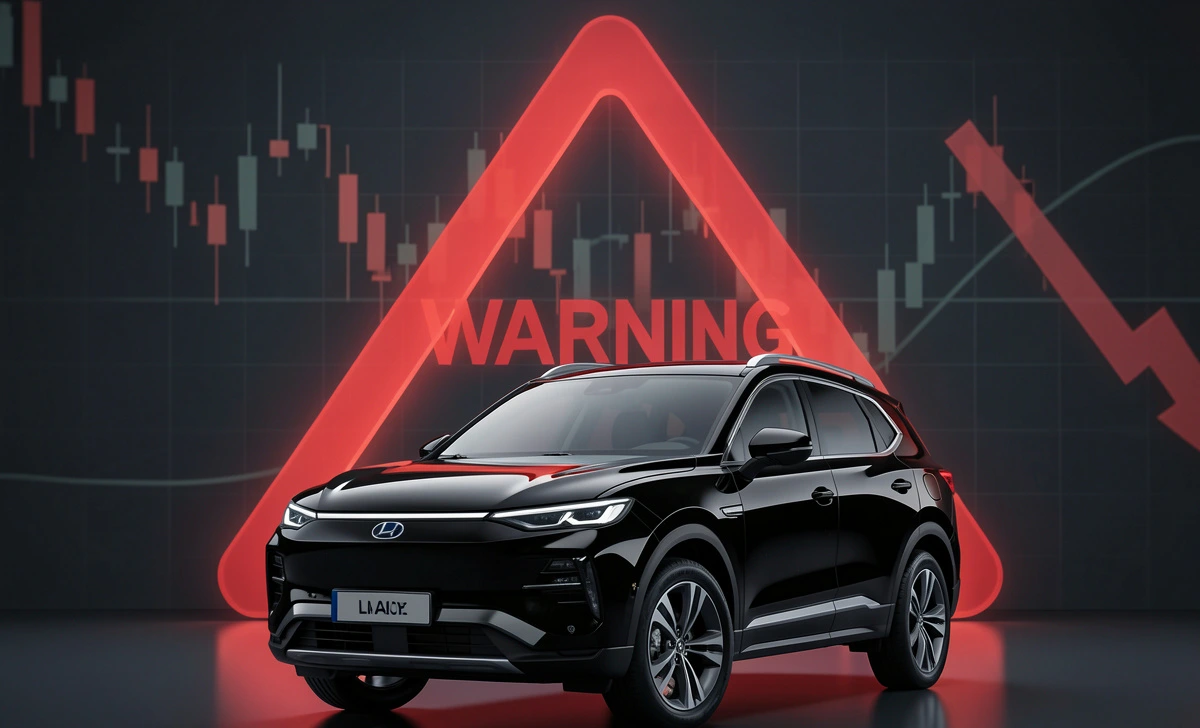
Li Auto’s five key investment risks are: dependency on EREV technology as the market shifts to pure BEVs, concentrated revenue from a narrow SUV lineup, heavy R&D capital spend on new technology platforms, regulatory exposure as a Chinese company listed on a US exchange, and vehicle margin compression from China’s ongoing EV price war.
Li Auto posts another record delivery month. Forums celebrate. The stock barely moves.
That gap between operational results and market reaction is the most important signal for any serious investor. It tells you that institutional money is pricing in something the delivery headline is not showing. This article is about what that something is.
These are the five Li Auto investment risks that get overlooked when delivery volume dominates the conversation — and a practical framework for tracking each one.
Why Delivery Numbers Create a Misleading Picture
Monthly delivery figures are clean, comparable, and emotionally satisfying. For a company that has executed as well as Li Auto has, they’ve been a source of justified confidence.
But they measure output, not sustainability. They don’t capture margin trends, technology transition costs, regulatory exposure, or competitive shifts. Institutional investors know this. They’re not ignoring the delivery numbers — they’re discounting them against everything else. Retail investors who treat delivery reports as the primary scorecard are working with an incomplete picture.
The right question is not “Did deliveries grow?” It’s “What has to remain true for these deliveries to stay profitable over the next five years?” The answers follow.
Li Auto Investment Risk 1: EREV Technology Dependency
Li Auto built its business on Extended-Range Electric Vehicles. The strategy was well-timed. Chinese consumers were anxious about range, and the national fast-charging network was still thin. The L-Series SUVs — with their large batteries and small onboard petrol generators — solved a real problem and created a category.
The risk is not that EREVs are bad technology. The risk is that this technology was designed to solve a transitional problem, and that problem is getting smaller.
- China’s public charging network has grown substantially, reducing the core anxiety that made EREVs appealing.
- Battery energy density improvements are making pure BEVs more practical at a comparable price point.s
- China’s long-term policy direction clearly favors full electrification, even if current NEV subsidies still include EREVs
Li Auto’s response has been to invest heavily in a pure BEV platform — the MEGA MPV was the first major test of this pivot. But this creates a strategic tension: the company must maintain and market its profitable EREV lineup while simultaneously making the case for its BEV future. If EREV demand softens faster than the BEV platform matures, the company is caught in the gap.
This is a slow-moving risk. It won’t appear in next quarter’s delivery report. But it’s the one that changes the long-term valuation story.
Li Auto Investment Risk 2: Model Concentration and Portfolio Vulnerability
For most of Li Auto’s growth period, three vehicles — the L7, L8, and L9 — generated the overwhelming majority of revenue. This concentration was a strategic choice that enabled manufacturing efficiency and clear brand positioning. It worked.
Concentration becomes a liability when the category faces pressure. Consider what can go wrong with a three-model, one-segment strategy:
- A design cycle refresh from a well-funded competitor (BYD’s premium brands, Huawei-backed AITO, or Xiaomi Auto) can shift buyer preference quickly
- A single major quality or safety incident hits a large share of revenue simultaneously
- If the family SUV segment softens — due to economic pressure or demographic shifts — there is limited offsetting revenue from other segments
The MEGA MPV launch was meant to test whether Li Auto’s brand could stretch beyond its established identity. Its reception in the market is now a known data point — investors should check current sales figures rather than relying on pre-launch expectations.
Every new model launch also introduces cannibalization risk. A successful BEV sedan that pulls buyers away from the L-Series is not a clean win — it may trade higher-margin EREV sales for lower-margin BEV sales during a period when margins are already under pressure.
Li Auto Investment Risk 3: R&D Capital Burn at Scale
Competing with Tesla, BYD, and Huawei’s automotive division is not just a product challenge — it’s a capital challenge. Li Auto is investing across multiple technology fronts simultaneously:
- Pure BEV platform development
- Gigacasting manufacturing processes
- Ultra-fast 5C charging infrastructure (which requires building or partnering on a charging network, not just engineering the battery)
- Advanced driver-assistance systems and autonomous driving software
Each of these is expensive. Combined, they represent a material and growing claim on earnings. Li Auto’s quarterly reports show R&D expenditure rising — investors should track this as a percentage of revenue, not just in absolute terms. A company spending 12% of revenue on R&D in a margin-compressed environment is in a different position than one spending 6%.
The financial risk here is specific: if these investments produce technology that becomes a commodity — if 5C charging becomes a standard feature across the industry within two years, or if autonomous driving remains a cost center rather than a revenue driver — Li Auto absorbs the development cost without gaining lasting pricing power.
Capital-intensive technology investment is not inherently bad. But it changes the business model. It shifts the company from a vehicle manufacturer with strong returns to a technology platform company with higher capital requirements and less predictable returns. Investors need to price that shift.
Li Auto Investment Risk 4: Regulatory Exposure in Two Markets
Li Auto’s dual structure creates two distinct regulatory risk layers.
In China:
NEV policy is an active tool of industrial policy, not a stable background condition. Subsidy structures change. Local content requirements evolve. Data security regulations have become more demanding across all technology sectors. A policy adjustment that disadvantages EREVs relative to pure BEVs — even a subtle one, like shifting subsidy eligibility criteria — creates a direct headwind for Li Auto’s core product line.
Consumer spending patterns in the premium SUV segment are also sensitive to broader economic conditions. A sustained period of subdued consumer confidence in China affects Li Auto more than it affects mass-market competitors.
In the United States:
Li Auto trades on the Nasdaq as an ADR (American Depositary Receipt — a structure that allows foreign companies to list on US exchanges). This exposes it to US regulatory oversight, including SEC audit requirements that have historically been a point of friction for Chinese companies listed in the US.
The risk of forced delisting, while not an immediate concern, is non-zero. More practically, periods of elevated US-China geopolitical tension tend to create selling pressure on Chinese ADRs regardless of company-specific fundamentals. This is a risk that has nothing to do with how many SUVs Li Auto sells.
Li Auto Investment Risk 5: Margin Compression in a Price War
This is the most immediate and measurable risk on the list.
The vehicle gross margin — the profit per vehicle after direct production costs — is the core engine of Li Auto’s financial model. When this margin holds or improves, the business has room to invest in growth. When it compresses, everything else gets harder.
China’s EV market entered a sustained price war starting in 2023. The pressure has not fully resolved. The competitive dynamic works like this:
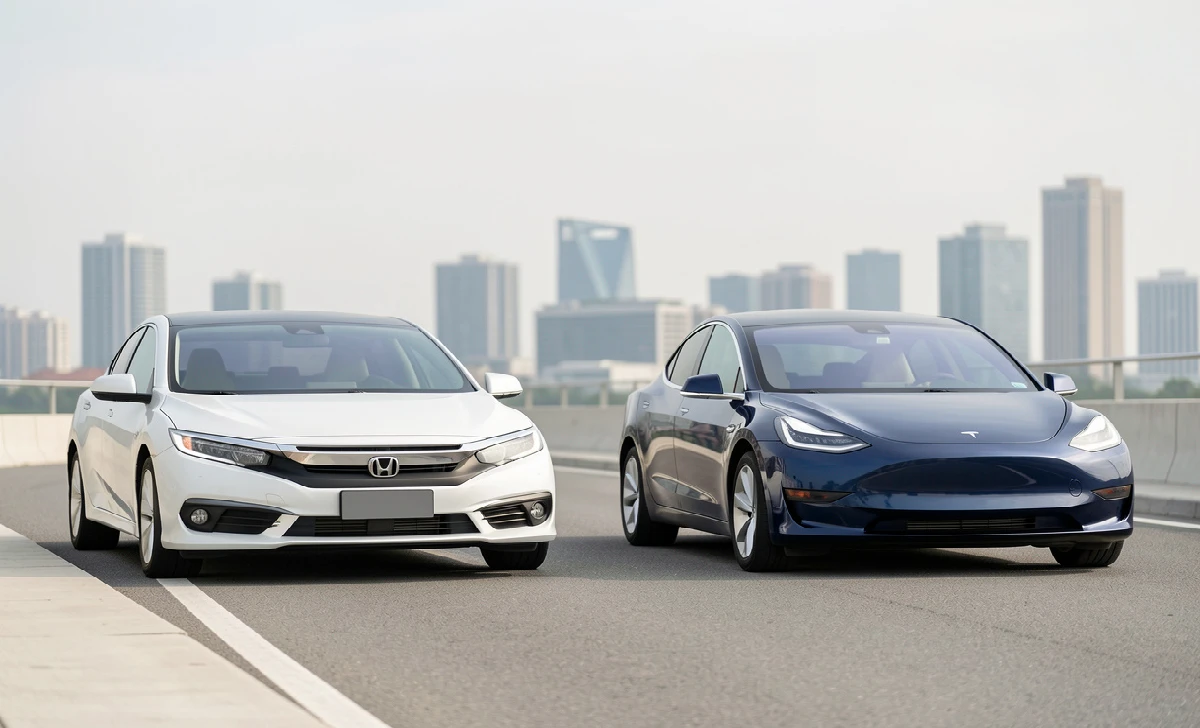
- Tesla cuts prices to defend volume in China, forcing the market to respond
- BYD, competing at high volumes with strong cost control, holds or cuts its own prices
- Premium players like Li Auto face a choice: match discounts to defend market share, or hold price and risk volume loss
Neither option is clean. Heavy discounting protects delivery numbers while eroding the margin that funds R&D. Holding price protects margin in the short term, but risks losing the volume needed for manufacturing efficiency.
This is the specific number to watch in Li Auto’s quarterly earnings: vehicle gross margin percentage, tracked sequentially over six to eight quarters. A declining trend here is a more serious warning signal than any single month of slowing deliveries.
How to Monitor These Risks: A Practical Tracker
Stop watching the monthly delivery press release as your primary data source. Instead, build a simple review of Li Auto’s quarterly earnings release around these five metrics:
- Vehicle gross margin (%) — Is it stable, rising, or falling quarter over quarter?
- R&D as a percentage of revenue — Is spending rising faster than revenue? What is it funding?
- Sales breakdown by model — Is any single model responsible for more than 50% of volume? What is MEGA’s current trajectory?
- Cash and cash equivalents — Does the company have sufficient runway to sustain R&D burn through the next product cycle?
- Management commentary on pricing and orders — Earnings call transcripts often signal competitive pressure before it shows up in the numbers.
These five data points, reviewed consistently, give you a more reliable read on Li Auto’s trajectory than any delivery headline.
Conclusion
Li Auto is a well-run company that has earned its position. The operational track record is real.
The question is not whether Li Auto has been successful. It’s whether the conditions that produced that success — EREV demand, a concentrated premium SUV market, and early-mover timing — will hold through the next phase of competition. That phase involves faster-moving rivals, a technology platform that needs to shift, and margin pressure that shows no sign of fully resolving.
None of these risks guarantees a bad outcome. But all of them can materially affect the investment case, and none of them show up in the delivery numbers.
Review the most recent quarterly earnings with this framework. Specifically: look at the vehicle margin trend, check how the MEGA is performing, and read what management says about competitive pricing conditions. That analysis will tell you more than six months of delivery headlines.
FAQs
What is Li Auto’s biggest competitive strength right now? It’s manufacturing execution and supply chain management within the premium family SUV segment. The L-Series created a clear category identity with strong brand loyalty. Operational efficiency in this niche is currently best-in-class among Chinese EV makers.
Is Li Auto stock a good long-term investment?
That depends on your view of how well the company will manage the five risks above — particularly the EREV-to-BEV technology transition and margin stability. Strong operational track record is clear. What’s not clear is whether it translates through the current phase of competition. It’s a high-potential, high-risk position within the EV sector.
How does Li Auto’s risk profile compare to NIO’s?
Li Auto currently has stronger profitability but faces a technology transition risk — its core product is EREVs in a market moving toward full electrification. NIO is already a pure BEV company with a differentiated Battery-as-a-Service model and a strong premium brand, but it has a longer path to consistent profitability. Li Auto’s primary risk is sustaining its current advantage through a transition. NIO’s primary risk is achieving the scale needed to make its model work financially.
Should delivery slowdowns trigger a sell decision?
Not automatically. A short-term slowdown after a period of rapid growth is normal. The more important question is why deliveries are slowing — is it a temporary demand pause, increased competitive pressure, or a pricing decision to protect margin? Check the vehicle margin and management commentary before drawing conclusions from the delivery figure alone.
How significant is international expansion to Li Auto’s future?
Significant as a long-term growth lever, but it introduces its own layer of risk. Entering Europe or the Middle East requires capital for distribution, regulatory compliance, and brand building in markets where Li Auto has no existing presence. It’s not a short-term solution to China-side pressures.