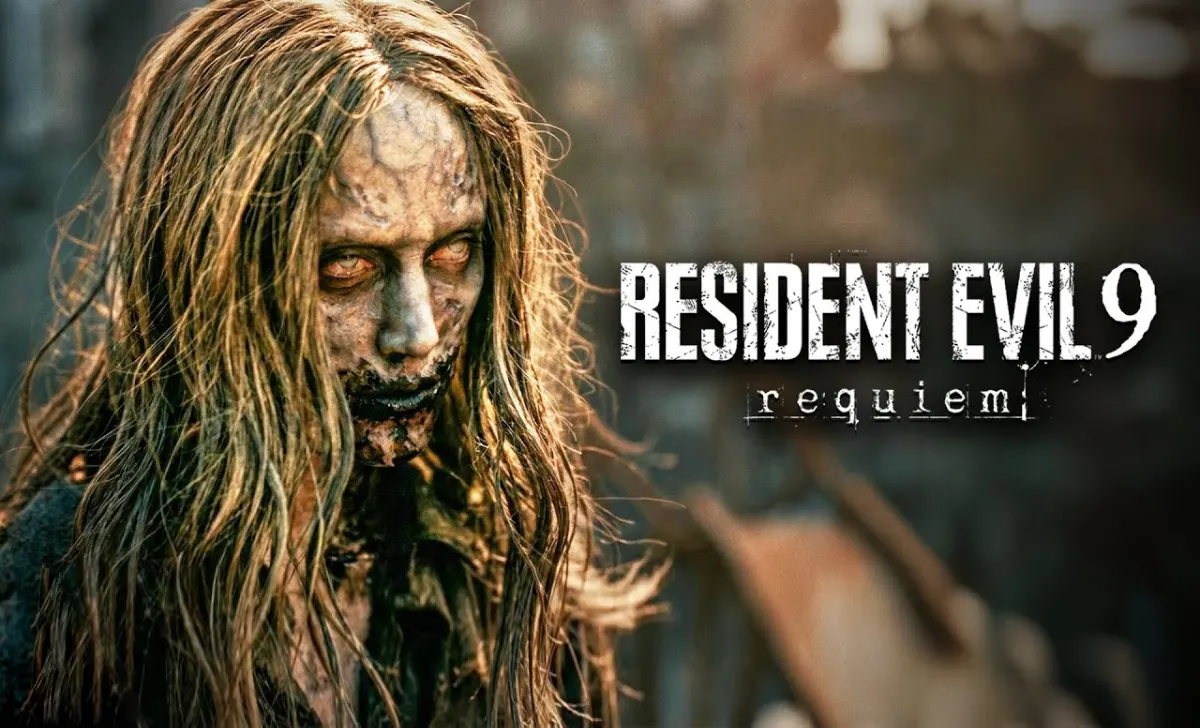
Evil Has Always Had A Name is a live-action short film produced to market Resident Evil Requiem. Starring Maika Monroe and directed by Rich Lee, it follows a mother and daughter during the 1998 Raccoon City outbreak. The film runs approximately four minutes and focuses on atmosphere and character rather than gameplay footage.
Before Resident Evil Requiem had a gameplay trailer, it had a QR code.
Posters appeared in New York and Los Angeles — no title, no logo, just a scannable square. That led to Evil Has Always Had A Name, a nearly four-minute live-action short film starring Maika Monroe, set during the original 1998 Raccoon City outbreak. It’s the kind of marketing move that gets discussed not just in gaming circles but in film ones too. This piece breaks down why it works, what it’s actually doing, and where the gaps in its coverage are.
What the Short Film Shows
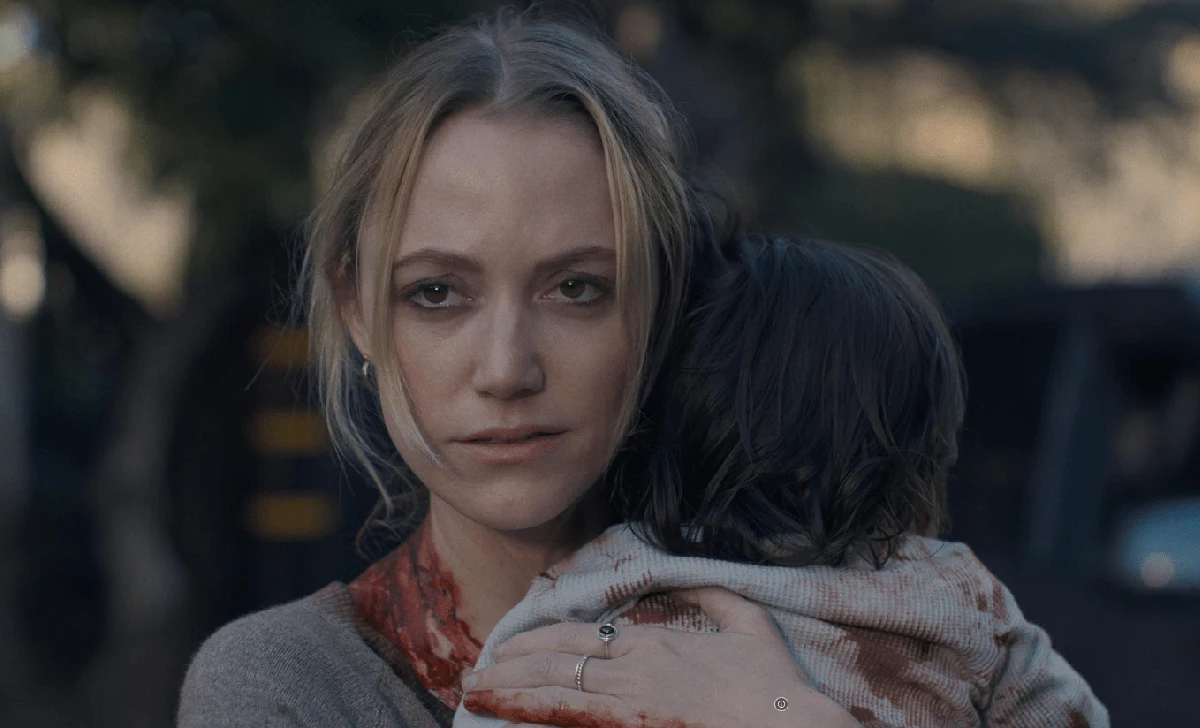
The film follows an unnamed mother trying to keep her daughter alive during the early hours of the Raccoon City disaster. Monroe plays the mother. The story ends with her transformation into a zombie — a process that reportedly required around three and a half hours of prosthetic makeup application, according to Monroe’s own accounts in press interviews.
The short is set firmly in 1998. Classic enemies appear — Lickers, standard zombies referred to by the in-universe term “Cannibal Disease.” The visual palette is heavy on red. The editing builds tension methodically rather than cutting fast. None of this is accidental.
Director Rich Lee, who has worked extensively in high-concept music video production, brings a controlled visual style to the material. His background shows in the way scenes are composed and colored — this doesn’t look like a game commercial. It looks like a short film.
Why Maika Monroe’s Involvement Is a Specific Choice
Monroe isn’t just a recognizable face. She’s become one of the cleaner signals of a particular kind of prestige horror — the type that cares about atmosphere and character over gore volume.
Her breakout came with It Follows (2014), a film defined by dread rather than shock. A decade later, Longlegs (2024) — directed by Oz Perkins — confirmed that her career in horror is deliberate, not incidental. In interviews around Requiem‘s marketing, Monroe stated it would take “something very specific” to bring her back to horror work after Longlegs. The short film, she said, had “a lot of heart.”
That framing matters to Capcom. Monroe’s name signals to both game fans and film audiences that this project has artistic intent — not just a budget. For Monroe, a compact, character-driven role with a clear beginning and end fits her pattern of engagement: serious projects, controlled scope.
The confirmed sequel to It Follows — They Follow — further shows that Monroe picks horror work with staying power, not one-off gigs.

The Production: What’s Confirmed, What’s Speculated
Monroe described the shoot as genuinely chaotic — police presence, smoke machines, crowds of extras playing zombies, and filming conditions that matched the material’s frantic energy.
What’s confirmed: extensive practical prosthetic effects for Monroe’s transformation, a shoot that involved large-scale crowd work, and Rich Lee as director.
What’s not confirmed but commonly inferred in productions of this scale and period-specificity: the use of virtual production technology — LED wall stages that project dynamic, real-time backgrounds. This allows controlled recreation of environments like a 1998 city in decay without full location builds. Whether this was used here hasn’t been officially confirmed. It’s worth noting, but not treating as fact.
The commitment to practical effects — real prosthetics, physical makeup — is worth flagging as a deliberate creative signal. The original Resident Evil games and their modern remakes lean into physical, tactile horror. Digital-only effects would have undercut that aesthetic. The choice reinforces that this short film is in conversation with the series’ visual history, not just its IP.
How the Short Film Connects to Resident Evil Requiem
Monroe’s character is not a canon figure from the games. She’s an original creation for this piece of marketing. But the story she tells connects to the game’s reported themes in a specific way.
According to pre-release leaks — which should be treated as unconfirmed until Capcom releases official story details — the game’s protagonist, Grace Ashcroft, is an FBI analyst investigating her own mother’s murder. If accurate, both the short film and the game’s main plot center on the same core dynamic: a daughter, a mother, and loss set against the Raccoon City disaster’s long shadow.
The short film shows the moment of loss. The game, reportedly set years later, deals with its consequences. That’s a clean narrative bridge — assuming the leaks hold.
What is confirmed: RE Requiem is directed by Koshi Nakanishi, who directed Resident Evil 7. That’s a meaningful signal for tone. RE7 stripped the series back to first-person, isolated horror after years of more action-heavy entries. Nakanishi returning — combined with a short film that goes back to 1998 Raccoon City aesthetics — suggests the game is deliberately positioning itself as a return to survival horror fundamentals, not an extension of Resident Evil Village’s gothic-fantasy direction.
Where This Sits in Resident Evil’s Live-Action History
The Resident Evil franchise has a complicated live-action track record.
The Milla Jovovich film series (2002–2016) treated the games’ lore as loose inspiration and built its own action-franchise logic around them. Welcome to Raccoon City (2021) attempted a direct game adaptation and largely failed critically. The upcoming feature from Zach Cregger (Barbarian) is reported to tell an original story within the universe — a different approach again.
Evil Has Always Had A Name is none of these things. It’s a standalone short designed to build emotional context for a game release. It doesn’t adapt a game. It doesn’t set up a film franchise. It creates atmosphere.
This is the same logic behind high-quality short films produced for games like The Last of Us (pre-series HBO material) or the live-action work done around Cyberpunk 2077 — content that treats the game world as worth inhabiting on its own terms, not just as source material for another medium.
The key difference here: those comparisons were marketing in the broadest sense. Evil Has Always Had A Name works because it earns its four minutes. Fan response has been notably warmer toward this short film than toward Welcome to Raccoon City as a full feature, which says something about execution, not just format.
What This Marketing Move Actually Signals
The QR code launch, the Monroe partnership, the practical effects commitment, and the Nakanishi connection aren’t random decisions. Together, they make a specific argument: Requiem is for people who take this series seriously.
That’s a targeted pitch. RE fans who felt the franchise drifted too far into spectacle with Village’s castle-and-werewolves aesthetic are the audience this marketing speaks to directly. The short film’s 1998 setting, its “Cannibal Disease” callback, its Monroe-caliber horror credibility — all of it points in the same direction.
Whether the game delivers on that promise is a different question. But as a piece of marketing, this short film does something increasingly rare: it makes a clear, specific argument about what kind of experience it’s selling — and it does so through storytelling rather than feature lists.