
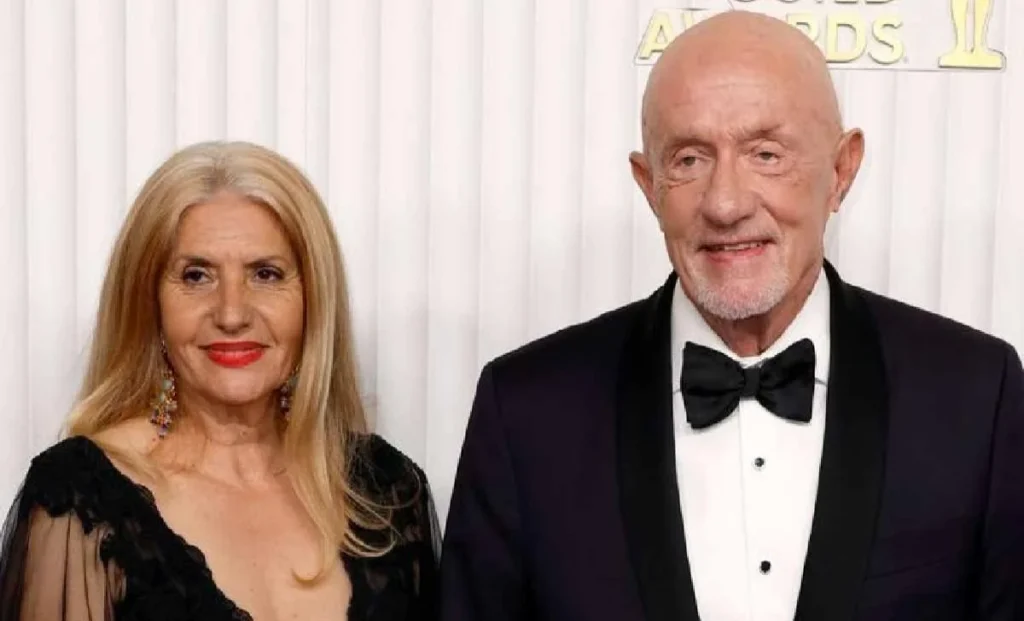
Marnie Fausch Banks was born Marion F. Fausch on July 22, 1947, in Pennsylvania. She briefly married actor Jonathan Banks in 1968, and the two divorced by 1970. After that, she built her own life in Florida — working as a graphic artist and library clerk before founding the Boca Beacon, a community newspaper in Boca Grande. She raised their daughter, Joanna Rae Banks Morgan, largely on her own. On January 19, 1991, Marnie died in a car accident in Sarasota, Florida. She was 43.
Most searches for her name lead straight to Jonathan Banks’ Wikipedia page or a short celebrity bio. But Marnie’s story stands on its own. She started a newspaper, raised a daughter after an early divorce, and built something real in a small Florida community — all before she was gone at an age when most people are just finding their stride. This article gives you the full picture.
Who Was Marnie Fausch Banks?
Marnie grew up in Pennsylvania, but what shaped her adult life was a combination of family background and personal drive. Her grandfather, Charles C. Carr, had been a part-owner of the St. Petersburg Times. That detail matters. Newspapers weren’t foreign territory for her — they were, in some sense, in her blood.
Before she launched her own publication, she worked as a graphic artist and a library clerk. Those two roles might sound unrelated at first glance, but they share a thread: both involve helping people access and understand information. The graphic artist in her knew how to present a story visually. The library clerk in her understood what a community actually needed to know. When she eventually started the Boca Beacon, she brought both of those instincts with her.
She was also a Christian Scientist, and by all accounts, a woman who kept her personal life grounded. She had ties to Englewood and Boca Grande, and the people who knew her there remembered her as someone with real energy — not the loud, self-promotional kind, but the kind that gets things done without needing an audience. Stories like hers share something with Anthony Dion Fay — people whose real lives and personal accomplishments rarely get the same attention as their famous connections.
Her Marriage to Jonathan Banks
In 1968, Marnie married Jonathan Banks. He was 21, she was the same age, and both were figuring out their early twenties. Jonathan was still years away from the roles that would make him recognizable — Airplane!, Beverly Hills Cop, Wiseguy, and eventually Breaking Bad — but at that point, he was a young man trying to make it as an actor.
The marriage lasted about two years. By 1970, they had divorced.
You won’t find a dramatic public story about what went wrong. No court records, no tabloid coverage, no interviews where either of them relitigated it. It reads, honestly, like a lot of young marriages from that era: two people who married early, had a child, and eventually moved in different directions. That’s not a failure — that’s just life at 22.
Jonathan went on to rebuild. He married Gennera Gonzalez Cebian in 1990, and the two have raised a family together, including fraternal twins and a stepdaughter. His career eventually reached the kind of recognition most actors only dream about.
Marnie went to Florida, raised Joanna, and built something of her own.
The Boca Beacon: What She Actually Built
Starting a community newspaper isn’t something you do on a whim. You need to understand your readership, manage production, chase down stories, handle distribution, and keep everything running without the backing of a major publisher. Marnie did all of that in Boca Grande — a small island community on Florida’s Gulf Coast.
The Boca Beacon served Boca Grande and the surrounding area. For a small town, having a local paper that actually covers what matters to residents — zoning decisions, community events, local business, environmental issues affecting the coastline — is the kind of thing people notice when it’s there and miss when it’s gone.
Her grandfather’s history with the St. Petersburg Times probably planted the seed, but Marnie is the one who watered it. She didn’t inherit a newspaper. She created one from scratch, in her forties, as a single mother. That takes a specific kind of confidence — the kind that doesn’t ask for permission.
In my experience writing about people like this, the founders of local publications rarely get the credit they deserve. Marnie wasn’t running a national outlet. She was serving a community she knew personally, and that kind of journalism — specific, local, unglamorous — is what keeps small towns connected to themselves.
Marnie Fausch Banks’ Daughter: Joanna Rae Banks Morgan
Marnie and Jonathan’s daughter is Joanna Rae Banks Morgan. She works as a wedding filmmaker and lifestyle photographer — a career that blends visual storytelling with documentation of people’s real lives. If you know anything about Marnie’s background as a graphic artist and newspaper founder, that path makes a certain kind of sense.
Joanna has stayed largely out of the public eye. She’s not trading on her father’s fame, and she’s not trying to build a celebrity platform. She creates and documents moments for other people — weddings, families, milestones. That’s quiet, meaningful work. Her story has that same grounded quality you find in someone like Solita Liliana Rivera — a person who builds their own identity without leaning on a famous last name.
Raising Joanna alone after a young divorce couldn’t have been uncomplicated. Marnie was managing a career shift, building a business, and parenting simultaneously. The fact that Joanna grew up to do visual work that echoes her mother’s creative instincts says something about how Marnie raised her — not by lecturing about legacy, but by modeling what it looks like to do creative work seriously.
Some people leave an impression through what they built. Others leave it through the people they raised. Marnie managed both.
Her Death at 43
On January 19, 1991, Marnie Fausch Banks died following a car accident in Sarasota, Florida. She was taken to Sarasota Memorial Hospital and passed away there. She was 43 years old.
A brief obituary in the St. Petersburg Times noted her role as founder of the Boca Beacon and listed her surviving family: her daughter Joanna (then living in England, listed in some records as Joanna Wyness), her brother James C. Fausch, and her mother, Joan Schachtner. She was buried at Royal Palm South Cemetery in St. Petersburg, Florida.
Forty-three is not old. It’s an age when most people are somewhere in the middle — not starting over, not winding down. Marnie had founded a newspaper. She had raised a daughter. She had built a life on her own terms after an early marriage that didn’t work out. By any measure, she was just hitting her stride.
The people who lose someone that suddenly died rarely have time to prepare. For Joanna, it meant growing up without her mother during what should have been some of the closest years between them. For Boca Grande, it meant losing the person who had chosen to tell their story. For the people who knew Marnie personally, it left a gap that no public recognition could fill. If you’ve read about people connected to well-known families — like Matthew Mario Rivera — you’ll recognize how grief in these situations tends to stay private, even when the names involved are public.
The Part That Gets Left Out
When you search for Marnie Fausch Banks, most of what comes up frames her as a footnote in Jonathan Banks’ biography. His career gets the headline. Her life gets a paragraph.
That framing misses the point. Yes, she was Jonathan Banks’ first wife. But she was also a woman who started a newspaper at a time when that wasn’t common or easy, raised a daughter on her own after an early divorce, and contributed something real to a community that needed it. Those aren’t supporting details — they’re the story.
Her death at 43 was sudden and early, and it cut short a life that still had a lot of road left in it. What she left behind — a daughter with her own creative voice, a newspaper that mattered to real people — is not a small thing.
You may have found her name while reading about Breaking Bad or Better Call Saul. But Marnie Fausch Banks was her own person, with her own accomplishments, her own losses, and her own quiet legacy. That’s the story worth knowing.
