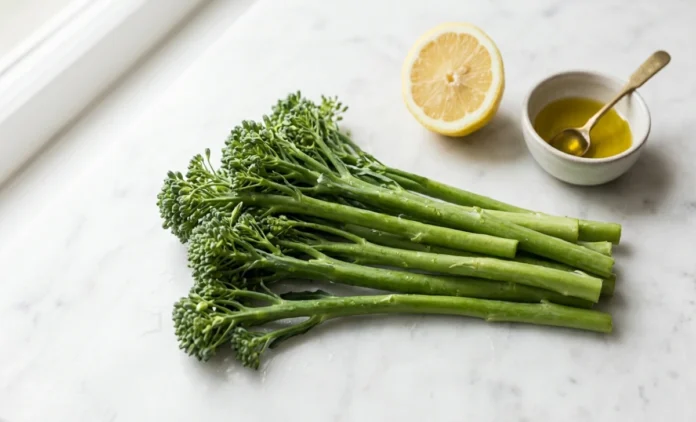
I picked up my first bunch of crocolini on a whim — it was sitting next to the broccoli, looked a little more elegant, and cost about the same. I had no plan for it. I got home, heated some oil, threw in a few garlic cloves, and had it on the table in less time than it takes to peel and chop regular broccoli. My partner, who normally picks around anything green, ate the whole portion.
That was the moment I understood why this vegetable keeps showing up everywhere in 2026.
This isn’t a trend built on hype. It’s one of those ingredients that earns its place quietly — through convenience, honest flavor, and the kind of results that make you want to buy it again the following week. If you’ve spotted it at the store or scrolled past it on social media and wondered whether it’s worth the curiosity, this article will give you a straight answer.
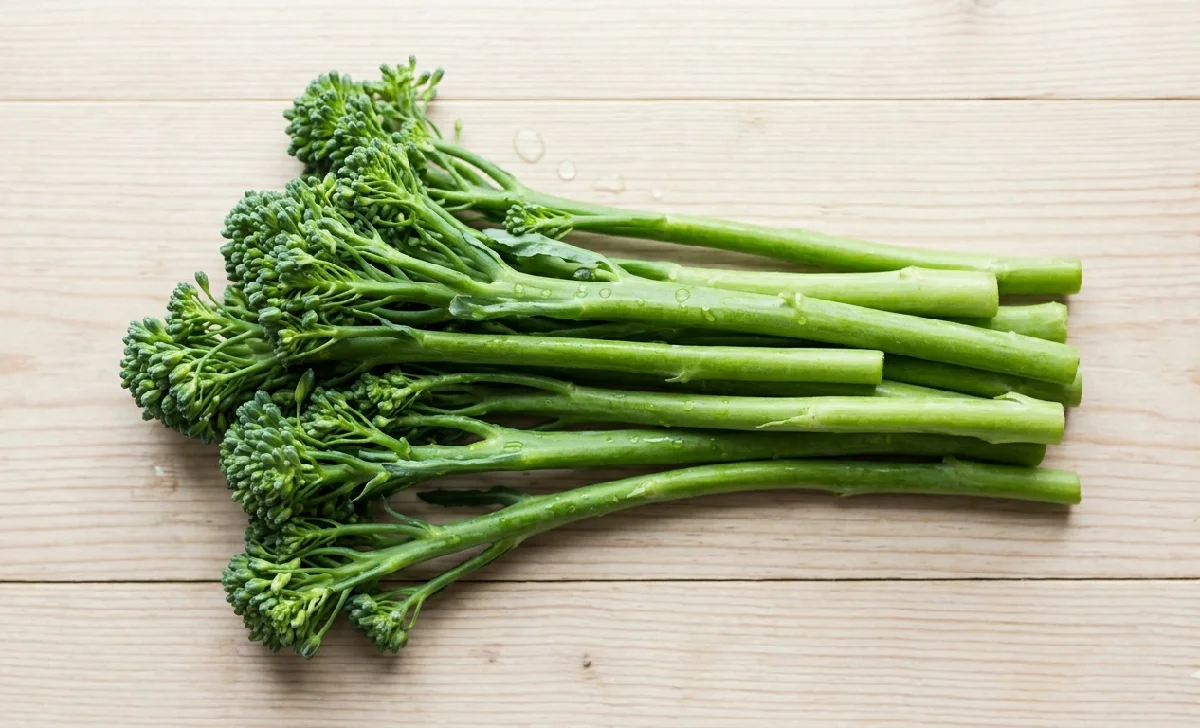
What Is Crocolini?
Crocolini is a hybrid vegetable — a deliberate cross between broccoli and Chinese kale, also known as gai lan. The result is a long-stemmed green with small, loose florets at the top and stems that are fully edible from top to bottom. You don’t need to peel, trim, or discard anything.
You may also see it labeled as broccolini. In most cases, they’re the same vegetable. The names vary by brand, region, and retailer, but the plant is essentially identical.
What makes it stand out from regular broccoli isn’t just its looks. The stems are genuinely tender — not fibrous or woody like the thick stalks you’d usually cut away. The whole bunch goes into the pan as-is, which cuts prep time down to almost nothing.
The flavor is milder and slightly sweeter than broccoli. There’s still an earthy, green backbone to it, but without that sharp, sulfur-edged bitterness that puts a lot of people off broccoli — especially kids. If you’ve ever served broccoli to a picky eater and lost, crocolini is worth trying.
Crocolini vs Broccoli: What’s the Difference?
Let’s understand this step by step, because the comparison comes up constantly, and the answer isn’t just “one is smaller.”
Shape and structure: Crocolini has longer, thinner stems and smaller, more open florets. Broccoli is dense and tree-like, with thick stalks and tightly packed heads. Side by side, crocolini looks more refined — which is partly why it shows up on restaurant plates so often.
Texture: This is where they differ most in practice. Broccoli florets soften faster than the stems, so getting an even cook requires either splitting pieces or accepting unevenness. Crocolini is more uniform. The stems and tops cook at roughly the same rate, which means fewer judgment calls and less risk of ending up with mush on one end and raw on the other.
Flavor: Broccoli has a stronger, occasionally bitter flavor that intensifies when overcooked. Crocolini is gentler — mildly sweet, with a fresh quality that holds up even when lightly wilted.
Cook time: Crocolini cooks noticeably faster. A quick sauté takes five to seven minutes. Broccoli typically needs more time to soften through the stem, especially if you want it fully tender.
Nutrition: Both are genuinely good for you. Broccoli has a slight edge in fiber and vitamin C per serving. Crocolini offers comparable levels of vitamin K, folate, and antioxidants. The practical difference is small. The more meaningful difference is that crocolini is easier to enjoy in larger amounts, more regularly — and that adds up over time.
One fair point for broccoli: if you like a heartier bite or prefer a more assertive flavor, it has its place. Both belong in a well-stocked kitchen. But if you’re trying to eat more vegetables without forcing it, crocolini removes a lot of the friction.
Where Did Crocolini Come From?
Crocolini was developed by plant breeders — it didn’t appear in the wild. The goal was to create a vegetable that was softer, sweeter, and quicker to cook than standard broccoli, while keeping the nutritional benefits of brassica greens.
The original development happened in Japan, where hybrid vegetable breeding has a long history. It later made its way into American markets and then European ones, where it gained a following among restaurant chefs before home cooks caught on.
Farmers tend to like it too. It grows faster than broccoli, can be harvested multiple times from the same plant, and holds up well during transport. That combination of growing efficiency and consumer appeal is part of why it’s become more widely available and more consistently stocked in recent years.
Why Crocolini Is Popular in 2026
Health awareness has been building for years, but in 2026, it feels more practical and less performative. People aren’t chasing specific superfoods with complicated preparation — they want everyday ingredients that are nutritious, quick to cook, and easy to enjoy without special skills or long shopping lists.
Crocolini fits that space well. It brings the nutritional profile of brassica greens without the prep overhead or the strong flavors that some people genuinely dislike. It’s become a vegetable that health-conscious eaters and casual home cooks can agree on — and that’s a harder thing to pull off than it sounds.
Social media has also played a real role. The long stems and bright green color photograph well, and the cooking method is short enough to show in a 30-second clip. Sheet pan dinners, quick sautés, pasta tosses — crocolini shows up in all of them, and it always looks good on camera.
But the popularity isn’t purely aesthetic. There’s a practical side to it: swapping crocolini into meals a couple of nights a week is the kind of small, repeatable habit that quietly improves how a household eats over months — less processed filler, more vegetables, with very little resistance at the table. If you’re thinking about making more of these kinds of changes, these best lifestyle optimization tips are worth a look alongside ingredient swaps like this one.
Crocolini Health Benefits
Crocolini is low in calories and provides a solid range of micronutrients that genuinely matter for daily health.
Vitamin C supports immune function and helps the body absorb iron. A serving of crocolini gives you a meaningful portion of your daily requirement without any complicated preparation.
Vitamin K is important for bone health and blood clotting. It’s one of the nutrients most people don’t think about until it becomes relevant, and crocolini is a reliable source.
Folate supports cell repair and is especially important during pregnancy, though it matters for general health across all life stages.
Fiber aids digestion, helps maintain steady energy, and keeps you feeling satisfied after a meal — all without adding calories.
Antioxidants from brassica vegetables like broccoli help protect cells from oxidative stress over time. These aren’t dramatic, overnight effects, but they’re part of what makes consistent vegetable intake worth building into a routine.
One thing worth knowing: crocolini is a cruciferous vegetable, which means some people with sensitive digestion — particularly those with IBS or thyroid conditions — may want to monitor their intake rather than eating large amounts daily. Cooking it rather than eating it raw reduces the compounds that can trigger digestive discomfort. For most people, this isn’t an issue, but it’s worth knowing rather than being surprised.
No single vegetable changes everything. The real value is in building consistent daily habits, and crocolini is easy to sustain because it doesn’t require effort to enjoy.
Is Crocolini Good for Weight Management?
In practical terms, yes. It’s low in calories, provides real fiber, and cooks quickly enough that it fits into meals that might otherwise lean toward heavier options.
The fiber content helps extend the feeling of fullness after eating, which makes it easier to avoid reaching for extras between meals. That’s not a dramatic effect — it’s a quiet, cumulative one that works best as part of regular eating habits rather than a short-term strategy.
Adding crocolini to rice bowls, pasta, or simple protein-based dinners is an easy way to increase the nutrient and volume of a meal without increasing the calorie load significantly. It works across most eating approaches — vegetarian, vegan, low-carb, or just general balanced eating.
How to Cook Crocolini
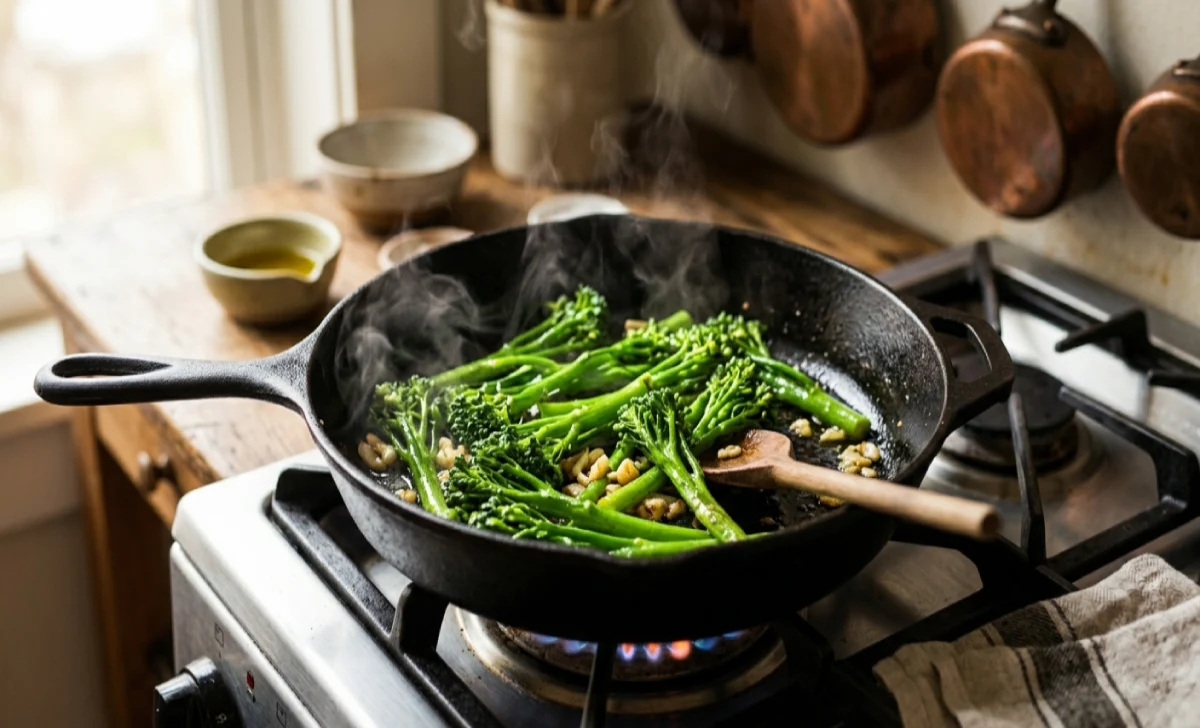
This is where crocolini earns its reputation for being genuinely easy. Let’s go through the methods that actually work.
Quick sauté (most common, most forgiving)
Heat a generous pour of olive oil in a wide pan over medium-high heat. Add minced garlic — two cloves for a standard bunch — and let it sizzle for about 30 seconds before adding the crocolini. Season with salt, add a pinch of chili flakes if you like heat, and cook for five to seven minutes, turning occasionally.
The stems should be tender with a little bite remaining. The tips will get lightly browned, which brings out a subtle sweetness. A squeeze of lemon at the end sharpens everything up.
Don’t walk away from it. The difference between well-cooked and overcooked crocolini is about two minutes — keep an eye on the color. Bright, vivid green with slightly charred edges is the target. Dull olive green means it’s gone too far.
Roasted
Preheat your oven to around 220°C (425°F). Spread crocolini in a single layer on a baking tray — don’t overcrowd it or it steams instead of roasting. Drizzle with oil, season with salt and pepper, and roast for 12 to 15 minutes until the edges begin to crisp and the stems are tender.
Roasting concentrates the flavor and gives the tips a slightly caramelized edge. It’s a good method when you want to cook it hands-off while handling other parts of the meal.
Steamed or blanched
Bring a pot of salted water to a boil. Blanch the crocolini for two to three minutes, then remove and either serve immediately or transfer to cold water to stop the cooking. This method keeps the color vivid and the texture clean — ideal for salads or when you want a lighter side dish.
In stir-fries and pasta
Add crocolini toward the end of a stir-fry — it only needs two to three minutes in a hot wok with sauce. In pasta, cook it in the pasta water for the last two minutes, then toss with olive oil or sauce directly in the pan. It absorbs seasoning well and adds color without overpowering anything else in the dish.
Common Cooking Mistakes to Avoid
Overcooking is the main one. Crocolini turns mushy quickly if it’s left on heat too long. Once the color goes from bright green to dull, the texture is already compromised. Keep the cook time short and pull it off the heat a little earlier than you think you need to.
Using too much oil. A light coating is all it needs. Over-oiling makes it greasy and mutes the flavor.
Skipping the seasoning. Because crocolini has a mild flavor, it needs a bit of help. Salt is essential. Garlic, lemon, chili flakes, or a grating of hard cheese all work well. Without seasoning, it can taste flat, which sometimes gets mistaken for the vegetable being uninteresting when the real issue is under-seasoning.
Trimming too aggressively. The stems are the point — they’re tender and fully edible. Just trim the very base if it looks dry or woody. Everything else can go into the pan as-is.
Best Ways to Use Crocolini in Everyday Meals
As a side dish: Sauté or roast it and serve alongside chicken, fish, eggs, or plant-based proteins. Its mild flavor doesn’t compete with much, which makes it a reliable companion for almost any main.
In pasta: Toss blanched crocolini with pasta, a little olive oil, garlic, and grated cheese. Add lemon zest if you have it. It’s a 15-minute dinner that tastes more considered than it is.
In stir-fries: Add it near the end with soy sauce, ginger, and sesame oil. It absorbs the sauce without losing its texture.
In rice or grain bowls: Roasted crocolini pairs well with grains like farro, quinoa, or brown rice. Add a soft-boiled egg and a simple tahini or miso dressing and you have a complete meal.
In salads: Blanch it briefly, cool it down, and use it as a base or addition to a salad with other vegetables. The slightly sweet flavor works well with acidic dressings.
Crocolini in Different Cuisines
Its versatility across different cooking traditions is part of what makes it practical to keep around regularly.
In Mediterranean cooking, it’s typically sautéed with olive oil, garlic, and lemon — a format that takes about ten minutes and works as a side for almost anything. In Asian kitchens, it goes into stir-fries and noodle dishes with soy sauce, ginger, and sesame. The texture holds up well in a hot wok, and it absorbs flavor cleanly.
Western cooking tends to use it roasted — served alongside meat or fish as a clean, modern side. Its appearance on restaurant menus has helped normalize it for home cooks who might otherwise only buy it occasionally.
The through-line across all these approaches is that crocolini adapts rather than dominates. It takes on the flavor of the dish without losing its own character, which is exactly what you want from a vegetable you plan to use throughout the week.
How to Pick and Store Crocolini
At the store: Look for firm, straight stems that don’t bend when you pick up the bunch. The florets should be tight and a consistent bright green — any yellowing is a sign the vegetable is aging, and the flavor will be weaker. Avoid bunches where the cut ends look dried out or discolored.
At home: Put it in the fridge as soon as you get home. Keep it dry — don’t wash it before storing. A loose plastic bag or a paper towel wrapped around the stems is enough to keep it fresh. Use it within four to five days for the best texture and flavor. By day six or seven, the stems start to soften, and the tops begin to yellow.
Freezing: If you won’t use it in time, blanch it briefly, cool it in cold water, pat it dry, and store it in a freezer bag. Frozen crocolini works well in cooked dishes — stir-fries, pasta, soups — though it won’t have the same texture as fresh for salads or simple sautés.
Why You Should Add Crocolini to Your Routine
The case for crocolini isn’t that it’s a revelation or that it replaces everything else in your fridge. It’s simpler than that.
It’s a vegetable that removes most of the friction around eating more greens. It’s fast to prep, quick to cook, mild enough that most people at the table will eat it without complaint, and versatile enough to show up in different meals throughout the week without getting boring.
Small habits — adding crocolini to two or three dinners a week instead of skipping vegetables altogether — compound over months. Better digestion, more consistent energy, and less reliance on processed sides. None of that happens because of one vegetable. But it happens because of choices that are easy enough to repeat. If you want to stay on top of changes like this without overcomplicating things, a stress-free habit tracker can help you see the progress that’s easy to miss day to day.
Conclusion
Crocolini has earned its place in 2026 kitchens through straightforward usefulness. It’s nutritious without being complicated, mild without being bland, and quick enough to cook that it works on the busiest evenings.
If you’ve been curious but haven’t committed to buying it yet, the honest advice is to just try it once in a familiar recipe. A quick sauté with garlic and olive oil is all you need to understand why it keeps showing up in stores and on plates.
And if you already cook with it regularly, you already know: it’s one of those ingredients that quietly make the rest of your week easier.
FAQs
What is crocolini, and is it the same as broccolini?
Yes, in most cases, they’re the same vegetable. Crocolini is a hybrid of broccoli and Chinese kale (gai lan). It has long, tender stems, small, loose florets, and a milder, slightly sweet flavor compared to regular broccoli. The name varies by brand and region — crocolini and broccolini are typically interchangeable.
Does crocolini taste different from regular broccoli?
It does. Crocolini is noticeably milder and a little sweeter. It doesn’t have the sharp, sulfurous edge that can make broccoli off-putting when it’s overcooked. Most people who find regular broccoli too strong or bitter find crocolini much more approachable.
Is crocolini healthier than broccoli, or just easier to eat?
Both are healthy. Broccoli has a slight edge in fiber and vitamin C. Crocolini provides comparable vitamins and antioxidants with a more forgiving texture and flavor. The more important factor is consistency: crocolini is easier to enjoy regularly, which tends to matter more for long-term health than small differences in nutrient content.
How do you cook crocolini so it stays crisp and not mushy?
Keep the cook time short and stay near the stove. For sautéing, five to seven minutes over medium-high heat is typically enough. Pull it off the heat while it still looks bright green — it continues cooking slightly in residual heat. Overcooking is the most common mistake, and it happens faster than most people expect.
Where can I buy crocolini and how should I store it?
It’s available in larger grocery stores, specialty produce sections, and farmers’ markets. Look for bright green stems that are firm, not floppy. At home, keep it dry in a loose bag in the fridge and use it within four to five days. Don’t wash it before storing — moisture speeds up spoilage.