
The world of airport lost luggage auctions can seem like a thrilling treasure hunt. Stories of rare finds fuel the imagination, but the reality for beginners is often a quick lesson in unexpected costs and buyer’s remorse.
This guide isn’t meant to scare you away but to prepare you. By understanding and avoiding these seven common mistakes, you can approach unclaimed baggage auctions as a smart buyer, not an impulsive gambler.
1. Not Understanding the “True Cost” Beyond the Hammer Price
The biggest shock for new bidders is the final bill. The hammer price—your winning bid—is just the start. Failing to calculate the full amount is the fastest way to blow your budget.
The true cost of an auction lot includes:
- Buyer’s Premium: This is a non-negotiable fee added by the auction house, typically ranging from 15% to 24% of the hammer price. A $100 bid instantly becomes $115-$124.
- Sales Tax: Applicable local and state taxes are calculated on the combined total of the hammer price and buyer’s premium.
- Payment & Pickup Logistics: Many auctions are “as-is, where-is.” This means you are responsible for removing your items. Factor in fuel, rental vehicles, shipping fees, or your valuable time.
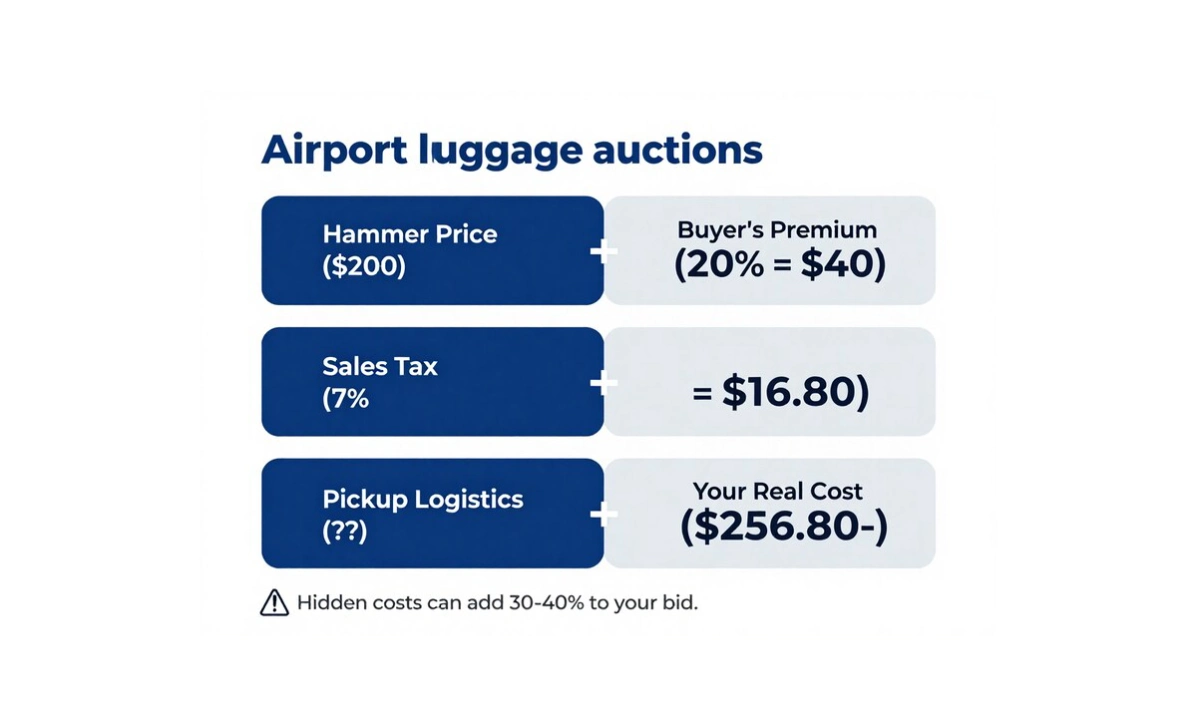
Example True Cost Breakdown:
- Winning Bid (Hammer Price): $200
- Buyer’s Premium (20%): +$40
- Subtotal for Tax: $240
- Sales Tax (7%): +$16.80
- Total Due at Payment: $256.80 …and that’s before you arrange to pick it up.
[Add Image Here – A simple infographic showing the “True Cost” formula: Hammer Price + Buyer’s Premium + Tax + Logistics = Your Real Cost]
Smart Tip: Before you bid, find the auction terms, calculate your maximum true cost, and stick to it. Never bid based on the hammer price alone.
2. Confusing Different Types of “Lost Luggage” Auctions
Not all auctions are the same. Beginners often lump them together, leading to confusion and misplaced expectations.
- Airline Contractor Sales (e.g., Unclaimed Baggage): This major company purchases unclaimed luggage in bulk from airlines, sorts it, cleans it, and resells items individually in their store or online. You are not buying a mystery suitcase. You’re buying a specific, seen item.
- Government & Municipal Surplus Auctions: These are true auctions, often found on sites like GovDeals. They sell items lost at TSA checkpoints or left in airport terminals. These are usually sold in lots (e.g., “Box of assorted electronics”) and are truly “as-is.”
- Private Liquidation Auctions: Other companies may auction lots from multiple sources, including lost cargo.
The Mistake: Expecting the curated, single-item experience of Unclaimed Baggage when you’re bidding on a sealed “mystery box” from a surplus auction. Know which platform you’re on and what you’re actually buying.
3. Getting Caught in the “Gambler’s High” of Bidding
The auction format is designed to create excitement. The clock ticks down, you get outbid, and the urge to “win” can override your budget. This emotional state—the suitcase gambling mindset—is a major profit killer.
You’re no longer bidding based on an item’s value but on the desire to beat others. This leads directly to overpaying for a lot of unknown content. The thrill of victory is quickly replaced by regret when you’re paying $150 for a box that might contain $50 worth of common hoodies and phone chargers.
Smart Tip: Use the auction platform’s “max bid” feature. Set your absolute maximum true cost at the beginning and walk away. Let the system bid for you. If you’re outbid, it was meant to be.
4. Assuming Items Are Functional or Complete
Every seasoned buyer knows the golden rule: All sales are final, and everything is sold “as-is.” This legal term means there are zero guarantees.
- Electrics & Electronics: That laptop or camera lot? Assume the batteries are dead, cords are missing, and there’s no way to test if they power on.
- Condition: Clothing may have stains or tears. Luggage itself may have broken wheels or zippers.
- Contents: A “sealed suitcase” lot means you cannot inspect it. You are bidding on a literal black box.
The mistake is filling in the blanks with optimistic assumptions. The correct mindset is to assume the worst and base your bid value on that. If you find working electronics or pristine designer items, consider it a bonus, not an expectation.
5. Ignoring Pickup Deadlines and Logistics
This is the most stressful post-auction mistake. Auction houses have strict, non-negotiable windows for payment and pickup—often just 1-3 business days.
Consequences of missing deadlines:
- You forfeit the item.
- You lose all the money paid.
- You may be banned from future auctions.
Before you bid, you must have a concrete plan:
- Can I pay immediately via the required method (wire, cashier’s check, etc.)?
- Where is the pickup location, and what are the pickup hours? Is it a 4-hour drive away?
- Can I physically transport the items I’m bidding on? A “pallet of assorted goods” requires a truck or van.
[Add Image Here – A simple checklist graphic titled “Pre-Bid Logistics Check”: Location? Pickup Hours? Vehicle Needed? Payment Method Ready?]
6. Falling for Social Media Scams and “Mystery Box” Hype
Inspired by viral “luggage haul” videos, countless scams have popped up. Beginners see a too-good-to-be-true deal on social media for a “guaranteed designer mystery suitcase” and get burned.
Red Flags of a Scam Auction Site:
- Prices seem oddly low for “premium” promises.
- The website is poorly designed and has broken links.
- You can’t find verifiable contact information or a physical address.
- The terms of service are vague or non-existent.
- They only accept non-reversible payment methods like wire transfers or cryptocurrency.
The Safe Path: Stick to well-known, established platforms with clear business histories and buyer terms. When in doubt, search the company name alongside “scam” or “reviews” to see other buyers’ experiences.
7. Having Unrealistic Expectations About “Treasure.”
This mistake underpins all others. Media highlights the one-in-a-million find of jewelry or vintage cameras, not the thousands of lots containing used jeans, paperback books, and toiletries.
A realistic lost luggage auction lot is more likely to contain:
- Common, fast-fashion clothing
- Toiletries (often discarded during pickup)
- Travel accessories like neck pillows
- Ordinary shoes and sneakers
- Non-working electronics and chargers
Valuable items like high-end cameras, luxury bags, or unique artifacts are the rare exception. Base your bids on the value of the common items, not the dream of a rare find. This is a surplus goods market, not an antique roadshow.
Your First Auction: A Smart Beginner’s Strategy
Now that you know the pitfalls, here’s how to start strong:
- Observe First: Watch several auctions from start to finish without bidding. See what lots actually sell for.
- Start Small: Your first bid should be on a low-cost, local lot. Treat it as a paid learning experience for the pickup and inspection process.
- Network: Talk to other buyers at pickup. Most are happy to share which auction houses they trust and which to avoid.
- Calculate Everything: Make your “True Cost” calculation a non-negotiable first step for every single lot you consider.
By shifting your mindset from treasure hunter to informed surplus buyer, you can navigate airport lost luggage auctions with confidence. The goal isn’t to get rich quick but to make strategic purchases, avoid losses, and perhaps occasionally enjoy the genuine thrill of a great find.
Happy—and smart—bidding.