
Ever feel like you’re the only one putting in effort?
You speak—no one really listens. You contribute—nothing comes back. You’re doing your part, but something still feels off. That frustration is more common than most people admit, and it usually points to the same missing piece: there’s no real back-and-forth happening.
That’s exactly where Duaction comes in.
In this guide, I’ll walk you through the meaning of Duaction, how it actually works in everyday situations, and—just as importantly—when not to use it.
What Is Duaction? (A Plain, Simple Definition)
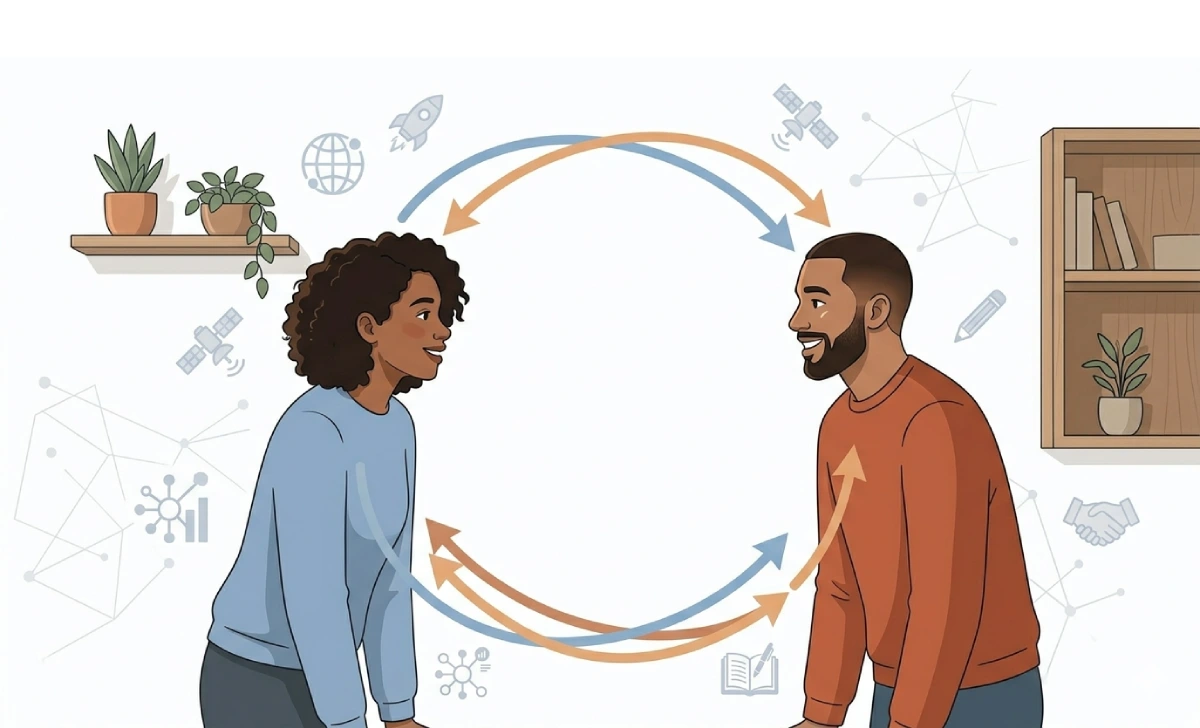
At its core, Duaction describes a two-way action process. Think of the word itself: “duo” (two) + “action.” It’s not one person doing something while another person just receives it. Both sides actively participate, respond, and adjust based on what the other does.
The meaning of Duaction is really about balance. Not just cooperation—where people split tasks—but a genuine feedback loop where each action shapes the next.
A good way to picture it: imagine a conversation where both people are truly paying attention. You say something. The other person responds thoughtfully. You adjust. They adjust. That back-and-forth? That’s Duaction in its simplest form.
In more structured settings, Duaction describes any process where two parties—people, teams, or even a person and a software tool—continuously influence each other to reach a shared goal.
How Duaction Works in Real Life
You’ve probably used Duaction without having a name for it. Here are a few honest, everyday examples that most people will recognise:
A parent and a child working through a disagreement. A parent sets a limit. The child explains how they feel about it. The parent listens and adjusts slightly. The child agrees to a middle ground. Neither “won”—both shaped the outcome. That’s Duaction at home.
Two coworkers are building on each other’s ideas. One person sketches a rough plan in a meeting. A coworker asks a pointed question. Together, they land on something better than either had alone. This is different from just dividing tasks—it’s real-time give-and-take.
A fitness app that adjusts to you. You log your steps. The app notices you’re consistently hitting your goal and suggests a new one. You push harder. The app updates again. That’s a simple, quiet form of Duaction between a person and a device. If you’re curious about tools that actually do this well, this guide to stress-free digital habit trackers covers some of the best options available right now.
In every case, neither side is passive. Both are acting and reacting.
Why Duaction Matters (Especially Over Time)
Here’s what most articles skip: what happens if you don’t use Duaction.
Think three to five years ahead. If your relationships—at work or at home—are consistently one-sided, you start to carry more than your share. That leads to quiet burnout, not the dramatic kind, but the slow kind where you stop caring. Projects stall. People disengage. Systems break down—not because of one big failure, but because the feedback loop was never there.
On the other side, people who practice Duaction early tend to describe the same thing: things just feel less heavy. Not because the workload disappears, but because the effort is shared. This kind of intentional back-and-forth also pairs well with broader lifestyle habits worth building—the best lifestyle tips tend to share this same thread: small, consistent adjustments made in response to real feedback, not rigid routines followed blindly.
From my own experience applying this in team settings, I noticed three changes fairly quickly:
Fewer misunderstandings. Because you’re checking in regularly, small problems get caught before they grow. You’re not guessing what the other person needs.
Better long-term results. Quick fixes feel good for a day. Duaction builds something that adapts. A team that practices it doesn’t just solve today’s problem—they get better at solving the next five.
Less burnout. When only one person carries everything, exhaustion follows. Duaction spreads the load. Both sides feel responsible, so no one feels solely responsible.
Duaction vs. Collaboration: What’s the Difference?
This is one of the more common questions, and it’s worth being direct about it.
Collaboration often means working side by side on separate pieces. You do your part, I do mine, and we combine them at the end.
Duaction goes further. Your actions directly shape what I do next—and mine shape yours. It’s a collaboration with a feedback loop built in.
Think of it like this: two people building separate IKEA furniture in the same room is collaboration. Two people building the same piece together, handing each other parts, calling out when something doesn’t fit—that’s closer to Duaction.
When NOT to Use Duaction (This Part Matters)
To be fair, Duaction isn’t always the right approach. And knowing when to skip it is just as useful as knowing when to apply it.
In a crisis. If a system crashes, someone gets hurt, or time is extremely short, you don’t have the luxury of mutual back-and-forth. You need a clear decision and fast follow-through. Duaction slows things down when speed is everything.
When trust is missing. If one side is defensive, dishonest, or checked out, forcing a two-way process can actually make things worse. Duaction requires both parties to engage genuinely. Without that, it just creates confusion.
When one side is clearly the expert. Sometimes one person has the knowledge and the other doesn’t—and that’s fine. If you’re new to a job or skill, a one-way flow of guidance makes more sense than trying to create artificial back-and-forth.
Use Duaction when you have the time for it, when both sides are willing, and when the situation genuinely calls for shared influence. In any other case, hold off.
Duaction Examples Outside of Work
One gap I’ve noticed in most explanations of Duaction is that they stay too close to professional settings. But this process shows up everywhere.
Cooking with someone. One person handles the chopping, tastes the dish, and says it needs more salt. The other adjusts. Both keep tasting and tweaking. That’s Duaction in the kitchen—and it works whether you’re throwing together a weeknight staple or trying something a little more adventurous, like crocolini, which tends to spark exactly this kind of collaborative back-and-forth between two people figuring out a new recipe together.
Texting a close friend. You send a voice note, they reply with their honest take, you send a longer follow-up. Back and forth. Real exchange.
Reading a book and journaling. Even solo, a version of Duaction can happen: a chapter shapes what you write, and your writing changes how you read the next chapter. It’s a loop, just internal.
Try This Today (One 30-Second Step)

You don’t need a major change to start experiencing Duaction. Just pick one interaction today—a meeting, a text thread, a conversation at home—and try this:
After you say something, pause and ask: “What’s your take on that?”
Then wait. Don’t fill the silence. Let the other person respond. See what shifts.
That single habit, done consistently, is where Duaction starts.
Final Thoughts
We live in a time when most exchanges feel shallow—quick replies, automatic responses, people half-listening. That one-sided effort adds up, and eventually, it drains you.
Duaction doesn’t fix everything. But it offers something simple and real: the experience of being heard and contributing to what happens next. Shaping something together instead of just sending information back and forth.
Start small. Pick one conversation this week and make it genuinely two-way. Notice how it feels.
My guess? It’ll feel like something you’ve been missing for a while.
FAQs About Duaction
Is Duaction the same as collaboration or teamwork?
Close, but not quite. Collaboration often means working in parallel. Duaction means your actions directly influence the other person’s next move, and theirs influence yours. It’s more responsive and more personal than most teamwork setups.
Can Duaction be used by one person, or does it always require two?
Technically, Duaction involves two parties. But a version of it exists in solo practice—when you reflect on your own actions, adjust your approach, and build on what you learn. That’s a self-directed feedback loop. True Duaction, though, needs another person or system to respond.
What’s a simple example of Duaction outside of work?
A parent and child working through a disagreement. A fitness app that adjusts your goals based on your actual performance. Two friends are revising a shared document in real time. Any situation where both sides are shaping the outcome, not just completing tasks.
When should I NOT use Duaction?
Skip it in emergencies where speed matters more than balance. Skip it when trust is genuinely absent. Skip it when one person clearly holds expertise and the other needs straightforward guidance. Duaction works best in stable, willing, and reasonably equal situations.
Disclaimer: This article is for informational purposes only. The examples and suggestions shared here reflect general principles and personal observations. Results may vary depending on individual relationships, work settings, and circumstances.