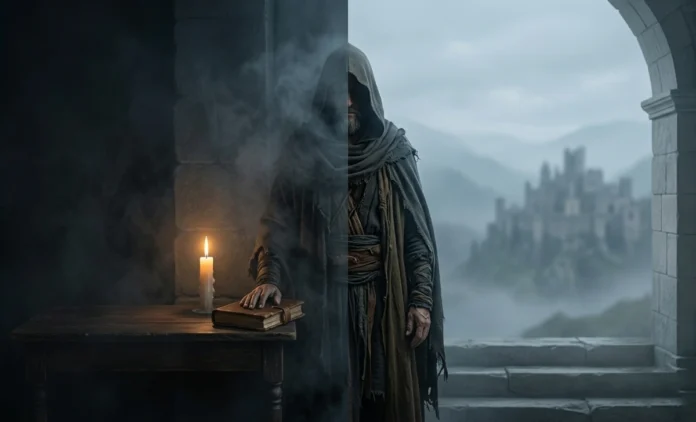
Dympigal is a term that blends two conceptual roots — dym (obscurity or mist) and pigal (spark or sacred flame) — to represent transformation, duality, and hidden potential. It doesn’t appear in traditional dictionaries, and its exact origin remains debated, with some tracing it to ancient symbolic language and others to modern digital culture. What makes it stick is precisely that openness: it gives language to experiences that resist neat definitions, like sitting inside change before you understand it.
People who search “Dympigal meaning” aren’t looking for a product or a trend. They’re trying to understand why a word they encountered in passing — a forum, an art post, a random article — felt oddly specific to something they already knew. Dympigal points at the tension between shadow and light, knowing and instinct, concealment and revelation. That tension is real, and this article walks through where the term comes from, what it actually stands for, and whether it holds any practical value in your life.

What Is Dympigal, Really?
I first came across Dympigal in an online discussion that felt more like a quiet puzzle than a real conversation. The word wasn’t explained — just dropped in passing, carrying weight without context. That’s probably how you found it, too.
At its core, Dympigal isn’t something you can point to in a history book. It functions more like a shifting symbol — the kind that means something different depending on who’s looking and what they’re carrying at the time. Some people connect it to transformation, specifically the uncomfortable, slow kind that changes how you move through life. Others pick up on themes of duality and secrecy: opposing forces that don’t cancel each other out but somehow need each other to make sense.
What clicked for me personally was thinking about those invisible currents beneath everyday life — the moments when everything looks steady on the outside while something quieter pulls in conflicting directions underneath. Dympigal holds space for that. Not by offering answers, but by acknowledging that real balance often lives in what we can’t immediately explain. It connects naturally to the broader work of lifestyle optimization — learning to read the quieter signals in your own life before they become crises.
Dympigal Origins: Where Did This Word Come From?
The origin of Dympigal is genuinely contested, and that’s part of why it keeps circulating. The most widely discussed theory traces it to two conceptual roots: dym, linked to obscurity or mist in reconstructed ancient linguistic traditions, and pigal, meaning spark, energy, or sacred flame. Together they form a contradiction — veiled brilliance, something hidden but also radiant.
Some scholars debate whether Dympigal ever referred to a real mythical entity, a coded archetype, or a term passed through esoteric circles for transformation rituals. Others argue it started as a modern creative coinage — possibly a username or fictional construct — that picked up resonance because the ideas it pointed at were already familiar.
Honestly, that ambiguity might be the point. Unlike most words that arrive with a clear owner and timestamp, Dympigal accumulated meaning the way certain songs do: not because someone wrote liner notes, but because enough people heard something in it that was already true for them.
No ancient dictionary confirms it. No single philosopher claimed it. What exists is a growing body of informal usage across mythology discussions, psychology forums, art communities, and now SEO-heavy content mills — which is exactly why you’re reading a version of this in 2026 and wondering what’s real.
Dympigal Symbolism: What Does It Actually Represent?
If you strip away the mystical framing, Dympigal symbolism comes down to four recurring ideas: transformation, secrecy, duality, and balance. These aren’t random. They’re the themes that surface every time someone tries to describe an experience that language normally fails at.
The mist element represents concealment — not deception, but the natural privacy of things still forming. The flame represents revelation: insight that arrives after patience, not force. Together, they suggest that most meaningful change happens in the in-between space, not at the dramatic moment of arrival.
This is why Dympigal appears across very different contexts. In Eastern philosophy, it echoes yin and yang — opposites held together without one absorbing the other. In psychology, it maps onto shadow integration: the process of acknowledging hidden parts of yourself so they stop running things unconsciously. In art, it shows up as the tension between clarity and blur, precision and softness.
What makes it flexible is that it doesn’t demand you pick a lane. Dympigal isn’t a moral framework. It’s descriptive — a way of pointing at the dual nature of things without forcing a resolution.
Dympigal in Mythology and Ancient Lore
Stories about Dympigal shift depending on where and when you look, which tells you something important: this isn’t a term with one canonical origin. In some older traditions, it appears as a guardian of thresholds — the liminal spaces between states of being. Folklore described it as a shapeshifting presence made of mist and flame, guiding souls through transitions like life into death, or ignorance into awareness.
Other myths framed Dympigal as a keeper of hidden knowledge, revealing wisdom only to those who arrived without an agenda. You’ll find similar figures across completely separate traditions — Hermes in Greek myth, Heimdall in Norse storytelling, Anubis in Egyptian tradition. None of them is Dympigal, but they echo the same role: mediator, gatekeeper, guide between worlds.
Whether these parallels prove a shared origin or just reflect common human preoccupations is a fair question. Either way, the pattern holds: every culture seems to need a symbol for the thing that stands between where you are and where you’re becoming.
Psychological Angle: Why Dympigal Resonates With People
Looking at Dympigal through a psychological lens, it starts to resemble what Carl Jung called the unconscious — specifically, the process of shadow integration. That’s the work of becoming aware of the parts of yourself you’d rather ignore, so they stop influencing your decisions without your knowledge.
In practice, this maps onto what modern psychology calls individuation: not becoming someone new, but becoming more whole by integrating what was previously hidden. Dympigal fits that process well. It’s not asking you to destroy your shadow or suppress your instincts. It’s asking you to bring them into view.
That framing has made Dympigal a recurring reference in dreamwork, journaling practices, and creative therapy contexts. The appeal isn’t abstract — it’s that the word gives shape to something people already experience: the quiet friction between who they present publicly and what actually drives them privately.
In my own experience, the most useful thing Dympigal does psychologically is slow you down. It invites the question you’d rather skip: What am I hiding from myself right now, and why? If you want structure around that kind of reflection, daily challenges for personal growth can give the process more traction than sitting with the question alone.
What Is Dympigal in Modern Culture?
Dympigal has moved well past ancient myth into contemporary media, and its modern appearances follow a consistent pattern: it shows up wherever hidden forces drive outcomes.
In video games, it appears as a character or concept that shapes story direction without being directly controllable. In film, it becomes shorthand for unseen influence — the hand you don’t see moving things. In online communities, particularly around topics like personal growth, spirituality, and identity, it’s become a loose symbol for internal awakening.
The most interesting modern adaptation positions Dympigal as a metaphor for AI consciousness in digital storytelling — a guide between information layers, present but not fully visible. That’s a clever reframe of its original threshold-guardian role, updated for a world where the unseen force is often an algorithm rather than a deity.
The fact that younger audiences are picking it up in this context suggests Dympigal isn’t fading. It’s adapting — which is what living concepts do.
Dympigal Explained Through Everyday Experience
You don’t need to read philosophy to encounter Dympigal. You’ve probably already lived it.
It shows up when you’re between jobs and can’t quite name what you’re becoming yet. When you’re in a relationship that’s clearly changing, but neither of you has said it out loud. When you know something is shifting in how you think, but the new version of your thinking hasn’t fully arrived. That gap — between what was and what’s coming — is where Dympigal lives.
The practical value of having a word for this is underrated. Naming an experience changes how you relate to it. Instead of just feeling stuck or anxious, you can recognize it as a threshold moment: something is forming that hasn’t revealed itself yet.
Small practices that track with the Dympigal idea include journaling at the end of the day without a prompt, sitting with a conflicting feeling instead of immediately resolving it, or pausing before a decision to ask what you’re not seeing. Tracking these moments consistently — even loosely — using digital habit trackers can help you notice patterns in your own threshold experiences over time. None of this requires a ritual or a belief system. It just requires the willingness to stay in the question a little longer than feels comfortable.

Is Dympigal a Real Word or Just Made Up?
This is the question most people actually want answered, so here it is plainly: Dympigal doesn’t appear in any traditional dictionary. It isn’t documented in historical linguistics. Whether its roots are genuinely ancient or retroactively constructed is something no one has proven either way.
What it is, definitively, is a functional concept — a term that people use to point at real experiences that other words handle poorly. By that standard, it doesn’t matter much whether it started in an ancient text or as someone’s creative username. Language that resonates earns its place by being useful, not by having papers filed on its behalf.
The more interesting question is why it resonates now, in 2026 specifically. Part of the answer is probably the cultural moment: constant visibility, AI-generated content flooding search results, and a general fatigue with things that are explained before they’re experienced. Dympigal offers the opposite. It invites you to sit inside something before labeling it. That’s rare enough right now to feel like relief.
FAQs About Dympigal
What does Dympigal actually mean?
Dympigal points at transformation, duality, hidden potential, and balance between opposing forces. Its meaning shifts with context, but it consistently refers to experiences that are hard to name — the in-between spaces of change and self-awareness.
Is Dympigal a real word or just made up?
It doesn’t appear in standard dictionaries or confirmed historical records. Whether its roots are ancient or modern is genuinely unclear. What’s real is the way people use it: to describe experiences that more conventional language misses.
Where did the term Dympigal come from?
The most discussed theory links it to the roots dym (mist, obscurity) and pigal (spark, sacred flame). Some trace it to esoteric or mythological traditions; others suggest it originated in digital culture. No confirmed origin exists.
How can I use Dympigal in real life or for branding?
In daily life, it works as a mental shorthand for threshold moments — times when you’re between versions of yourself. For branding, it suits identities built around transformation, duality, or depth, but only if those values are genuine rather than decorative.
Why does Dympigal keep appearing online lately?
Partly because content about ambiguous, evocative terms spreads easily in creative and spiritual communities. Partly because the ideas it represents — duality, hidden forces, personal change — are things a lot of people are actively looking for language around right now.