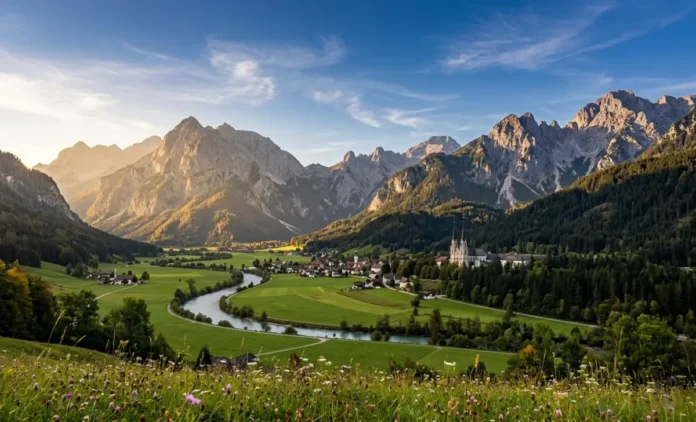
There are valleys you pass through, and then there are valleys that make you pull over, turn off the engine, and just sit there for a minute.
Enntal did that to me.
I wasn’t even planning to stop. I was cutting through Austria on a longer drive, and then the valley just… appeared. Wide, green, surrounded by hard Alpine ridges, and completely unhurried. That accidental stop turned into two full days. I’ve gone back twice since.
If you’re researching Enntal for an upcoming trip — or just trying to figure out whether it’s worth your time — this guide is for you. I’ll cover what the valley actually looks like, what you can do there, when to go, where to stay, and a few things most travel articles completely skip.
What Is Enntal and Is It Worth Visiting?
Enntal (literally “Enns Valley”) follows the Enns River through the heart of the Austrian Alps, running through Styria and into Upper Austria. It’s anchored by small towns like Haus im Ennstal, Aigen im Ennstal, and Admont, each with its own personality and practical value as a base.
Is it worth visiting? That depends on what you’re after.
If you want crowds, nightlife, and five-star shopping, look elsewhere. But if you want a valley that earns your attention through actual beauty — proper Alpine scenery, real history, and outdoor space that doesn’t feel like a theme park — then yes, Enntal absolutely delivers.
It sits close to Gesäuse National Park to the east and the Schladming-Dachstein ski region to the west, which means it’s both a destination in itself and a smart base for exploring a wider area. Many visitors overlook it entirely in favour of those bigger names. That’s your advantage — and it’s part of why heritage-focused destinations like this one tend to hold their appeal even when travel budgets tighten.

The Rich History of Enntal
What I love about Enntal’s history is that it doesn’t lecture you. It just sits there in the landscape, waiting for you to notice it.
The valley has been inhabited and travelled in for centuries. Roman roads once cut through here, connecting military and trade routes across the Alps. You can still walk stretches of old stone paths near Admont that date back to that period — no velvet rope, no audio guide, just worn rock and your own imagination.
During the Middle Ages, Admont Abbey became one of the most important religious and cultural centres in the region. Founded in 1074, it’s still standing and still active. The abbey library is genuinely stunning — it holds over 200,000 volumes and is considered one of the most beautiful monastery libraries in the world. Even if you’re not a history person, it’s hard to stand in that room and feel nothing. If you’re considering Enntal as part of a broader cultural itinerary, the heritage tourism investment guide is worth reading for context on how sites like Admont fit into the wider landscape of European cultural travel.
The valley also served as a quiet movement corridor during various regional conflicts over the centuries. No major battles, but plenty of ordinary people passing through, settling, building, surviving. You see that resilience in the farmhouse architecture, the church placements, and the way local communities still celebrate seasonal traditions with real investment — not just for tourists.
In my experience, spending even half a day in Admont gives you a far better sense of the valley’s past than any travel summary can.
Exploring the Natural Scenery of Enntal
The scenery here doesn’t build slowly. It hits you fast and then keeps surprising you as you go deeper.
The valley floor is wide and green in summer, with the Enns River running clean and cold alongside the main road. The surrounding peaks — many topping 2,000 meters — create a physical sense of enclosure that’s more comforting than claustrophobic. You feel held in by the landscape rather than hemmed in.
A few natural highlights worth knowing before you go:
Silberkar Gorge is one of the most dramatic spots in the valley. Carved by meltwater over thousands of years, the gorge has narrow rock walls, mossy surfaces, and a stream that runs fast and loud. It’s accessible on foot and doesn’t require technical gear — just solid shoes and the willingness to get a little damp.
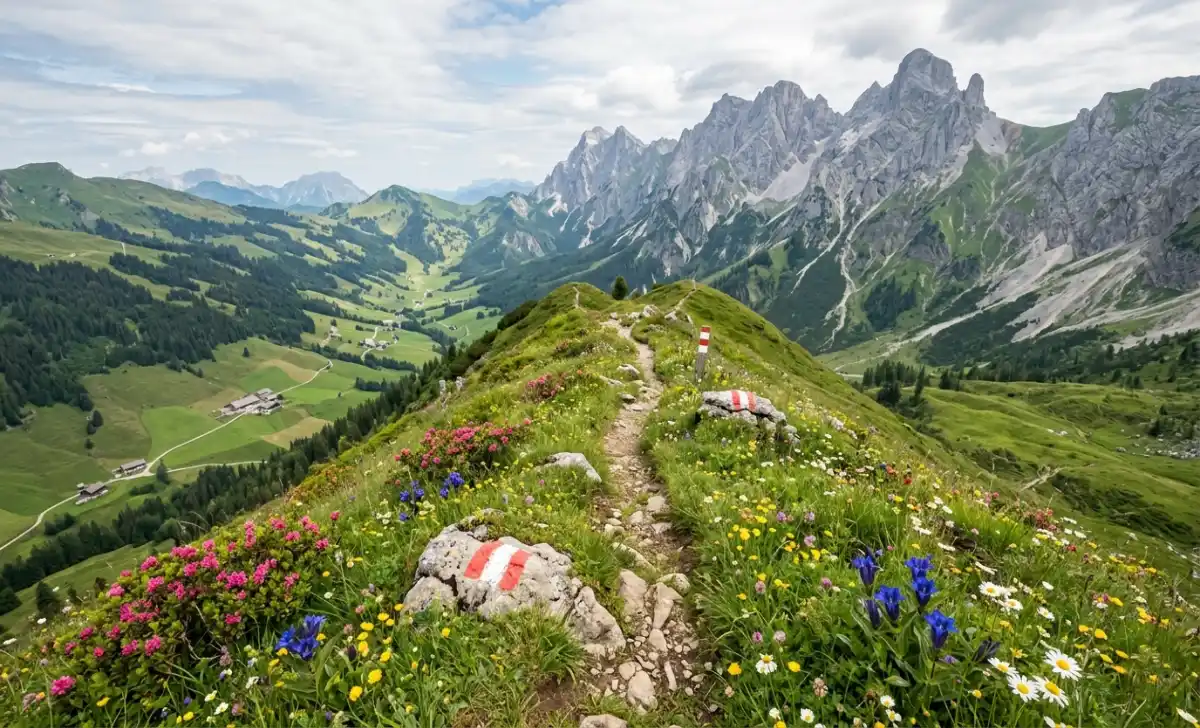
The meadows above Haus im Ennstal are best in late May and early June when wildflowers are at their peak. It sounds clichéd until you’re actually standing there watching the colours move in the wind. Bring a proper camera if you have one.
The lakes near the valley edges — including some smaller alpine lakes on the plateau routes — are cold even in July but absolutely clear. Some are reachable by car, others only on foot.
Seasonally, here’s what to expect:
- Late spring (May–June): Wildflowers, manageable trails, fewer crowds. The best light for photography in the morning.
- Summer (July–August): Lush but occasionally hazy. Busier on weekends. Best for full-day hikes.
- Early autumn (September–October): Forests turn gold and red. Temperatures drop, but the air is sharp and clear. My personal favourite.
- Winter (November–March): Snow-covered and beautiful, but some trails close. Best for skiing and cold-weather walks.
Things to Do in Enntal: Outdoor Activities for Every Level
The Enntal hiking scene is one of its strongest selling points, and it genuinely covers a wide range of abilities. You don’t have to be an experienced mountaineer to enjoy the trails here.
Hiking
The main valley trail runs along the Enns River and is almost entirely flat. It takes around two to three hours at a relaxed pace and works well for families or anyone who just wants to walk without a climb. You’ll pass old bridges, meadows, and occasional viewpoints without breaking much of a sweat.
The Admont Basin loop is a moderate half-day hike (about 3–4 hours) that takes you above the valley floor with views back toward the abbey and surrounding peaks. It’s well-marked and manageable for anyone with basic fitness.
The Natterriegel summit trail is for those who want a proper challenge. It’s a full-day effort, gains significant elevation, and rewards you with panoramic views across the valley and into Gesäuse National Park. Don’t attempt it without good shoes, water, and a weather check.
Always download your map offline before heading into the upper valley. Mobile coverage drops fast above certain elevations, and conditions can change quickly even in summer.
Cycling
The valley has a well-maintained cycling path that follows the Enns River for much of its length. It’s flat, scenic, and suitable for casual riders. You can rent bikes in Haus im Ennstal or Admont and cover a good stretch in a day without overcommitting.
For more demanding routes, the roads climbing toward the plateau areas are popular with road cyclists. Expect long climbs but equally satisfying descents.
Rock Climbing
The limestone cliffs along the valley edges — particularly near Gesäuse — attract climbers from across Austria and Germany. There are routes for beginners and serious technical climbers alike. If you’re not experienced, local outfitters in the area offer introductory climbing sessions with guides.
Winter Activities
Enntal skiing doesn’t get the marketing that Schladming-Dachstein does, but that’s partly what makes it worth considering. The Hauser Kaibling area, accessible from Haus im Ennstal, is a serious ski mountain with varied terrain and notably fewer lift queues than the more famous resorts nearby. Snow reliability is generally good from late December through March.
Cross-country skiing and winter walking trails are also available for those who prefer the quieter pace of the season.
Wildlife Watching
If you’re patient and quiet, the valley rewards you. Red deer are common in the forested zones, particularly at dawn and dusk. Golden eagles and other raptors are visible above the cliff faces, especially in spring. The Gesäuse National Park, just east of Admont, has a more structured wildlife observation setup if that interests you.
Local Food and Culture in Enntal
Austrian food doesn’t try to be complicated, and that’s one of its strengths.
Kaiserschmarrn — the shredded pancake dusted with powdered sugar and served with warm plum compote — tastes best after a long walk. It’s the kind of simple dish that earns its reputation. Most guesthouses and hut restaurants in the valley serve it, and the quality is consistently good.
Beyond that, look for: Tafelspitz (boiled beef with broth and horseradish), Knödel (bread or potato dumplings served with everything), and Brettljause — a cold spread of cured meats, cheese, pickles, and dark bread that functions as both a snack and a proper meal depending on your appetite.
The cultural calendar is worth checking before you visit. Summer and harvest festivals in the valley towns involve live music, local crafts, and food that doesn’t come from a catering truck. These events are genuinely community-centred rather than tourist-facing, which makes them more interesting to attend.
Local artisans in the area still work in wood carving, textile production, and ironwork — crafts tied to the region’s history. Small workshops in Aigen im Ennstal and Admont are occasionally open to visitors.
Where to Stay in Enntal
Your base choice matters here more than in some destinations, because the valley is long and driving between sections takes time.
Admont works well if you want history and culture close by. It’s also the most practical base for visiting the abbey and accessing the Gesäuse trails.
Haus im Ennstal is better for outdoor-focused visits — closer to ski lifts in winter and well-positioned for hiking the central valley trails.
Aigen im Ennstal is quieter and a good choice if you want to avoid even the modest crowds that form in peak season.
For accommodation types:
- Guesthouses and family-run pensions are the best value and most authentic. Most include breakfast, and the owners will happily give you trail recommendations that never appear online.
- Alpenhotel-style properties with spa facilities exist near Haus im Ennstal for those who want recovery amenities after active days.
- Camping along the valley is genuinely excellent in summer. Some sites sit almost directly on the riverbank.
- Hostels in Admont cater to budget hikers and offer basic, clean accommodation close to the main attractions.
Book ahead for weekends in July–August and any week around major festivals. Outside those windows, last-minute availability is usually fine. If you’re organising travel for a larger group, the logistics here — split accommodation across Admont and Haus im Ennstal, shared trailhead transport, coordinating different ability levels on hiking days — benefit from proper planning upfront. This guide to advanced group travel planning is a useful reference for getting those moving parts sorted before you arrive.
Getting to Enntal
From Vienna, the drive takes roughly two to two and a half hours via the A1 and then the S6/B146 route into the valley. It’s a straightforward and scenic drive once you leave the motorway.
From Salzburg, allow about an hour and forty minutes heading east via the A10.
By train, the main line through the valley stops at Selzthal, Admont, and Haus im Ennstal. Connections from Vienna via St. Pölten or Linz are available, though journey times are longer than driving. Local buses connect the train stations to smaller villages, but service is limited on evenings and weekends — check schedules in advance.
Having your own car gives you the most flexibility, especially for reaching trailheads and smaller viewpoints that don’t sit on bus routes.
Best Time to Visit Enntal
The clearest answer: late May through June or September through early October.
In late spring, trails have dried out after snowmelt, wildflowers are at their peak, and the valley hasn’t yet hit its summer visitor volume. Days are long, and temperatures are comfortable for walking.
In early autumn, the crowds thin considerably, the forest colours are at their best, and the mountain air has that sharp, clean quality that’s hard to describe until you’ve experienced it. Visibility on clear days is excellent.
July and August work well, but come with more visitors and occasional haze. Weekends fill the more popular parking areas by mid-morning.
Winter is rewarding for skiers and those who genuinely love cold-weather landscapes. Just plan ahead — some services reduce hours or close between January and March.
Final Thoughts
Enntal doesn’t demand your attention. It doesn’t have a famous cable car or a lake that gets plastered across every travel magazine. What it has is something harder to package: a valley that feels genuinely whole. History, landscape, and everyday local life sit together without one overshadowing the others.
Go in autumn if you can. Walk the valley trail slowly. Spend time in the abbey. Eat the Kaiserschmarrn somewhere unremarkable-looking and order a second one. Find a viewpoint where you can see the full length of the valley and just stay there for a while.
FAQs
What is Enntal known for, and is it worth visiting?
Enntal is known for its Alpine scenery, the Admont Abbey (one of Austria’s most important historical sites), and access to outdoor activities including hiking, cycling, and skiing. It’s worth visiting if you want a less commercialised Austrian valley experience with genuine history, good trails, and local food. It’s not the right fit if you’re looking for nightlife or luxury resort amenities.
What are the best things to do in Enntal in summer and winter?
In summer: hiking the main valley trail or the Natterriegel summit route, cycling along the Enns River, visiting Admont Abbey and Silberkar Gorge, and attending local festivals. In winter: skiing at Hauser Kaibling, cross-country skiing on groomed trails, winter walking paths, and visiting the abbey and indoor cultural sites.
Where should I stay in Enntal — hotels, guesthouses, or camping?
For most visitors, family-run guesthouses in Admont or Haus im Ennstal offer the best combination of value, local knowledge, and atmosphere. Camping along the river is excellent in summer. Alpenhotel-style properties near Haus im Ennstal suit those who want spa facilities after active days. Budget travellers should look at hostels in Admont.
When is the best time to visit Enntal for hiking and outdoor activities?
Late May through June for wildflowers and quieter trails. September through early October for autumn colour, clear visibility, and cooler temperatures. July and August are good but busier. Always check trail conditions before heading into the upper valley — some routes close after heavy rain or remain icy into early spring.