

Most businesses don’t die because they grew too slowly.
They die because they grew too fast.
You land a few big clients, revenue climbs, and suddenly it feels like the right time to hire more people, open new markets, and build out the team. But without the right foundation in place, that growth doesn’t accelerate you — it buries you.
In this guide, you’ll learn the most common scaling mistakes founders and operators make, why they happen, and what you can do to scale your business without blowing it up in the process.
What Does “Scaling” Actually Mean?
Before we get into mistakes, let’s be precise.
Scaling means growing your revenue faster than your costs. A business that doubles revenue while only increasing costs by 20% is scaling well. A business that doubles revenue while tripling headcount and burning through cash? That’s just growing — and it’s dangerous.
According to the U.S. Small Business Administration, approximately 20% of businesses fail in their first year. By year five, roughly 50% are gone. The causes are rarely market-related. More often, they trace back to operational and strategic errors made during a growth phase.
1. Scaling Before You Have Product-Market Fit
This is the most expensive mistake on the list.
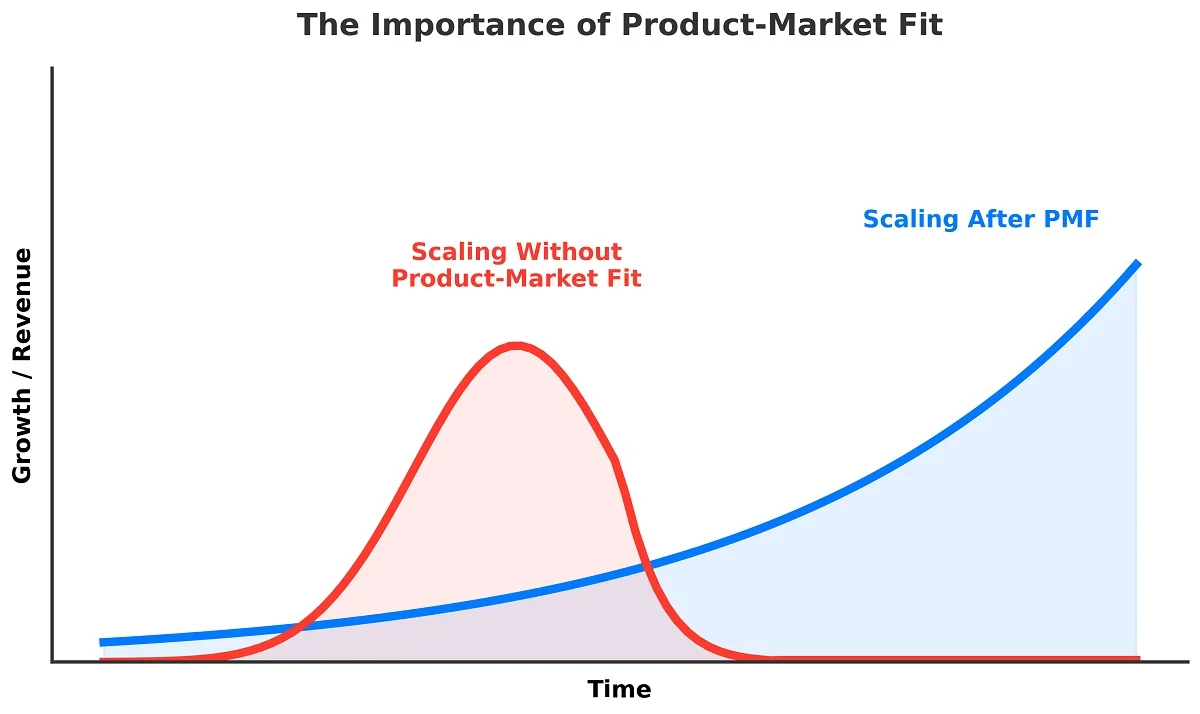
Product-market fit means your product solves a real problem for a specific group of people — and that group actively wants it. Without it, you’re pouring fuel into a car with no engine.
Signs you don’t have product-market fit yet:
If you’re still testing whether your idea has real traction — these signs can tell you if you’re crossing from side hustle into a real business — here’s what to watch for before scaling:
- Customers churn within 30–60 days
- You’re discounting heavily just to close deals
- Your sales cycle is unusually long or inconsistent
- You can’t describe your ideal customer in one sentence
Scaling at this stage multiplies the problem. You hire more salespeople to sell something customers don’t want. You build more features that don’t fix the core issue. You spend more on marketing to fill a leaking bucket.
What to do instead: Get to a retention rate above 80% before you scale. Talk to your best customers. Understand why they stay. Then build your go-to-market strategy around that.
2. Ignoring Cash Flow During a Growth Phase
Revenue going up feels great. Until you check your bank account.
Cash flow and profit are not the same thing. You can be profitable on paper and still run out of money. This happens because growth consumes cash — you pay for inventory, staff, and infrastructure before customers pay you.
A Harvard Business School study found that 82% of business failures are caused by cash flow problems. Not bad products. Not weak marketing. Cash.
Watch these numbers closely when you’re scaling:
| Metric | Why It Matters |
|---|---|
| Days Sales Outstanding (DSO) | How long it takes to collect payment |
| Burn Rate | How fast you’re spending cash |
| Runway | How many months of cash you have left |
| Gross Margin | What’s left after direct costs |
What to do instead: Before you scale, build a 13-week rolling cash flow forecast. And if you’re not clear on how taxes affect your cash position during growth, this small business tax guide covers what founders often miss.
3. Scaling Without Systems and Processes
Your first 10 employees can operate on instinct and direct communication. Your first 50 can’t.
When you scale without documented processes, every new hire invents their own way of doing things. Quality becomes inconsistent. Errors multiply. You spend more time managing chaos than building the business.
This is one of the most common — and most avoidable — scaling mistakes.
What “scaling without systems” looks like in practice:
- No standard onboarding for new hires
- Customer service quality varies by rep
- No clear approval process for spend or contracts
- Tribal knowledge held by 2–3 people who become bottlenecks
What to do instead: Document your 10 most critical processes before you hire for them. Use tools like Notion, Loom, or a simple Google Doc. If you want to go further, AI-powered tools are changing how teams document and automate processes — worth knowing before you build your stack. The goal isn’t bureaucracy — it’s repeatability.
4. Making Hiring Mistakes When Scaling
Hiring is where most scaling businesses lose control.
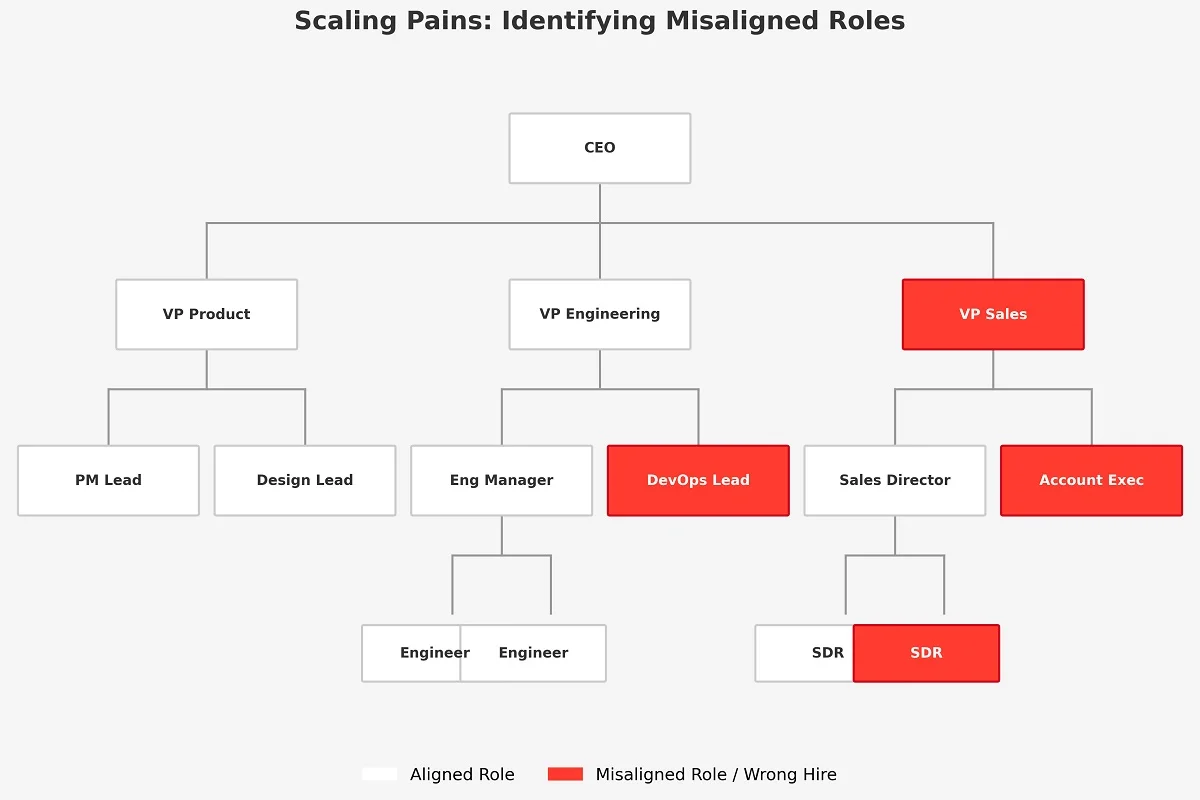
The pressure to hire fast is real. But hiring the wrong people — or hiring too many people too quickly — is one of the leading hiring mistakes when scaling that founders regret.
Common patterns:
- Hiring for speed over fit
- Promoting top individual contributors into management before they’re ready
- Adding headcount before you’ve validated that the role is actually needed
- Hiring generalists when you need specialists (or vice versa)
It costs an average of 1.5–2x an employee’s annual salary to replace them — factoring in recruiting, onboarding, and lost productivity. Scale fast with bad hires and that adds up quickly.
What to do instead: Write a hiring scorecard for every role before you post the job. Define what “great” looks like in 90 days. And hire at least one person per function before building a team under them.
5. Lack of Leadership Alignment During Growth
The leadership team that got you to $1M probably needs to evolve to get you to $10M.
As companies scale, responsibilities shift. The founder who was doing everything starts needing to delegate. VPs who were close to execution need to think more strategically. And if leadership isn’t aligned on the direction — and the pace — things fracture.
You’ll see this show up as:
- Conflicting priorities across departments
- Teams pulling in different directions
- Senior hires who clash with founding team culture
- Decisions that get made and then unmade
Leadership alignment during growth isn’t just about getting along. It’s about agreeing on what you’re building, how fast, and at what cost.
What to do instead: Run a quarterly leadership offsite — even a half-day — focused only on strategic alignment. Not operational reviews. Alignment. Who owns what. What matters most. What you’re saying no to.
6. Expanding Into New Markets Too Early
Moving into a second market before you’ve dominated the first one is a classic scaling mistake.
It feels like diversification. It’s actually dilution. You spread your team, your budget, and your attention before you’ve built the machine that earns it.
Peter Thiel wrote in Zero to One that great companies “start small and monopolize.” The goal is to own a specific niche completely before expanding — not to be 10% of 10 markets.
Signs you’re expanding too early:
- You have less than 30% market share in your primary segment
- Your core product still has known quality or retention issues
- Your ops team is still figuring out the basics
What to do instead: Define what “winning” looks like in your current market. Hit that target first.
7. Underestimating the Cost of Complexity
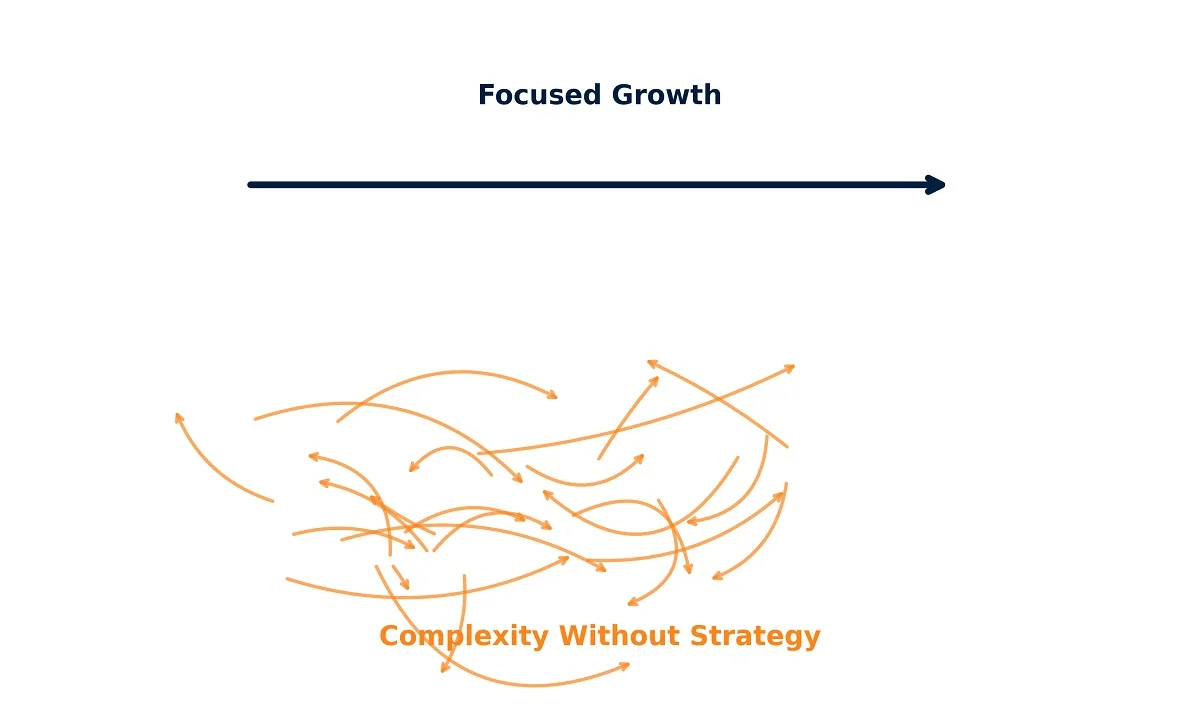
Every new product, market, or customer segment adds complexity. And complexity costs more than you think.
A second pricing tier isn’t just a pricing change — it’s a CRM update, a contract revision, a support training update, and a billing system tweak. Multiply that across a year of growth decisions and you’ve quietly doubled your operational overhead.
What to do instead: Before adding anything new, ask: “What does this break?” Then assign someone to own that answer.
 The Scaling Mistakes Checklist: What to Verify Before You Scale
 The Scaling Mistakes Checklist: What to Verify Before You Scale
Use this before making any major scaling decision:
- Customer retention rate above 80%
- Gross margins above 50% (SaaS) or 40% (product/services)
- 6+ months of cash runway
- Core processes documented and repeatable
- Leadership team aligned on 12-month priorities
- Hiring scorecard exists for every open role
- Clear definition of “winning” in your current market
If you can check every box, you’re ready. If you can’t, you know what to fix first.
Sustainable Growth Strategies That Actually Work
Avoiding mistakes is half the battle. The other half is building growth deliberately.
The most durable companies scale by doing a few things consistently:
1. Nail one customer segment before expanding. Own something specific. Then grow from there.
2. Build for repeatability, not heroics. If your best month required superhuman effort from the team, you don’t have a scalable model — you have a sprint.
3. Treat your P&L like a product. Review it monthly. Know your unit economics cold. The best operators can tell you their CAC, LTV, and payback period without looking it up.
4. Hire ahead of need — but just barely. Hire one quarter before you hit the wall, not one quarter after.
5. Protect the culture deliberately. Culture doesn’t scale automatically. You have to codify it, model it, and hire for it. How customers perceive your brand during rapid growth matters too — your online reputation can take a hit faster than you’d expect.
FAQ: Common Questions About Scaling Mistakes
What’s the most common scaling mistake startups make?
Scaling before achieving product-market fit. Most founders feel pressure to grow quickly and mistake revenue spikes for validation. If customers aren’t coming back or referring others, you haven’t found your fit yet — and scaling will just accelerate the churn.
How do you know if your business is ready to scale?
Look at three things: retention (are customers staying?), margins (do you make money per unit?), and repeatability (can your team execute consistently without you?). If all three are solid, you’re ready.
Can scaling too fast kill a profitable business?
Yes. A profitable business can run out of cash during a growth phase because revenue recognition lags behind expenses. Hiring, infrastructure, and inventory all cost money before the revenue from new customers arrives.
What’s the difference between growing and scaling?
Growing means revenue and costs increase together. Scaling means revenue grows faster than costs. A business that adds $1M in revenue but also adds $900K in costs is growing, not scaling. The goal of scaling is improving efficiency as you expand.
How important is leadership alignment when scaling?
It’s critical — and often underestimated. Misaligned leadership is one of the top causes of stalled growth in businesses that have the right product and market. When executives disagree on priorities, teams get conflicting signals, hiring slows down, and execution suffers.
What systems should be in place before scaling?
At minimum: a documented sales process, a repeatable onboarding flow for customers, a hiring and onboarding process for employees, a finance and cash flow tracking system, and clear decision-making authority across the leadership team.
Conclusion1: Scale With a Plan, Not Just Momentum
Growth is exciting. It’s also where most businesses make their worst decisions.
The scaling mistakes covered here aren’t obscure edge cases — they’re the same patterns that appear in post-mortems of failed companies, and in the regrets of founders who scaled too fast. If you ever reach the point of exiting, the first 30 days after selling come with their own set of decisions most founders aren’t prepared for.
The fix isn’t to grow slowly. It’s to grow deliberately.
Three things to do this week:
- Audit your retention and cash flow numbers before making any scaling decision
- Document your 5 most critical operational processes
- Get your leadership team aligned on what you’re saying no to this quarter
Growth is a tool. Use it with intent.
