
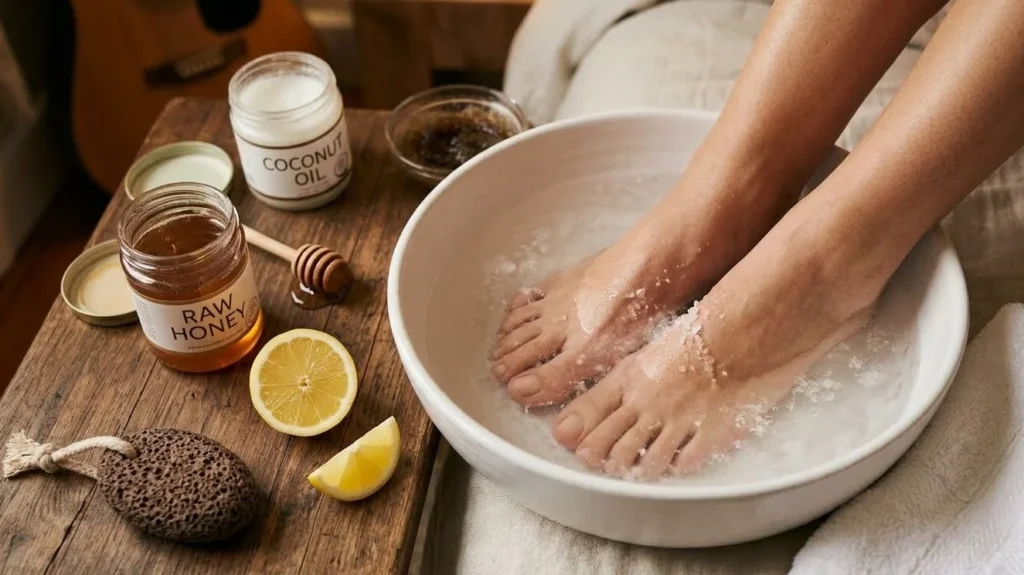
Cracked heels affect roughly 20% of adults. They start as dry, rough skin around the heel rim and — without treatment — split into painful fissures that bleed, snag on socks, and risk infection. The good news: most cases respond well to consistent home treatment using ingredients you already own.
This guide covers why heels crack, which natural remedies have the strongest evidence, and a clear step-by-step routine to follow at home.
Key Takeaways
- Cracked heels are caused by moisture loss, pressure, and friction — not just dry weather
- A 15–20 minute warm soak 2–3 times per week softens skin enough for safe exfoliation
- Coconut oil and raw honey are the most effective overnight treatments
- Deep or bleeding cracks need a liquid bandage — not more scrubbing
- See a podiatrist if cracks show redness, swelling, or don’t improve within 2 weeks
- People with diabetes should consult a doctor before using any exfoliation tools
Why Do Heels Crack? The Real Causes
Heel skin is thicker than skin elsewhere on your body — it has to handle your full body weight with every step. But thickness makes it rigid. When the fat pad beneath the heel spreads under pressure and the skin has lost elasticity from dryness, it cracks outward like dry clay.
The main causes:
Moisture loss: Long hot showers, low humidity, harsh soap, and cold air all strip the skin’s natural oils. Once that protective barrier is gone, water evaporates faster than skin can retain it.
Mechanical pressure: Standing on hard floors for hours, or wearing open-back shoes (sandals, slides, backless clogs), lets the heel fat pad spread sideways under load. The skin can’t stretch fast enough — it splits.
Footwear friction: Shoes with stiff heel counters create constant rubbing. The skin responds by building up callus — which is protective at first, but eventually cracks under pressure.
Health conditions: Thyroid disorders, diabetes, eczema, psoriasis, and vitamin B3 or zinc deficiency can all make cracked heels worse or harder to heal. If your heels crack year-round without an obvious cause, it’s worth mentioning to a doctor.
The Best Natural Ingredients for Cracked Heels
You don’t need specialty products for mild-to-moderate cracking. These five ingredients cover every stage of treatment.
Coconut oil is the most well-studied natural emollient for dry skin. It penetrates the outer skin layer and reduces water loss. Apply it warm — it melts at 76°F — for better absorption. Works best as an overnight treatment under cotton socks.
Raw honey pulls water into the skin (humectant) and has documented antibacterial activity from hydrogen peroxide and defensin-1 proteins. It’s especially useful when cracks are slightly open — it moisturizes and lowers infection risk simultaneously.
Olive oil is rich in oleic acid and vitamin E. It softens callused skin and works as a good carrier when mixed with sugar for a scrub. Less greasy than coconut oil overnight.
Apple cider vinegar (ACV) has a pH of around 3.1 — mildly acidic enough to break down the protein bonds in tough callus tissue when used as a diluted soak. Use 1 part ACV to 2 parts warm water. Limit to 10–15 minutes; longer soaks can irritate.
Sugar or sea salt provides mechanical exfoliation. Sugar is gentler, salt is coarser — choose based on how thick your calluses are. Mix with oil to prevent micro-tears from dry scrubbing.
Step-by-Step Home Treatment Plan
Follow this routine 2–3 times per week. Most people see meaningful improvement within 7–10 days.
Step 1: Soak (15–20 Minutes)
Fill a basin with warm — not hot — water. Hot water feels soothing but strips oils faster than warm water does.
Add one of the following:
- 2 tablespoons of Epsom salt (draws out inflammation, softens skin)
- 2 tablespoons of baking soda (neutralizes odor, loosens flaky skin)
- 1/4 cup ACV mixed into 1/2 cup warm water (for thick calluses)
Soak for 15–20 minutes. Pat — don’t rub — dry. Move to exfoliation within 2 minutes while skin is still damp.
Step 2: Exfoliate (3–5 Minutes)
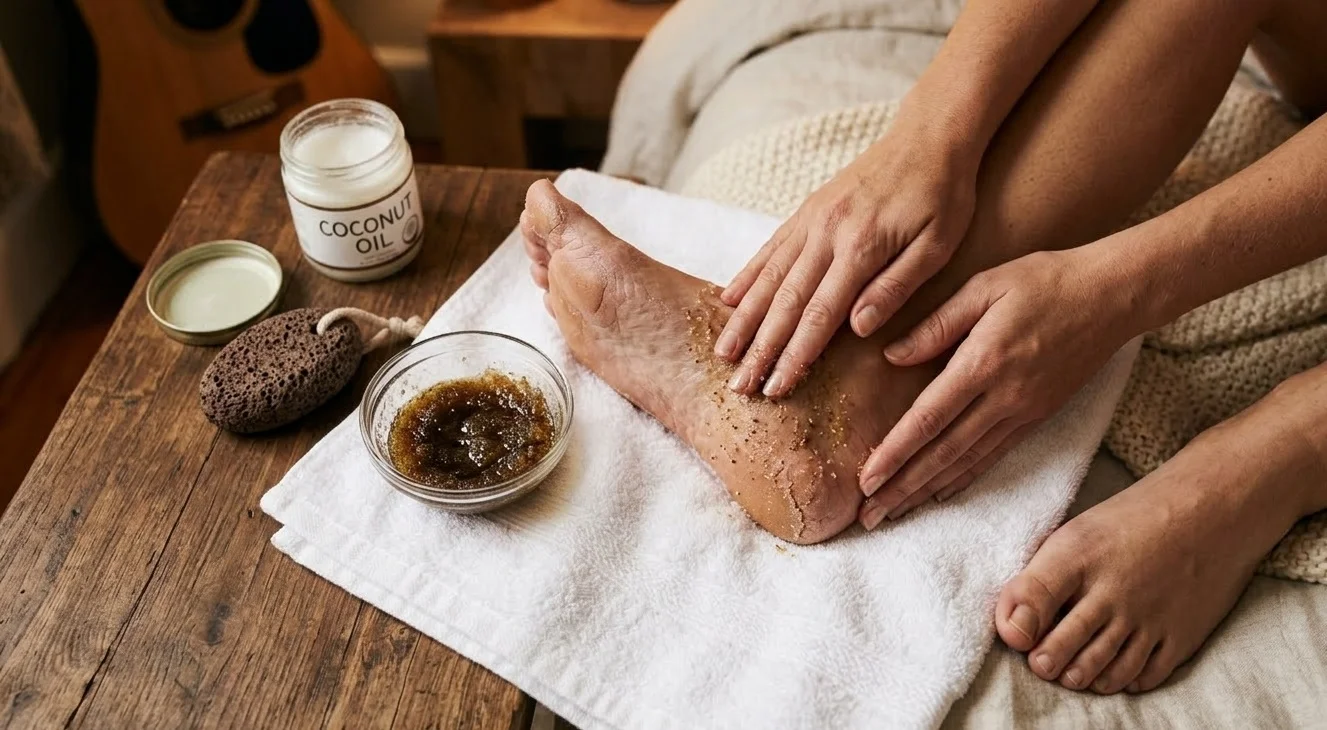
Option A — Pumice stone or foot file: Use on damp skin only. Rub in small circles with light pressure. Let the abrasive surface do the work — pressing hard causes micro-tears and can worsen cracking.
Option B — DIY scrub: Mix 2 tablespoons sugar, 1 tablespoon olive oil, and 1 teaspoon raw honey. Massage onto heels for 3–5 minutes, then rinse with warm water.
Stop if you feel any sharp pain or see pink skin — that means you’ve reached live tissue.
Step 3: Apply a Moisture Treatment (20 Minutes or Overnight)
Overnight mask (most effective): Coat your heels generously with coconut oil or raw honey. Put on cotton socks immediately. The occlusion traps heat and drives ingredients deeper. Leave on overnight. Results are usually visible the next morning — skin is noticeably softer and more supple.
20-minute mask: Mash half a ripe banana with 1 tablespoon plain yogurt. The banana delivers vitamins A and C; yogurt adds lactic acid for light exfoliation. Apply, leave 20 minutes, rinse.
Step 4: Seal with a Thick Moisturizer
After rinsing, apply a heel balm or thick moisturizer while skin is still slightly damp. Look for these active ingredients:
- Urea (10–25%) — breaks down dead protein in thickened skin; found in Flexitol Heel Balm and CeraVe SA Cream
- Salicylic acid — softens callus; found in Kerasal
- Shea butter or petrolatum — occlusive, locks in moisture
For deep cracks that are painful but not infected, seal them with a liquid bandage (like New-Skin). It protects the crack from reopening, reduces pain when walking, and speeds closure. Don’t use super glue — several formulations contain chemicals toxic to skin tissue.
Daily Habits That Prevent Cracking
Treatment works — but prevention stops you needing it every week.
- Moisturize every morning and night. Apply heel balm right after showering, before skin fully dries. This alone can prevent cracking in most cases.
- Drink enough water. Skin hydration is partly internal. Aim for 8 glasses (2 liters) daily — more if you’re active.
- Choose supportive shoes. Backless shoes let your heel spread uncontrolled with every step. A shoe with a firm, padded heel counter reduces that lateral pressure. Silicone heel cups add cushioning and hold moisture against the skin.
- Weekly maintenance soak. A 10-minute soak and quick pumice pass on Sundays prevents callus buildup before it becomes a problem.
- Avoid walking barefoot on hard floors. Tile and hardwood concentrate pressure directly on the heel without cushioning.

Expert Tips
Use urea-based products before bed, not ACV soaks. ACV is useful for breaking down callus before exfoliation, but it’s drying if used as a stand-alone treatment. Dermatologists recommend following any acid-based soak with an occlusive moisturizer immediately.
The “bag method” accelerates healing. After applying coconut oil or a thick balm, slip your foot into a thin plastic bag before putting on your cotton sock. The extra occlusion increases skin temperature slightly, improving ingredient absorption. Leave on 30–60 minutes — not overnight; extended plastic occlusion can cause sweating.
Exfoliate only on wet skin. Dry scrubbing tears live skin cells, not just dead ones. Every podiatrist recommendation says the same thing: always exfoliate on damp or freshly soaked skin.
Check your vitamin levels if cracking is chronic. Low B3 (niacin), zinc, or omega-3 levels all contribute to dry, fragile skin. A basic blood panel can rule these out.
Common Mistakes to Avoid
Over-exfoliating. Scrubbing more than 2–3 times per week removes healthy skin before the damaged layer has healed. This slows recovery significantly.
Using hot water. Water above 104°F strips the skin’s lipid barrier faster than it can rebuild. Keep soaks at a comfortable warm temperature.
Skipping socks after moisturizing. Applying oil or balm and then walking barefoot on your floors just transfers the product — it doesn’t absorb. Socks keep it where it belongs.
Cutting calluses at home. Callus razors and “credo blades” are sold at pharmacies but carry a real infection risk, especially if you cut into live skin. Stick to pumice stones and foot files.
Stopping treatment when cracks look better. The skin surface heals faster than the deeper layers. Keep up the routine for at least 2 weeks after visible improvement to prevent relapse.
When to See a Podiatrist
Home treatment handles most cases. See a podiatrist if you notice:
- Signs of infection: Redness spreading beyond the crack, warmth, swelling, throbbing, or discharge
- Bleeding or deep fissures: Cuts that don’t close with a liquid bandage
- No improvement after 2 weeks of consistent treatment
- Diabetes or poor circulation: Cracked skin in diabetic patients can progress to a diabetic foot ulcer within days. Podiatrists at facilities like Oklahoma Foot and Ankle Associates consistently emphasize that diabetic foot care requires professional oversight — not DIY management.
Frequently Asked Questions
How long does it take to heal cracked heels naturally?
Mild cracking typically improves in 3–7 days with consistent treatment. Deep, painful fissures can take 2–4 weeks. The key variable is consistency — treating every other day produces faster results than sporadic effort.
Can I heal cracked heels overnight?
You can make significant progress in one night. An overnight coconut oil or honey mask under cotton socks reliably softens surface dryness by morning. But deep cracks need repeated treatment over days — one application won’t rebuild the skin barrier.
Is Vaseline or coconut oil better for cracked heels?
Both work — they do different things. Vaseline (petrolatum) is a better occlusive; it seals moisture in more effectively. Coconut oil penetrates the skin layer and has antimicrobial properties. Using both — coconut oil first, then a thin layer of Vaseline over it — gives you the benefits of each.
Are Listerine foot soaks effective?
There’s no clinical evidence they heal cracked heels. The antiseptic content may reduce odor-causing bacteria, but the alcohol in Listerine is drying. Vinegar-water soaks or Epsom salt soaks are more effective and gentler on skin.
Can diet affect cracked heels?
Yes. Deficiencies in vitamin B3, zinc, vitamin E, and omega-3 fatty acids are all linked to dry, fragile skin. If your heels crack year-round regardless of season or footwear, a blood test to check these levels is worth discussing with your doctor.
