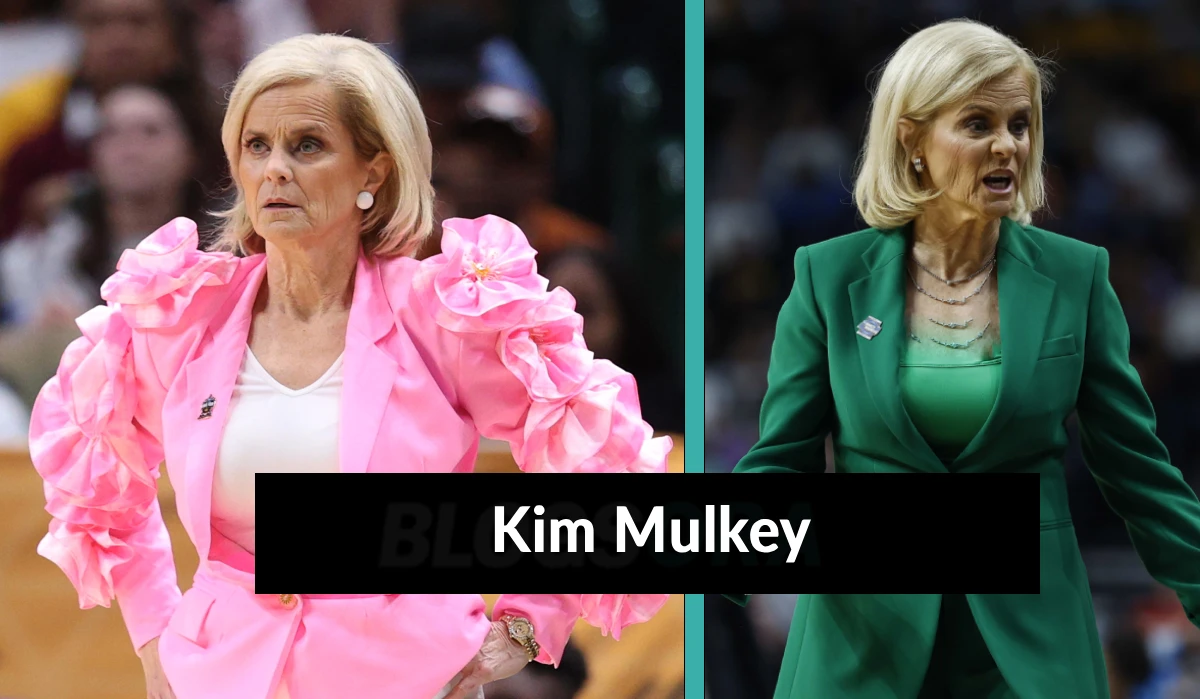
Kim Mulkey is the only person in NCAA history to win national championships as a player, assistant coach, and head coach — a distinction no one else has matched across any division or sport. At 63, she leads the LSU Tigers women’s basketball program with a .861 winning percentage and continues to add to a record that was already complete before most coaches reach their prime.
The 2024–25 season added a chapter that required no embellishment: LSU scored 100 or more points in eight consecutive games, averaging 112 per outing during that stretch, breaking an NCAA record that had stood since 1981–82 — held, as it happens, by Mulkey’s own Louisiana Tech team. She broke her own record as a coach, 43 years after setting it as a player.
Her career spans four decades, two powerhouse programs, and every role the sport offers. What follows is a precise account of how she built it.
| Full name | Kimberly Mulkey-Robertson |
| Born | May 17, 1962 — Santa Ana, California |
| Current role | Head coach, LSU Tigers women’s basketball |
| LSU record (through 2024–25) | 124–20 (.861 winning percentage) |
| Overall coaching record | 756–124 entering 2025–26 season |
| National championships | 4 as head coach (2005, 2012, 2019 at Baylor; 2023 at LSU) |
| Unique NCAA distinction | The only person to win titles as a player, assistant coach, and head coach |
| LSU salary | $3.2M+ annually (contract through 2031) |
| Hall of Fame inductions | Women’s Basketball HOF (2000); Naismith HOF (2020) |
Growing Up in Tickfaw, Louisiana
Mulkey was born on May 17, 1962, in Santa Ana, California, but she was raised in Tickfaw, Louisiana — a small town in the piney woods of Tangipahoa Parish. She grew up in a working-class family with no obvious path to a professional future in basketball.
By high school at Hammond, she had already separated herself from her peers. She led her team to four consecutive state championships, graduated as class valedictorian with a 4.0 GPA, and accomplished it all at 5’4″. Her size forced her to develop precision, court vision, and efficiency earlier than players with obvious physical advantages. Those qualities would later define how she ran offenses and built rosters.
Louisiana Tech: Player, Champion, Olympian
From 1980 to 1984, Mulkey played point guard at Louisiana Tech University, majoring in communications and earning All-American recognition. She played under coach Sonja Hogg on a program that was among the most competitive in women’s basketball at the time.
In 1982, Louisiana Tech won the NCAA national championship — Mulkey’s first title as a player. She was later named the first recipient of the Frances Pomeroy Naismith Award, given annually to the best player under 5’6″.
In 1984, she was part of the U.S. women’s basketball team that won gold at the Los Angeles Olympics. She graduated with honors the same year.
The experience of playing under a demanding coach on a winning program shaped how she would eventually run her own teams. She learned to study opponents, manage roster chemistry, and compete without excuses — lessons that became the foundation of her coaching philosophy.
Building a Dynasty at Baylor
In 1985, Mulkey joined Louisiana Tech’s staff as an assistant coach. She spent 15 years there, helping the Lady Techsters reach seven Final Fours and win the 1988 NCAA championship — her second title, this time as an assistant.
When Baylor offered her the head coaching position in 2000, the program had gone 7–20 the previous season. Within five years, Baylor won its first NCAA title. In 2012, the Bears finished 40–0 — the only undefeated championship season in women’s Division I history. A third title followed in 2019.
Over 21 seasons at Baylor, Mulkey’s record was difficult to argue with:
- 19 NCAA Tournament appearances
- Four Final Fours
- 12 regular-season conference titles
- Three national championships
Her approach to recruiting and player development became a reference point for coaches at every level. How Baylor’s program grew under Mulkey also reflected broader changes in how schools invested in women’s athletics.
Coming Home to LSU
In April 2021, Mulkey left Baylor to take the head coaching job at LSU — the flagship program in her home state. The move surprised observers, given what she had built in Waco, but the reasoning was straightforward: Louisiana was home, and LSU offered elite resources, strong NIL infrastructure, and recruiting territory in a basketball-rich region.
The results came fast. LSU won the 2023 NCAA national championship, Mulkey’s fourth title overall and first at a new program. The championship game, which drew the most-watched NCAA women’s basketball audience in decades, was defined in part by forward Angel Reese’s performance — 15 points, 10 rebounds — and the cultural moment it generated around the program. The game averaged over 9.9 million viewers on ESPN, a record for women’s college basketball at the time.
Through the 2024–25 season, Mulkey’s record at LSU stands at 124–20. Her roster during that stretch featured prominent players, including Flau’jae Johnson, a McDonald’s All-American and nationally recognized recording artist who became one of the program’s most visible figures.
The 2024–25 season produced the eight consecutive 100-point games noted above. The November 2025 signing of five-star guard Lola Lampley, the top-ranked prospect in Indiana, reinforced an already strong 2026 recruiting class built in part through LSU’s NIL program.
The NCAA Record That No One Else Holds
Mulkey’s defining distinction is one that required decades to complete. She is the only person in NCAA history — man or woman — to win national championships in all three roles:
- Player: Louisiana Tech, 1982
- Assistant coach: Louisiana Tech, 1988
- Head coach: Baylor 2005, 2012, 2019 — LSU 2023
Entering the 2025–26 season, her overall head coaching record stood at 756–124, a winning percentage above .859 across 25 seasons. She has won three AP Coach of the Year awards (2012, 2019, 2022) and was inducted into both the Women’s Basketball Hall of Fame (2000) and the Naismith Memorial Basketball Hall of Fame (2020).
How Her Record Compares to Other Top Women’s Basketball Coaches
Context makes the numbers sharper. The three coaches most frequently cited alongside Mulkey in discussions of the sport’s best:
| Coach | Program(s) | NCAA Titles | Career Win % | HOF |
|---|---|---|---|---|
| Kim Mulkey | Baylor, LSU | 4 | .859+ | Yes (2020) |
| Geno Auriemma | UConn | 11 | .847+ | Yes (2006) |
| Dawn Staley | South Carolina | 3 | .820+ | Yes (2013) |
| Pat Summitt† | Tennessee | 8 | .841 | Yes (2000) |
Mulkey’s title count trails Auriemma and the late Pat Summitt, but her winning percentage is the highest among active coaches, and her achievement of winning across multiple programs — Baylor and LSU — is something neither Auriemma nor Summitt accomplished. How Mulkey’s record stacks up against Dawn Staley is a comparison that will define this era of women’s basketball.
Controversies and Public Criticism
Mulkey’s career has not been without significant controversy, and a complete profile requires addressing it directly.
1. The Washington Post Lawsuit
In May 2023, Mulkey filed a defamation lawsuit against The Washington Post over a story the paper published examining her tenure at Baylor during a period when the university faced scrutiny over its handling of sexual assault allegations involving football players. Mulkey’s lawsuit argued the article contained false and defamatory statements about her conduct and knowledge of those events. The Post defended its reporting. The legal proceedings drew national attention and sparked debate about press freedom, institutional accountability, and the obligations of coaches in powerful programs. The case’s status should be verified and updated here as proceedings develop.
2. Player Departures and Transfer Portal
Several high-profile players transferred out of LSU’s program, including guard Alexis Morris, after the 2023 championship season. Mulkey has been publicly critical of the transfer portal’s effect on team continuity — a position that places her at odds with players who argue the portal gives athletes the same mobility long available to coaches. The tension between roster stability and player movement is one of the defining friction points in college basketball in 2025–26, and Mulkey’s program sits at its center.
Personal Life and Family
Mulkey married Randy Robertson in 1987; they met at Louisiana Tech and divorced in 2006. They have two children:
- Kramer Robertson — a former LSU baseball All-American who played professionally in minor and independent leagues
- Makenzie Robertson Strong — a former Baylor basketball and softball player who now coaches youth sports
Both children built careers in competitive athletics, which reflects an environment Mulkey deliberately created. The consistency between how she raised her family and how she manages rosters is not coincidental — sustained performance inside competitive structures is the thread connecting both.
Off the court, Mulkey is immediately recognizable for her sideline style: sequined ensembles, frequently from Queen of Sparkles, that have become part of her public identity. The look is intentional. She has never tried to blend into the background of a sport that spent most of its history being ignored.
Kim Mulkey’s Salary and Contract at LSU
Mulkey’s LSU contract, extended through 2031, pays over $3.2 million annually — the highest base compensation for any coach in women’s college basketball at the time of signing. As a public institution, LSU’s contracts are public records; the current verified figure should be confirmed against the most recent contract disclosure.
For comparison, her salary at Baylor peaked at approximately $2.34 million before she departed in 2021. The jump reflects both her standing in the market and the broader shift in how programs value women’s basketball success — driven by rising TV rights deals, sold-out arenas, and NIL revenue that now flows through women’s programs at a scale that didn’t exist five years ago.
Her estimated net worth, built through coaching contracts, Nike endorsements, and motivational speaking, is reported between $2 million and $5 million, though those figures are unverified estimates. Her compensation matters beyond her personal finances: having the sport’s most decorated active coach earn $3.2M+ annually signals clearly where women’s basketball stands commercially in 2026.
Why Her Coaching Record Stands Apart
Mulkey’s career doesn’t follow a single arc. She was a small player who dominated against physically larger opponents. She spent 15 years as an assistant — watching, studying, waiting — before being handed her first head coaching role. She took that role at a program that had won seven games the year before. Then she won, left for a new program, and won again within two years.
Each phase demanded a different competency:
- The player needed precision and court vision to compensate for size
- The assistant needed patience and the discipline to learn without controlling
- The head coach needed recruiting ability, cultural consistency, and the willingness to rebuild what she’d already built once before
The 2024–25 season’s eight-game 100-point streak is not incidental. It reflects a coach who, at 63, is still adjusting her program’s offense to what the talent allows rather than running systems out of habit. That kind of adaptability is rarer than the win totals suggest.
The question of what comes next — a fifth title, a contract extension, a succession plan — will answer itself. March has a way of doing that.
⚠️ Editor’s note: LSU’s full 2025–26 season record and NCAA Tournament outcome should be updated here once the season concludes. Verify Lola Lampley’s current enrollment and playing status.