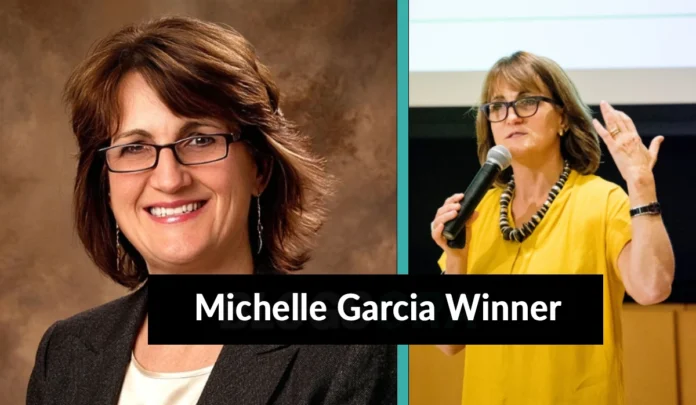
Michelle Garcia Winner is a speech-language pathologist and founder of Social Thinking — a methodology that teaches individuals to understand the thinking behind social behaviour. Developed through clinical practice, it is widely used with autistic individuals, those with ADHD, and others who find social interaction challenging. Her books and training programs are used in schools worldwide.
If you’ve ever struggled to explain why social situations feel confusing — or tried to help a child who genuinely doesn’t understand unspoken social rules — you’ve touched the exact problem Michelle Garcia Winner has spent her career solving.
She didn’t write a motivational book about being kind. She built a structured, research-informed way of thinking about social behaviour from the ground up. And for hundreds of thousands of teachers, therapists, and parents, that work has made a concrete difference.
Here’s who she is, what she created, and why it matters.
Who Is Michelle Garcia Winner?
Michelle Garcia Winner is a speech-language pathologist (SLP) and author based in the United States. She is best known as the founder of Social Thinking — a methodology she developed to help individuals who struggle with social communication, including those with autism spectrum disorder (ASD), ADHD, anxiety, and related profiles.
Her work sits at the intersection of speech therapy, cognitive psychology, and special education. She is not primarily a pop-psychology figure or a social media personality. She is a clinician and educator who has built her reputation through direct practice, published materials, and professional training.
Over the past three decades, her approach has been adopted by school districts, therapy practices, and clinicians across the United States and internationally.
Early Life and Education
Michelle Garcia Winner earned her Master of Arts degree in Speech-Language Pathology. Her academic background in communication disorders gave her the clinical lens through which she later developed her frameworks.
She began her career working directly with students and clients who had strong verbal ability but significant difficulties with social interaction — a profile that wasn’t well-served by the social skills training available at the time. Most existing programs focused on isolated behaviours: make eye contact, take turns talking. The winner noticed that the approach didn’t address why those behaviours matter or how they connect to what other people think and feel.
That gap in the field became her life’s work.
It’s worth noting that social development doesn’t happen in isolation. It’s shaped by early environments, family relationships, and the people around us before any formal education begins. The story of Charles Anthony Vandross — Luther Vandross’s older brother and the quiet stabilising presence in a household that produced one of America’s most celebrated voices — reflects exactly this dynamic. People rarely become who they are without someone behind the scenes holding the structure steady. That principle runs through Winner’s entire body of work.
The Social Thinking Methodology: What It Actually Is
The term “social thinking” can sound vague, but the methodology is specific.
At its core, Social Thinking is a treatment framework that teaches individuals to understand their own thinking processes during social interactions — and to recognise how their behaviour affects how others think and feel about them. It targets what Winner calls the “hidden curriculum” of social behaviour: all the things neurotypical people seem to absorb automatically, but that many individuals with ASD, ADHD, or other social-cognitive challenges do not.
The Core Premise
Social Thinking is built on a fundamental idea: before you can act socially, you have to think socially. Most social skills programs teach behaviours. Winner’s framework teaches the thinking behind those behaviours.
For example, rather than just instructing a child to “look at someone when they talk to you,” the Social Thinking approach explains why eye contact matters — it signals that you’re paying attention, which makes the other person feel respected and heard. When someone understands the why, the behaviour becomes more meaningful and more transferable across situations.
Key Concepts and Vocabulary
Winner and her team developed a set of accessible, concrete concepts to help individuals understand and discuss social dynamics. Some of the most widely used include:
Thinking about you, thinking about me — the recognition that in any social interaction, both people are making observations and forming impressions of each other simultaneously.
Expected vs. unexpected behaviour — instead of labelling behaviour as “good” or “bad,” the framework uses “expected” (what most people anticipate in a situation) and “unexpected” (what surprises or confuses others). This removes moral judgment and focuses on social reality.
The Social Behaviour Mapping tool — a visual framework that connects a behaviour to what others feel when they see it, how they react, and how the person feels as a result. It makes cause-and-effect visible for those who don’t perceive it intuitively.
Size of the problem — a concept that helps individuals calibrate their emotional responses relative to the actual significance of a problem. Spilling juice is not the same as missing a flight. Many socially challenged individuals react to minor issues with high-intensity responses; this concept helps them recalibrate.
Superflex — a popular character-based curriculum Winner developed for younger children, where a superhero named Superflex battles a team of “Unthinkables” — characters representing common behavioural challenges like Rock Brain (rigid thinking) or One-Sided Sid (only talking about your own interests). It makes abstract social concepts concrete and fun for kids aged roughly 4–10.
Who It Helps
The Social Thinking methodology was originally developed with autistic individuals in mind — specifically those with average to above-average IQ who nonetheless struggled significantly in social contexts. Over time, it has been applied more broadly to individuals with:
- Autism Spectrum Disorder (ASD)
- ADHD
- Social anxiety
- Nonverbal learning disability (NVLD)
- Two-times exceptional (2e) learners
- Individuals with anxiety and emotional regulation challenges
It is used across age groups — from preschool children to adults in workplace settings.
One thing the methodology does particularly well is support the adults around a struggling individual — not just the individual themselves. Parents who navigate complex co-parenting situations, single-parent households, or non-traditional family structures often find the Social Thinking tools especially practical. Understanding how your child processes social expectations and how to communicate that clearly to teachers, coaches, or extended family is a genuine skill. Kelly South — a Michigan parent who raised her son mostly outside the public eye while managing a complicated custody situation — represents the kind of quiet, steady parenting effort that Social Thinking’s tools are designed to support. The framework gives parents language and structure for something that is otherwise very hard to explain.
The winner has written and co-authored a substantial catalogue of books, curricula, and teaching guides. Some of her most recognised titles include:
“Thinking About YOU Thinking About ME” — one of her foundational texts laying out the Social Thinking philosophy and framework for clinicians and educators.
“Social Thinking and Me” — a two-book set written directly for students, pairing a concepts book with an activity book.
“Superflex: A Superhero Social Thinking Curriculum” — designed for younger children, co-authored with Stephanie Madrigal, this is one of the most widely used pieces of the curriculum in elementary school settings.
“The Incredible Flexible You” — a curriculum series for pre-K through early elementary, introducing Social Thinking concepts at an age-appropriate level.
“Think Social! A Social Thinking Curriculum for School-Age Students” — a comprehensive school-based guide for working with groups.
Her materials are available through the Social Thinking Publishing website and are used by speech-language pathologists, special education teachers, school psychologists, and occupational therapists.
Social Thinking as an Organisation
Beyond her individual work, Winner founded Social Thinking, a publishing and training company based in San Jose, California. The organisation:
- Publishes all of the curriculum materials developed under the methodology
- Runs professional training conferences and workshops across the U.S. and internationally
- Offers online learning resources for professionals and parents
- Maintains a website (socialthinking.com) with free articles, strategies, and research references
The company has grown significantly, with Winner’s frameworks now taught in school districts across all 50 U.S. states and in multiple countries. Social Thinking has trained tens of thousands of educators and clinicians through its workshop programs.
Why Her Work Earned Credibility in the Field
The education and therapy world is full of programs claiming to help children with social difficulties. What set Winner’s approach apart — and why it gained traction with professionals — comes down to a few things.
It addresses cognition, not just behaviour. Many programs train children to perform specific behaviours. Winner’s framework teaches them to understand social dynamics as a cognitive system. This makes skills more likely to generalise across settings.
It was developed through direct clinical practice. Winner built these concepts while actively working with clients. The framework didn’t emerge from a research lab disconnected from reality — it emerged from watching what actually confused people and what helped them understand.
It avoids moral framing. The expected/unexpected framework is particularly valued by clinicians because it removes “you’re bad for doing this” from the equation. Children who already feel different don’t benefit from shame. They benefit from understanding.
It’s transparent about limitations. Winner herself has been explicit that Social Thinking is not a cure or a fixed program — it’s a framework that needs to be applied thoughtfully based on each individual’s profile. That intellectual honesty has earned respect among professionals sceptical of oversold solutions.
Criticism and Ongoing Discussions
No methodology is without scrutiny, and Social Thinking has received some critical analysis within the autism community and research literature.
Some autistic self-advocates have raised concerns that the framework, while well-intentioned, can place a disproportionate burden on autistic individuals to adapt to neurotypical social norms rather than encouraging mutual understanding. The question of whether social differences are deficits to correct — or simply differences to navigate — is an active and important conversation in the field.
Some researchers have also noted that while the methodology is widely used, the published evidence base for it is still developing compared to more formally studied behavioural approaches like Applied Behaviour Analysis (ABA).
These are legitimate points worth acknowledging. Winner and the Social Thinking team have engaged with some of this feedback, and the methodology continues to be updated and refined.
At its best, the framework supports something more valuable than behavioural compliance: the ability to make aware choices about how to engage with the social world. The goal isn’t conformity. It’s understanding your options and choosing consciously. Henry Olyphant — son of actor Timothy Olyphant — is an interesting real-world illustration of this. Despite growing up inside one of Hollywood’s most well-known families, he built his own path with full awareness of the social pressures around him and simply chose differently. That kind of self-directed social awareness — understanding the norms, knowing you have options, making a deliberate choice — is precisely what Social Thinking aims to build in the individuals who need the most support getting there.
Michelle Garcia Winner’s Net Worth
Reliable, publicly verified figures for Michelle Garcia Winner’s net worth are not available. She is not a public company executive, and she has not disclosed personal financial information.
What is known is that Social Thinking, as an organisation, has operated for over 25 years, publishes a large catalogue of books and curricula, and runs conferences attended by thousands of professionals annually. It is reasonable to conclude she has built a financially sustainable professional practice — but specific figures would be speculation, and this article won’t do that.
Her value to the field is better measured by reach and impact than by income estimates.
Conclusion
Michelle Garcia Winner built something genuinely useful. The Social Thinking methodology gives teachers, therapists, and parents a shared vocabulary and a practical framework for helping individuals who find social interaction genuinely difficult — not because they don’t care, but because they process social information differently.
Her contribution isn’t just a collection of worksheets. It’s a way of thinking about social thinking — and that conceptual shift has mattered to a lot of people.
If you work with children or adults who struggle socially, or if you’re looking for practical tools as a parent, the Social Thinking website is a strong starting point. Much of the foundational content is free, and the books are designed to be readable by educators and parents alike, not just specialists.
FAQ
What is the Social Thinking method?
Social Thinking is a methodology developed by Michelle Garcia Winner that teaches individuals to understand the thinking behind social behaviour. Rather than teaching isolated social behaviours, it helps people understand how their actions affect what others think and feel — making social skills more meaningful and transferable.
Who is Michelle Garcia Winner?
Michelle Garcia Winner is a speech-language pathologist and the founder of Social Thinking. She developed her approach over decades of clinical practice with individuals who have autism, ADHD, and related social-cognitive challenges.
Is Social Thinking only for autism?
No. While originally developed for autistic individuals, Social Thinking is now used with anyone who has social communication challenges — including those with ADHD, anxiety, nonverbal learning disability, and twice-exceptional profiles.
What age group does Social Thinking target?
The methodology has materials for preschool children through adults. Different curricula are designed for different age groups and cognitive profiles.
Is there scientific research behind Social Thinking?
The methodology has a growing body of practice-based evidence, though the formal research base is still developing. Many clinicians and educators report significant practical effectiveness, and it is widely adopted in school-based practice across the United States.
Where can I find Social Thinking resources?
The official Social Thinking website (socialthinking.com) offers free articles, downloadable guides, and a full catalogue of books and curricula. Professional training is also available through workshops and online courses.