
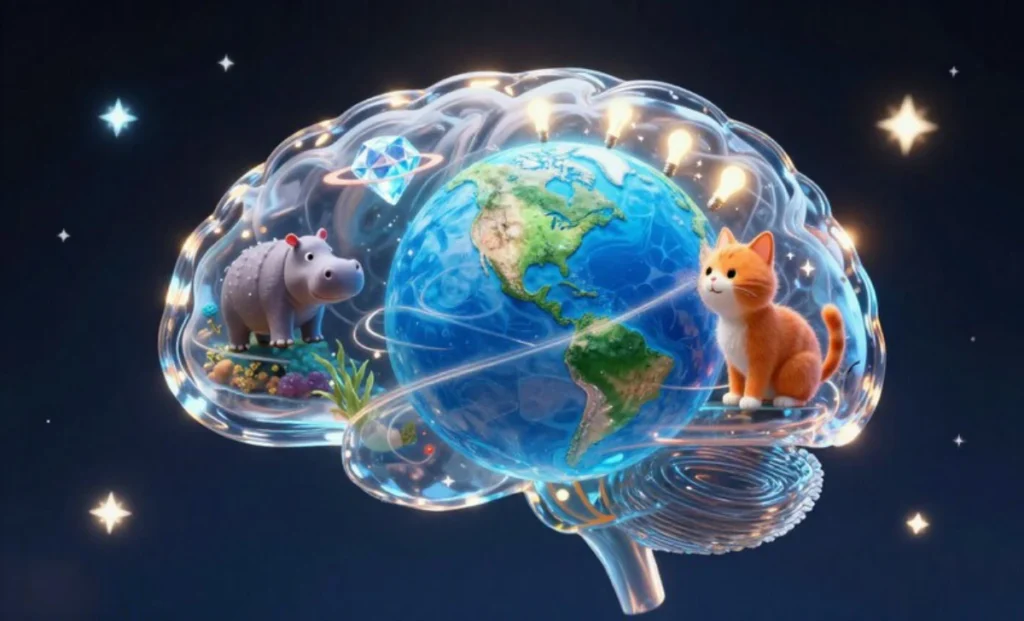
The internet is full of random trivia, but most lists give you a claim with no context. This guide walks through 121 of the most surprising verified facts across space, the animal kingdom, the human body, Earth’s geology, and human history — and explains the science or reasoning behind each one. Knowing why a fact is true makes it stick far better than knowing the fact alone.
What separates this collection from a basic trivia dump is structure and verification. Each fact is grouped by category, so you can follow your curiosity without wading through unrelated information. Whether you want to know how astronomers calculated the average color of the universe, or why wombats produce cube-shaped droppings, every entry comes with enough context to actually make sense of it.
Why Random Facts Need More Than a Bullet Point
You have probably read a trivia list that left you with more questions than answers. A fact like “Mercury is the closest planet to Earth on average” sounds wrong if you only glance at it. Venus feels closer, and in some orbital positions it is. But Mercury’s tight, fast orbit keeps it from ever straying too far from Earth, making it the nearest neighbor across all positions on average. That context transforms a puzzling claim into a genuinely useful piece of knowledge about orbital mechanics.
This is what good fact-writing does. It does not just state the surprising thing — it shows you why the surprising thing is true. Google’s search quality guidelines reflect this, too. Content that demonstrates real subject-matter knowledge and serves the reader’s actual intent performs better over time than content that piles up claims without explanation.
Space Facts That Break Your Mental Model of Scale
The universe operates on a scale that makes everyday intuition useless. One of the most striking examples: when you look at a star visible to the naked eye, you are seeing light that left its source up to 4,000 years ago. The star you are watching tonight may no longer exist. This is not a metaphor — it is a direct consequence of the finite speed of light, and it means every clear night sky is a window into the past.
A few other verified space facts worth knowing:
- The average color of the universe, calculated by analyzing light from over 200,000 galaxies, is a beige-white hue astronomers named “Cosmic Latte.”
- The Sun produces sound in the form of massive pressure waves, but their wavelength runs into the hundreds of miles, far below what human ears can detect.
- The exoplanet 55 Cancri e is largely composed of carbon, which, under extreme pressure, likely crystallizes. Astronomers consider it a strong candidate for a planet-sized diamond.
- Mercury, not Venus, is the closest planet to every other planet in the solar system on average, because of how tightly it orbits the Sun.
Animal Biology That Makes Evolution Look Like a Puzzle
Nature produces adaptations that seem absurd until you understand the pressure that shaped them.
Hippopotamuses cannot swim. Their bones are dense enough to make them barely buoyant, so they move through water by walking along the riverbed in a slow gallop. The image most people carry of hippos floating lazily is simply wrong.
Orange cats offer a cleaner example of genetics. The gene that produces orange fur sits on the X chromosome. A male cat carries only one X chromosome, so one copy of the gene turns him ginger. A female needs two copies — one on each X chromosome — to show the same color. The result: roughly three out of every four orange cats are male.
The wombat’s cube-shaped droppings sound like a joke, but the mechanism is real. Varying elasticity in different sections of the wombat’s intestine shapes the waste into cubes as it moves through. The shape prevents droppings from rolling away on uneven surfaces, making them reliable territorial markers. The animal kingdom rewards specificity.
Your Body Does Things You Have Never Heard Of
Your brain burns roughly 20 percent of your daily calories despite accounting for only two percent of your body weight. It is one of the most metabolically expensive organs you carry, and it does not take breaks.
The idea that you lose most body heat through your head is a myth. Heat loss scales with surface area exposed to cold. Your head feels the chill more sharply because it is usually the one body part left uncovered, not because it is a disproportionate source of heat loss.
Auto-brewery syndrome is a rare but documented condition where an overgrowth of gut yeast ferments carbohydrates into ethanol inside the digestive tract. People with this condition can become measurably intoxicated without consuming any alcohol. It has been used as a legal defense in DUI cases.
Your body also uses sweat as a subtle social signal. Research shows that stress sweat — produced by apocrine glands rather than the eccrine glands that cool you down — activates brain regions tied to empathy and alertness in people who detect it. You are communicating chemical information to the people around you without any conscious input.
Speaking of unconscious signals, the way you greet someone in passing tells more about you than you might expect. Small behavioral cues shape how others read your confidence, warmth, and social intent. You can read more about what everyday waving habits reveal about your personality if you want to understand what your own gestures are broadcasting.
Earth Facts That Reframe What “Normal” Means
Global sea level is an average, not a fixed surface. Due to differences in gravity, ocean currents, and the Earth’s rotation, actual sea surface height varies by several feet across different parts of the world. The ocean is not flat.
The Moon is shrinking. As its interior cools, it contracts, forming thrust faults where the crust buckles. Over the past few hundred million years, the Moon has lost about 50 meters in radius. The change is slow, but the seismic activity it generates — moonquakes — is measurable.
Quicksand, unlike its movie reputation, is not a death trap. Its density is roughly twice that of the human body, which means you float in it rather than sink. The danger is getting stuck, not submerged. Slow, deliberate movement reduces its viscosity and lets you work freely.
A typical cumulus cloud — the white, puffy kind — carries roughly 500 tons of water. The water exists in tiny droplets spread across an enormous volume, which is why the cloud floats despite its mass. The numbers become counterintuitive fast when you are dealing with cubic kilometers of airspace.
Historical Facts That Are Stranger Than Fiction
The chainsaw was not invented for forestry. Surgeons developed it in the late 18th century to assist with symphysiotomy, a procedure that widens the pelvis during difficult childbirths. The hand-cranked tool made the procedure faster and more precise. Its transition to cutting wood came well after its medical debut.
Three U.S. presidents died on the Fourth of July: John Adams, Thomas Jefferson, and James Monroe. Adams and Jefferson died on the same day in 1826 — the 50th anniversary of the Declaration of Independence.
Frederic J. Baur, the creator of the Pringles can, requested that his ashes be buried inside one. His family honored the request.
Switzerland’s animal welfare laws require that social animals like guinea pigs be kept in pairs. Owning a single guinea pig is considered inhumane under Swiss law.
New Zealand’s longest place name, a hill called Taumatawhakatangihangakoauauotamateaturipukakapikimaungahoronukupokaiwhenuakitanatahu, runs to 85 characters. Locals call it Taumata Hill.
Where Curiosity About Facts Leads Next
Once you start reading verified trivia with real explanations attached, it is hard to stop. You begin noticing how often common knowledge is slightly wrong — or dramatically wrong. The Moon does not make you crazy. You do not use only 10 percent of your brain. Quicksand will not swallow you whole.
If you want to keep going, the full list of 121 verified surprising facts covers more ground across every category mentioned here, with sourced explanations for each entry.
And if random trivia ever leads you into unfamiliar territory — say, an airport auction where you overpay for impounded goods because you did not understand how the process works — the same instinct that makes you verify a fact before repeating it is the one that keeps you from making expensive assumptions. Curiosity, directed well, pays off in more ways than one.
