
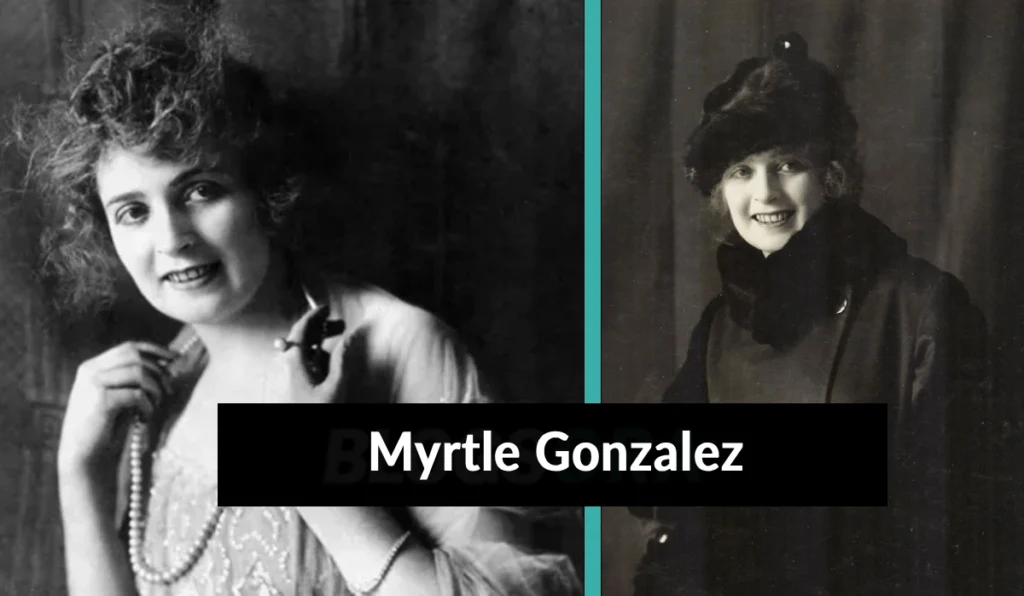
Myrtle Gonzalez (1891–1918) was an American silent film actress known for naturalistic performances in over 70 films, produced primarily by Vitagraph Studios. Of Mexican and Irish descent, she became one of early Hollywood’s first Latina stars before tuberculosis ended her life at age 27. Her career helped shift film acting away from exaggerated stage gestures toward the subtle, camera-aware style that defined modern screen performance.
Her work between 1913 and 1917 covered comedies, dramas, and action-adventure shorts. She played resourceful, determined characters at a time when female roles were mostly passive. Film historians study her career to understand how performance techniques evolved during cinema’s first two decades, and how early Hollywood began to reflect a wider range of faces and backgrounds on screen.
Who Was Myrtle Gonzalez?
If you study early Hollywood or silent film history, Myrtle Gonzalez is a name that comes up quickly. Her career was short, but it left a clear mark on how screen acting developed in America.
Gonzalez was born on September 28, 1891, in Los Angeles, California. Her father was Mexican, her mother Irish-American. That background made her one of the few Mexican-American actresses working in mainstream American film during the silent era.
She started in local theater as a teenager. By 1913, she moved into film at a time when the motion picture industry was still finding its footing in California. The transition suited her well.
Her Path Into Silent Cinema
Many stage actors struggled with silent film. The camera picked up everything, and the exaggerated gestures that worked on stage looked unnatural on screen. Gonzalez adapted quickly.
Directors noticed her ability to convey emotion through subtle facial expressions and controlled body language. These skills sound basic now, but they were uncommon in 1910s film acting. Most performers still borrowed heavily from stage melodrama.
Her theater background gave her a foundation in physical storytelling. When dialogue cards were your only tool for spoken words, pacing and body movement carried the scene. Gonzalez understood this from the start.
Her Career at Vitagraph Studios
Vitagraph Studios signed Gonzalez in 1913. The company was one of early Hollywood’s major production houses, specializing in short films and serials.
Between 1913 and 1917, she appeared in more than 70 films. Most were one- or two-reel shorts, running 10 to 20 minutes each. These covered a wide range of genres: comedies, dramas, and action-adventure stories.
Notable titles include The Level (1914), The Chalice of Courage (1915), and Southern Justice (1917). In these films, she often played resourceful, determined women rather than passive romantic interests. That was a meaningful distinction at the time.
Her naturalistic style aligned with what film historians call the “cinema of authenticity,” a shift toward believable performances that trusted the camera’s ability to capture subtle emotion. She was part of that shift, not just a passenger in it.
What Made Her Performances Different
Silent film actors faced a specific set of challenges. Without spoken dialogue, every story point had to communicate through:
- Facial expressions captured in close-ups
- Deliberate body language and movement
- Interaction with sets and props
- Brief title cards for essential dialogue or narration
Actors also worked without monitors or playback. You could not review a task immediately. Directors gave verbal instructions during filming, but performers relied heavily on instinct and repetition.
Lighting technology was primitive. Early film stock required intense illumination, often from hot studio lights or direct sunlight. Long shooting days under those conditions were physically demanding.
Gonzalez handled all of this well. Colleagues noted her ability to hit marks precisely and repeat performances across multiple takes. Those were critical skills when editing techniques were still basic.
Personal Life and Final Years
In 1917, Gonzalez married Allen Watt, a fellow actor and director. The two had worked together on several Vitagraph productions.
The marriage was brief. Within a year, she began showing symptoms of tuberculosis, a bacterial lung infection that was one of the leading causes of death in early 20th-century America.
Medical treatments in 1918 were limited. Rest, fresh air, and sanatorium care were standard recommendations. Antibiotics would not exist for another three decades.
Her condition deteriorated quickly. She died on October 22, 1918, at her parents’ home in Los Angeles. She was 27 years old.
Her death came during the global influenza pandemic of 1918 to 1919. Hospitals were overwhelmed, and public health systems were managing multiple crises at once. Her passing received less public attention than it might have in other years. Most newspapers prioritized pandemic coverage and World War I news over entertainment obituaries.
Why Her Legacy Still Matters
Gonzalez’s career represents three clear contributions to early cinema.
She demonstrated that film acting required different skills from stage acting. Her restrained style influenced how directors approached performance. Actors who came after her had a clearer model for what “good screen acting” looked like.
As a Mexican-American actress in mainstream Hollywood productions, she worked during an era when ethnic representation was minimal. Her heritage was not always highlighted in publicity materials, but her presence on screen challenged the industry’s narrow casting standards.
Her productivity, more than 70 films in four years, also shows how rapidly the silent film industry operated. Actors often completed a film in days. This pace created a massive catalog but placed real physical and emotional demands on performers. Gonzalez met those demands consistently.
She shares that kind of persistent, working-actor dedication with other women who built careers in the early entertainment industry. Profiles of figures like Layne Ann Cuoco and Marcell Mae Ford explore similar stories of women who carved out space in industries that were not built with them in mind.
How to Research Early Silent Cinema
If you want to go deeper on Gonzalez or the era she worked in, several resources are worth your time.
The Library of Congress and UCLA Film and Television Archive preserve silent films. Some Vitagraph productions survive, though not all of Gonzalez’s specific films are readily accessible. Many silent films were lost to deterioration or studio disposal over the decades.
For academic research, JSTOR and Project MUSE host film studies work covering early Hollywood demographics and performance history. Digitized newspaper archives, including Newspapers.com and Chronicling America, hold contemporary reviews and publicity materials from the 1910s. Primary sources from her era give you the most accurate picture of how audiences experienced her work.
For a broader context on women in early performance culture, the profile of Jayne Posner offers a useful parallel look at how women navigated careers in entertainment during similar periods.
FAQs
How many films did Myrtle Gonzalez appear in?
She appeared in over 70 films between 1913 and 1917, primarily short films and serials produced by Vitagraph Studios. The exact count varies slightly among sources due to incomplete studio records.
What was Myrtle Gonzalez’s ethnic background?
She was of Mexican and Irish descent. Her father was Mexican, her mother Irish-American. This made her one of early Hollywood’s few Mexican-American actresses working in mainstream productions.
What illness caused Myrtle Gonzalez’s death?
Tuberculosis caused her death on October 22, 1918. She was 27 years old. Treatment options in 1918 were limited to rest and sanatorium care, as antibiotics did not yet exist.
Did any of Myrtle Gonzalez’s films survive?
Some Vitagraph productions from her era survive in film archives, though many silent films were lost over time. The exact availability of her specific films requires archive research.
Who was Myrtle Gonzalez married to?
She married Allen Watt in 1917. Watt was an actor and director who worked with her at Vitagraph Studios. Their marriage lasted approximately one year before her death.
Why is Myrtle Gonzalez important to film history?
She represents early Hollywood’s shift toward naturalistic acting and was among the first Mexican-American actresses in mainstream American cinema during the silent era.
