
The TEAS reading section throws challenging passages at you—and solar panel topics combine history, science, and policy in ways that trip up even strong readers. You’re not just reading about solar panels. You’re analyzing why they matter, what happened historically, and what the author wants you to understand.
This guide gives you the exact strategies to break down White House solar panels TEAS test passages, understand the historical context that appears repeatedly, and answer questions correctly with confidence.
The White House solar panels TEAS test passage covers the installation of solar panels during Jimmy Carter’s presidency in 1979, their removal under Ronald Reagan in 1986, and reinstallation efforts under Barack Obama. Test questions focus on chronology, policy motivations, author’s purpose, and inference about renewable energy initiatives. Success requires identifying main ideas, understanding cause-effect relationships, and recognizing the author’s tone toward sustainability efforts.
Understanding the White House Solar Panels Passage
TEAS passages about White House solar panels aren’t random. They test your ability to process mixed content—historical events, technical concepts, and policy decisions—all in one reading.
The passage typically runs 6-8 paragraphs. You’ll see dates, presidential names, energy terms, and arguments about renewable energy policy. Your job isn’t to become a solar expert. It’s to extract information quickly and answer questions accurately.
What the TEAS Passage Covers
The core narrative follows three key moments:
1979#
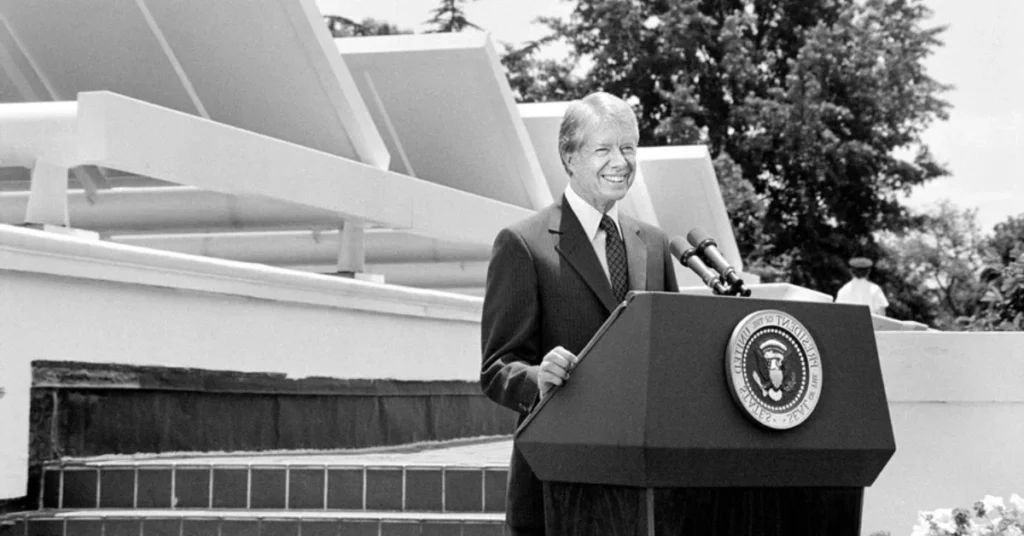
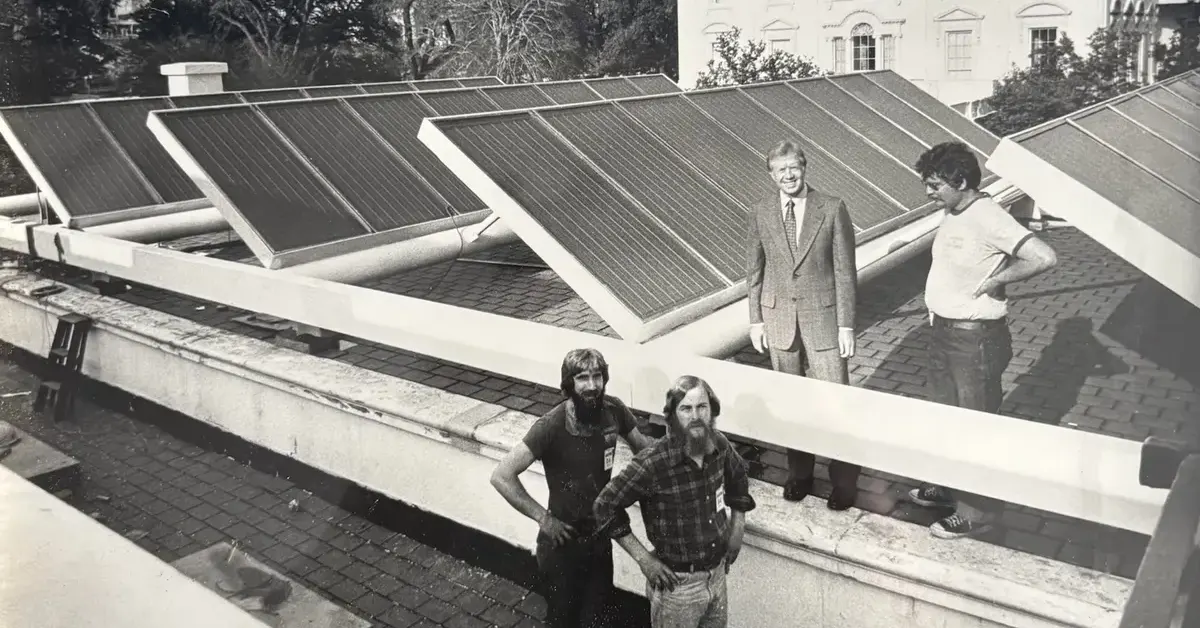
President Jimmy Carter installed 32 solar thermal panels on the White House roof. This happened during the energy crisis when gas prices soared, and the U.S. wanted energy independence.
1986#
President Ronald Reagan removed the panels during roof repairs and never reinstalled them. The official reason was maintenance work. The real reason involved shifting energy priorities.
2003-2014#
Presidents George W. Bush and Barack Obama brought solar technology back to the White House grounds, reflecting renewed interest in renewable energy and climate initiatives.
You’ll need to track who did what and when. TEAS questions love chronology.
The passage also discusses broader themes: energy independence, environmental policy, symbolism of presidential actions, and public perception of renewable energy. These themes drive inference questions.
Common Question Types You’ll Face
TEAS reading questions about this topic fall into five categories:
- Detailed questions: “When were the solar panels first installed?” Direct answers from the text.
- Sequence questions: “What happened after Reagan removed the panels?” Test your timeline understanding.
- Inference questions: “What can you infer about Carter’s priorities?” Requires reading between the lines.
- Purpose questions: “Why does the author mention the energy crisis?” Tests understanding of why information is included.
- Tone questions: “What is the author’s attitude toward renewable energy?” Identifies bias or perspective.
Most students miss inference and purpose questions because they look for explicit answers. These questions require you to think about why the author includes specific details.
Historical Context That Appears on the Test
You don’t need to memorize every detail. You need to understand the why behind each action, because that’s what the TEAS tests.
1. The Carter Era Installation (1979)
Jimmy Carter installed solar panels during a national crisis. The 1973 oil embargo created gas shortages and price spikes. Americans waited in long lines for fuel. The country felt vulnerable to foreign oil dependence.
Carter’s response included promoting alternative energy. The solar panels served two purposes:
- Practical purpose: Heating water for the White House laundry and cafeteria, demonstrating that solar technology worked.
- Symbolic purpose: Showing Americans that renewable energy deserved attention and investment.
Carter called the installation a sign that solar power would be a major energy source in the future. He believed the panels represented American innovation.
TEAS passages emphasize this dual purpose—function and symbolism. Questions often ask you to identify why Carter’s action mattered beyond just installing equipment.
2. Policy Changes Under Reagan and Beyond
Ronald Reagan removed the panels in 1986. The official explanation: roof repairs required removal. The real story: Reagan’s administration favored traditional energy sources—coal, oil, and natural gas.
The panels weren’t reinstalled because they didn’t fit Reagan’s energy policy priorities. This wasn’t explicitly stated, but the passage implies it through timing and context.
Key point for test-takers: When a passage describes an action without stating the complete reason, TEAS wants you to infer the unstated motivation. Reagan’s removal suggests policy preference, not just maintenance needs.
Later presidents gradually returned to solar energy:
- George W. Bush (2003): Installed small solar systems on maintenance buildings, not the White House itself.
- Barack Obama (2014): Installed modern photovoltaic panels on the White House residence, returning solar power to the building’s main structure.
Each action reflected changing attitudes about climate policy and renewable energy’s role in national strategy.
Proven Reading Strategies for Solar Energy Passages
The passage uses technical language and shifts between history and policy. You need a system to handle this mix.
Vocabulary You Need to Know
These terms appear regularly:
- Solar thermal panels: Equipment that uses sunlight to heat water or air. Carter’s original panels were thermal, not electric.
- Photovoltaic panels: Equipment that converts sunlight directly into electricity. Modern panels, like Obama’s, are photovoltaic.
- Energy independence: A country’s ability to meet its energy needs without relying on foreign sources. Major motivation for Carter’s policies.
- Renewable energy: Energy from sources that naturally replenish—solar, wind, hydroelectric. Contrasts with fossil fuels.
- Symbolism: Using actions or objects to represent larger ideas or values. Presidential energy choices often serve symbolic purposes.
You don’t need deep technical knowledge. You need to recognize what these terms mean in context.
When you see unfamiliar terms, use context clues:
- Words around the term (definitions often follow)
- Examples in the same paragraph
- Purpose of the sentence (description, comparison, explanation)
Identifying Main Ideas vs. Supporting Details
TEAS loves asking: “What is the main idea of paragraph 3?” Most wrong answers are supporting details that feel important but aren’t the point.
- Main idea: The paragraph’s core message—what the author wants you to understand above everything else.
- Supporting details: Facts, examples, dates, and quotes that prove or illustrate the main idea.
- Practice technique: After reading each paragraph, ask yourself: “If I could only remember ONE thing from this paragraph, what would it be?”
Example from a typical passage:
“President Carter installed 32 solar thermal panels on the White House roof in 1979. The panels heated water for the residence. Carter hoped the installation would inspire Americans to consider solar energy. He believed solar power represented the future of American energy independence.”
- Main idea: Carter installed solar panels to promote renewable energy and inspire Americans.
- Supporting details: 32 panels, heated water, 1979, Carter’s beliefs about the future.
Questions asking for the main idea want the big picture. Questions asking for details want specific facts.
How to Answer Different Question Types
Each question type needs a different approach.
Fact-Based Questions
These ask for information stated directly in the passage.
Example: “How many solar panels did Carter install?”
Strategy:
- Identify the key term (solar panels, Carter, number)
- Scan the passage for that term
- Read the sentence containing it
- Verify the answer matches what’s stated
Common trap: Mixing up different installations. Carter installed 32 thermal panels. Obama installed different panels later. Questions might test whether you confuse these facts.
Time-saving tip: Numbers, dates, and names stand out when you scan. Use this to find answers quickly.
Inference and Author’s Purpose Questions
These require reading between the lines.
Example: “What can you infer about Reagan’s attitude toward renewable energy?”
The passage won’t say: “Reagan opposed renewable energy.” You infer this from:
- He removed the panels
- He didn’t reinstall them
- The passage mentions changing energy priorities
Strategy for inference questions:
- Find relevant facts in the passage
- Ask: “What do these facts suggest?”
- Eliminate answers that require information not in the passage
- Choose the answer that logically follows from the stated facts
Example: “Why does the author mention the 1973 oil embargo?”
The author includes this to explain why Carter cared about energy independence. It provides context for his actions.
Strategy for purpose questions:
- Identify what the author is trying to explain, prove, or illustrate
- Ask: “How does this detail support the larger point?”
- Choose the answer that connects the detail to the main argument
Warning: Don’t bring outside knowledge. If the passage doesn’t mention climate change, don’t choose an answer about climate change—even if it’s true in real life.
Common Mistakes and How to Avoid Them
Mistake 1: Rushing through the first read
You miss key details and waste time re-reading. Instead, read once carefully. Note dates, names, and transition words (however, therefore, although).
Mistake 2: Choosing answers based on real-world knowledge
TEAS tests reading comprehension, not subject expertise. Answer based solely on passage content.
Example: You might know Carter was environmentally conscious, but if the passage doesn’t state this, you can’t use it as evidence.
Mistake 3: Ignoring question keywords
- “According to the passage” = fact-based, must be stated directly
- “The author suggests” = inference, based on implied meaning
- “The author’s purpose” = why information is included
These keywords tell you what type of thinking the question requires.
Mistake 4: Falling for “sounds right” answers
Wrong answers often include true facts from the passage that don’t answer the question. Read the question carefully. Eliminate answers that are true but irrelevant.
Mistake 5: Overthinking inference questions
The correct inference is strongly suggested by the passage. If you’re making logical leaps or assumptions, you’ve gone too far. Stick close to stated facts.
FAQs
How long should I spend reading the solar panels passage?
Spend 2-3 minutes reading the passage carefully. Note dates, presidential names, and policy changes. Take another 3-4 minutes answering questions. If you rush the reading, you’ll spend more time searching for answers later. A careful first read saves time overall.
What vocabulary terms matter most for this passage?
Focus on solar thermal (heats water/air), photovoltaic (generates electricity), energy independence (self-sufficient energy supply), and renewable energy (naturally replenishing sources). Understanding these terms helps you grasp policy motivations and technical differences between installations. The passage typically defines terms through context, so read the surrounding sentences carefully.
How do I identify the main idea in solar energy paragraphs?
Ask yourself: “What is this paragraph’s one key point?” The main idea is usually stated early or late in the paragraph. Supporting details include dates, numbers, quotes, and examples. If a paragraph discusses Carter’s installation, the main idea might be his motivation, not the technical specs of the panels. Focus on why over what.
What if I don’t know anything about solar panels or presidential history?
You don’t need background knowledge. TEAS tests reading comprehension, not subject expertise. Every answer comes from the passage itself. In fact, outside knowledge can hurt you—stick to what’s stated or clearly implied in the text. Your reading strategy matters more than topic familiarity.
How can I improve my inference skills for these passages?
Practice identifying stated facts, then asking: “What does this suggest?” For example, if Reagan removed panels and didn’t replace them despite opportunities, this suggests renewable energy wasn’t his priority. Strong inferences stay close to the passage facts. Weak inferences require assumptions not supported by the text. Always find textual evidence for your inference.
Are there practice questions available for the solar panels passage?
Yes. Look for TEAS reading practice tests that include informational passages about historical topics and policy. Many test prep books include passages with mixed content—history, science, and social issues—similar to the solar panels topic. Focus on practicing with passages that require tracking chronology and inferring unstated motivations, as these skills transfer directly.
CONCLUSION
The White House solar panels TEAS test passage challenges you to process history, policy, and technical concepts simultaneously. Your success depends on recognizing question types, using context clues for vocabulary, and distinguishing main ideas from supporting details.
Practice these strategies with similar passages—topics mixing history and science. Train yourself to infer motivations and identify the author’s purpose. The better you understand how TEAS structures questions about content like this, the more confident you’ll feel on test day.
Start by reviewing the historical timeline above, then practice with timed reading passages to build your speed and accuracy.
