Cryptocurrency is digital money that uses cryptography to secure transactions and control the creation of new units. It runs on a blockchain — a shared public ledger maintained by thousands of computers. No government or bank controls it. Bitcoin is the most well-known example; Ethereum is the second largest.
Cryptocurrency is digital money that runs on math instead of banks. No government issues it. No bank clears it. Transactions happen directly between two people, recorded on a shared ledger that thousands of computers around the world maintain simultaneously.
That’s the core idea. Everything else — Bitcoin, blockchain, wallets, mining — builds on it.
This guide explains how it all fits together, what the real risks are, and what you need to know before you buy a single coin.
What Is Cryptocurrency, Exactly?
Cryptocurrency is a type of digital currency that uses cryptography — a branch of mathematics — to secure transactions and control how new units are created.
Unlike traditional money, no central authority (government, central bank, or corporation) issues or controls it. Its supply and rules are set by code — usually open-source code that anyone can inspect.
Three basic functions define any currency. Cryptocurrencies aim to fulfill all three:
- Medium of exchange — you can send it to pay for things
- Store of value — you can hold it, similar to gold
- Unit of account — prices can be quoted in it
The most well-known is Bitcoin, created in 2009 by a pseudonymous developer known as Satoshi Nakamoto. The second-largest is Ethereum, which introduced programmable contracts into the system. Today, tens of thousands of crypto projects exist — ranging from global payment networks to digital collectibles.
How Does Blockchain Work?
Every cryptocurrency transaction needs to be recorded somewhere. That “somewhere” is a blockchain — a public ledger shared across thousands of computers simultaneously.
Here’s what actually happens when you send crypto:
- You broadcast a transaction to the network (e.g., “send 0.1 Bitcoin to [address]”)
- Thousands of computers receive it and verify its legitimacy
- Your transaction groups with others into a “block”.
- The block gets a unique code (called a hash) that links it to the previous block
- That block becomes permanent — it can’t be changed without rewriting every block after it
The result: a chain of blocks, each sealed to the one before it. Altering one entry would require rewriting the entire chain across every computer on the network at once. In practice, this is computationally impossible.
That’s why blockchain is described as tamper-resistant. No single person or company controls it. Anyone can read it.
How Cryptocurrency Transactions Are Verified
If there’s no bank to approve your transfer, how does the network know you’re not sending money you don’t have?
Two main systems handle this:
Proof of Work (used by Bitcoin): Computers compete to solve a complex math problem. The winner validates the next block of transactions and earns newly created Bitcoin as a reward. This process is called mining. It’s energy-intensive by design — the cost discourages fraud.
Proof of Stake (used by Ethereum and many others): Validators put up a deposit of their own coins as collateral. If they try to cheat, they lose it. This approach uses far less energy than Proof of Work.
Both systems reach the same goal: agreement on which transactions are valid, without anyone being in charge.
Cryptocurrency vs. Traditional Currency
The core differences aren’t just technical — they affect who controls your money and who protects it.
| Traditional Currency | Cryptocurrency | |
|---|---|---|
| Who issues it | Central bank (government) | Code and protocol rules |
| Who controls supply | Federal Reserve / central banks | Fixed algorithm |
| Transaction speed | 1–5 business days (international) | Minutes to hours |
| Transaction fees | Varies; bank fees often apply | Network fees (vary widely) |
| Fraud protection | Chargebacks possible | Transactions are irreversible |
| Account insurance | FDIC-insured up to $250,000 | No insurance — you’re responsible |
| Access requirement | Bank account required | Internet connection only |
The last point matters: an estimated 1.4 billion adults globally are unbanked. Crypto offers them direct access to financial services through a mobile phone — no bank account required.
What Actually Gives Cryptocurrency Value?
This confuses most people. There’s no gold backing it. No government guarantees it. So why is it worth anything?
The honest answer is: the same reason anything has value — people agree it does, and it’s useful.
More specifically:
- Scarcity. Bitcoin has a hard cap of 21 million coins. That limit is written into the protocol and can’t be changed without consensus from the entire network. Scarcity creates value in the same way rare metals do.
- Utility. Some cryptocurrencies let you execute contracts, build applications, or transfer money across borders without a bank. That usefulness has real-world demand.
- Network effects. The more people use and accept a cryptocurrency, the more valuable it becomes — the same dynamic that makes a messaging app worth using only when others use it too.
- Speculation. Much of crypto’s price is driven by expectations about future demand. This is why prices swing dramatically.
Wallets and Exchanges: How to Buy and Store Crypto
Exchanges are where you buy cryptocurrency. Two types exist:
- Centralized exchanges (like Coinbase or Kraken): You create an account, verify your identity, and buy crypto using a bank transfer or card. The exchange holds your crypto on your behalf. Convenient, but you don’t control the underlying keys.
- Decentralized exchanges (like Uniswap): You trade directly from your own wallet. No account required, no identity check. More control, but a steeper learning curve.
Wallets are where you hold cryptocurrency. The key distinction:
- Hot wallets (apps and browser extensions like MetaMask): Connected to the internet. Easy to use for frequent transactions. Higher security risk.
- Cold wallets (hardware devices like a Ledger or Trezor): Offline storage. Best for holding significant amounts long-term.
Every wallet has two important codes:
- Public key — like your bank account number. Share this to receive payments.
- Private key (or seed phrase) — like your password, but unrecoverable if lost. Anyone with your private key has full access to your funds. There is no “forgot my password” option. If you lose it, your crypto is gone permanently.
This is not a flaw in the system — it’s a deliberate design choice that gives you full control. But it means the responsibility for security sits entirely with you.
The Real Risks of Cryptocurrency
Crypto’s benefits are real. So are the risks — and these are frequently underplayed.
Price volatility is extreme. Bitcoin fell roughly 65% between late 2021 and early 2022. Most smaller coins have lost 90%+ from peak prices at some point. If you invest, assume the value could drop significantly at any time.
Irreversibility. Unlike credit card payments, crypto transactions cannot be reversed. If you send funds to the wrong address or get scammed, the money is gone.
Security failures. In 2022, exchange hacks resulted in approximately $3.8 billion in losses (Chainalysis). This happened not because blockchain was broken, but because centralized platforms holding users’ funds were attacked.
Scams are widespread. The FTC consistently reports crypto as one of the leading categories of fraud losses. Common scams include fake investment platforms (“pig butchering”), fraudulent token launches, and impersonation of legitimate platforms.
Regulatory uncertainty. Governments are still deciding how to classify and tax crypto. Rules differ by country and can change quickly, which can affect both legality and value.
No safety net. There is no FDIC equivalent for crypto. If an exchange collapses (as FTX did in 2022), users can lose everything with little legal recourse.
Cryptocurrency and Taxes in the US
The IRS treats cryptocurrency as property, not currency. That has practical implications:
- Selling crypto at a profit triggers capital gains tax
- Trading one cryptocurrency for another is a taxable event
- Using crypto to buy goods or services is taxable
- You are required to report these transactions on your tax return
Tax rules differ by country. If you are outside the US, check your local tax authority’s guidance.
The short version: every crypto transaction may have a tax consequence. Track your cost basis (what you paid) and the value at the time of each transaction. Tools like Koinly or CoinTracker can help automate this.
US Cryptocurrency Regulation: What to Know
Crypto regulation in the US is fragmented across multiple agencies:
- The IRS taxes crypto as property (established in 2014, still in effect)
- The SEC classifies some cryptocurrencies as securities, meaning they fall under securities laws. A landmark 2023 ruling involving Ripple’s XRP determined that programmatic sales to retail buyers on exchanges were not securities transactions, while direct sales to institutions were. This ruling applies specifically to XRP — not all crypto.
- The CFTC claims jurisdiction over Bitcoin and Ethereum as commodities
- State regulators add further complexity. New York requires a BitLicense for crypto businesses; other states have lighter requirements
As of 2025, comprehensive federal crypto legislation remains in progress. Rules are evolving, and what’s compliant today could change. If you run a business involving crypto, consult a tax and legal professional.
Is Cryptocurrency a Good Investment?
This guide won’t tell you to buy or not buy. That depends on your financial situation, risk tolerance, and how much you understand what you’re holding.
What’s worth knowing before you decide:
- Crypto is a high-risk asset class. Past gains are not a prediction of future performance. Many people who bought at peak prices in 2021 are still at a loss.
- Diversification matters within crypto, too — large-cap assets (Bitcoin, Ethereum) behave differently from smaller altcoins.
- Most financial advisors suggest allocating only money you can afford to lose completely.
- Research any project before buying: read the whitepaper, check who the development team is, look at how the token is used, and verify the total supply and how it’s distributed.
Institutional interest has grown — Bitcoin ETFs were approved in the US in January 2024, making it easier to gain exposure through traditional brokerage accounts. That doesn’t make it safe. It makes it more accessible.
What Comes Next: Trends Worth Watching
The most significant near-term developments:
- Layer-2 networks (like the Lightning Network for Bitcoin and Arbitrum for Ethereum) are reducing transaction costs and increasing speed, making small payments more practical
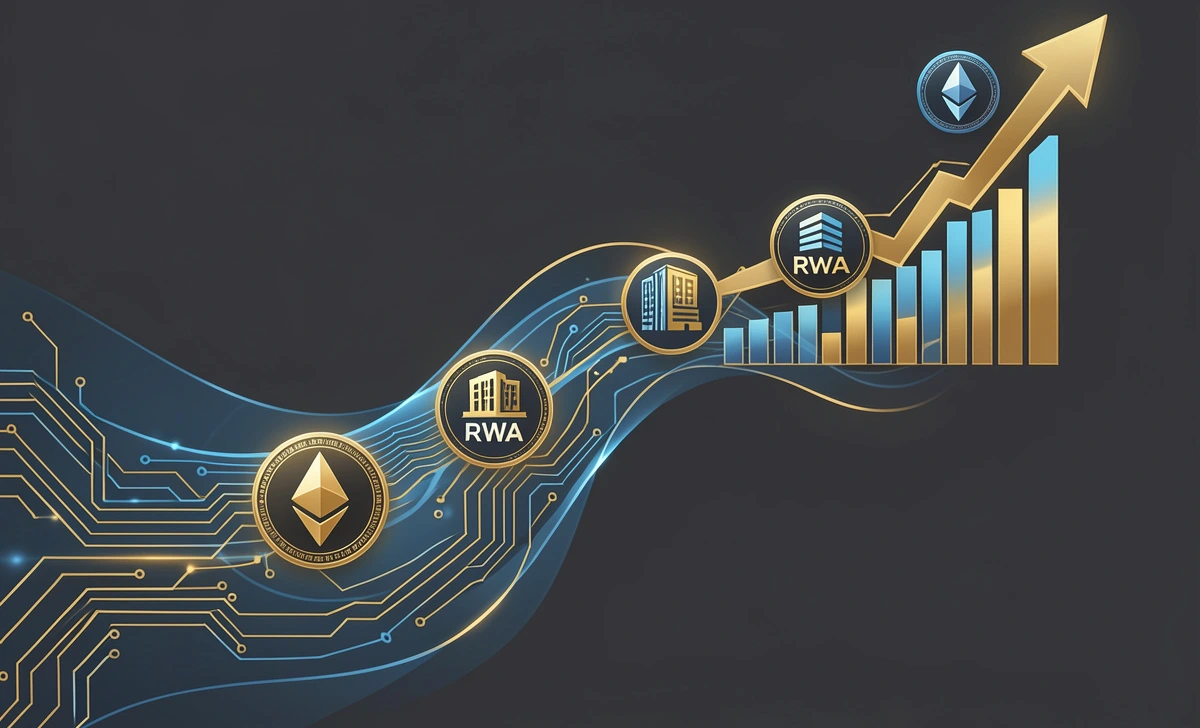
- Real-world asset tokenization — representing ownership of physical assets (real estate, bonds) as blockchain tokens — is growing among financial institutions.s
- Stablecoins — crypto pegged to a fiat currency like the US dollar — are seeing increasing regulatory scrutiny and mainstream use for cross-border payments
- Regulatory clarity in the US and EU is likely to accelerate institutional adoption while setting clearer rules for consumers
Whether any of this changes crypto’s long-term trajectory depends on adoption, regulation, and whether the technology solves real problems better than existing systems can.
The Short Version
Cryptocurrency is digital money secured by math, stored on a shared public ledger, and controlled by no single authority. It offers real utility — global payments, financial access, programmable contracts — alongside real risks: volatility, irreversibility, scams, and regulatory uncertainty.
If you’re new to this space: understand what you’re buying before you buy it, control your own private keys for anything significant, and never treat crypto as a guaranteed path to wealth.