European automakers are not losing the EV race because they lack engineering talent or financial resources. They are losing it because they spent a decade optimizing for the wrong things — high margins, combustion engine extensions, and premium positioning — while China built the infrastructure, supply chain, and software stack to dominate the next century of mobility.
In 2025, Chinese brands nearly doubled their share of Europe’s plug-in market, climbing from 3.4% to 6%, according to Schmidt Automotive Research. BYD alone surged 276% year-over-year in Europe. That growth did not happen by accident. It happened because European brands misread the speed of the shift and now face a competitor that has 19.3 million public and private chargers at home versus Europe’s 1 million. The gap you see in the sales charts today reflects decisions made five years ago.
The Pricing Gap That Europe Cannot Close Overnight
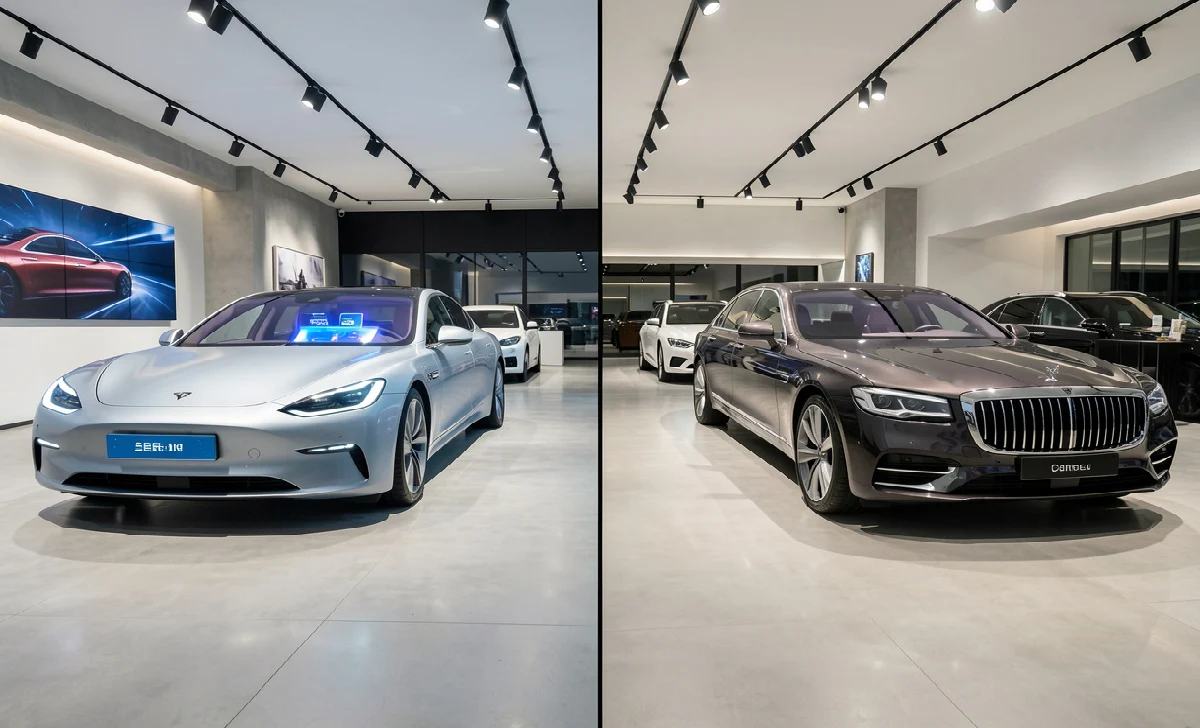
Walk into a BYD showroom in Germany today, and you can buy a well-equipped EV for under €30,000. Walk into a Volkswagen or BMW dealership, and your comparable options start several thousand euros higher, even after years of cost reduction work.
This is not a coincidence. Chinese manufacturers receive direct state support at every stage of production — from battery cell sourcing to export logistics. BYD, for example, produces its own Blade batteries in-house, which cuts costs that European brands pay to third-party suppliers like CATL. When Volkswagen buys battery cells, it pays a margin that BYD does not.
In 2025, Chinese EV sales in Europe doubled to around 810,000 vehicles, securing a 6.1% market share, up from 3.1% in 2024, according to Dataforce. That growth came despite a 35% EU tariff on Chinese EV imports introduced in late 2024. If Chinese brands can nearly double their market share while absorbing a 35% import tax, you have to ask what happens when they start building locally.
Stellantis already saw the answer coming. The company partnered with Leapmotor, investing $200 million in a Spanish factory to produce an electric SUV for the European market by 2026. Once Chinese brands manufacture inside the EU, the tariff wall disappears entirely. For buyers actively comparing options across segments, understanding how dealer pricing and incentives actually work before you visit a showroom can save you thousands — regardless of which brand you choose.
Software Is Where the Real Deficit Lives
You can build a well-designed EV body, install a capable battery, and still lose the market if your software experience feels dated. This is where European brands face their most difficult challenge in 2026, and it is the one they talk about least publicly.
Chinese EVs ship with deep software integration as standard. NIO, XPeng, and BYD all treat their vehicles as software platforms first and physical products second. Over-the-air updates, AI-assisted driving features, and deeply embedded digital ecosystems are baseline expectations for buyers in China. When those same buyers or aspirational European customers compare products, the software experience shapes the purchase decision as much as range or price.
Volkswagen has spent years restructuring its software division, Cariad, after high-profile delays cost the company multiple product launches. BMW’s Neue Klasse platform, expected to debut at scale through 2025 and 2026, promises a more integrated software architecture. But promising architecture and delivering the consumer experience are two different things, and Chinese brands are not waiting.
Porsche announced plans to gradually shut down its proprietary EV charging network in China and seek deeper cooperation with external charging providers — a signal that even premium European brands are acknowledging they cannot build every layer of the stack alone in China’s market.
The China Market Illusion That Backfired
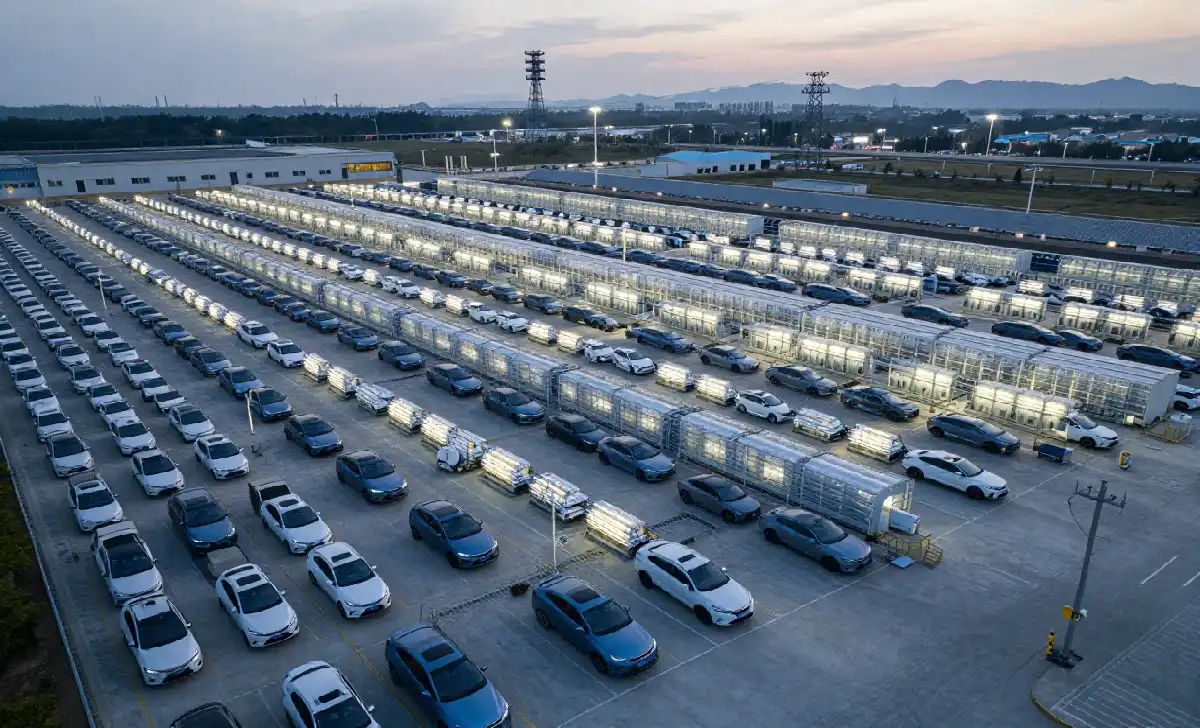
For two decades, European automakers treated China as their highest-margin growth engine. Volkswagen, BMW, and Mercedes all built enormous dealership networks there and posted record profits through Chinese joint ventures. That success created a dangerous blind spot.
As recently as last year, 96% of Volkswagen vehicles sold in China were still powered by fossil fuels. While Volkswagen was selling combustion cars in the world’s largest EV market, BYD, Geely, and XPeng were capturing the next generation of Chinese car buyers — buyers who will never return to combustion and who increasingly set the global benchmark for what an EV should do.
European brands assumed their China profits would fund their EV transition at home. Instead, those profits began shrinking precisely when the transition costs accelerated. BMW and Mercedes both reported margin pressure in China through 2024 and 2025 as local brands displaced them in segments they had previously owned.
Li Auto is one of the sharper examples of how fast the shift happened. The brand went from a niche extended-range EV maker to a mainstream family vehicle contender in under three years — a trajectory that caught most European analysts off guard. If you want a closer look at what drove that acceleration, this breakdown of Li Auto’s stock performance and growth strategy puts the numbers in context.
Regulatory Pressure Without a Unified Response
The EU’s 2035 fossil fuel ban created a hard deadline, but it did not create a coordinated industrial response. Unlike China, where the state aligned EV subsidies, battery production incentives, and raw material supply chain investments into a single national strategy, Europe left most of the execution to individual manufacturers.
Germany halted its EV subsidy program in late 2023 due to a budget crisis, creating a demand shock that slowed consumer adoption precisely when automakers needed volume to scale production costs down. France maintained its social leasing scheme, which supported Renault’s numbers, but the inconsistency across EU member states created a fragmented buying environment.
As stricter EU emissions standards come into force, more than 140 additional EV models are due to enter the European market by 2026, with Volkswagen and Stellantis alone announcing around 35 new electric models between them. More models help, but volume without a price strategy does not automatically translate into market share gains when the competition starts below your floor price.
Where European Brands Still Have Ground to Stand On
None of this means European automakers are finished. The situation is serious, but several brands are making the right moves.
Renault’s comeback has been real. The Renault 5 E-Tech sold over 100,000 units in its first 15 months of production, proving that a European brand can compete on affordability when it commits to a purpose-built, affordable EV platform rather than a rebadged combustion chassis. Renault is now developing an even more affordable model, the Twingo E-Tech, and its Dacia brand is building its own version on the same platform at a lower entry price.
Volkswagen Group ended 2025 with a 27.7% share of Europe’s plugin market — a number comparable to BYD’s dominance in China. At home, Volkswagen is still a force. The question is whether that home-market strength translates globally, or whether it becomes a defensive position while Chinese brands grow everywhere else.
BMW’s upcoming iX3 is closely watched as a potential volume driver in 2026. If the Neue Klasse architecture delivers on the software and efficiency promises, BMW has a credible response in the premium segment. The problem is that the premium segment alone cannot sustain the volumes European automakers need to cover their EV transition costs.
The Real Test Is Not Next Quarter — It Is the Next Factory
The structural battle in 2026 is not about which car wins a comparison test. It is about where the next generation of affordable EVs gets built and who controls the battery supply chain feeding those factories.
Europe risks trading its dependence on oil imports for a dependence on Chinese EV batteries if local manufacturers cannot develop competitive battery production at scale. Several European battery gigafactory projects have faced delays or cancellations, while Chinese battery manufacturers continue expanding capacity faster than any Western competitor.
The brands that survive this decade will be the ones that answer one question directly: Can you build an EV that European buyers choose over a Chinese alternative at the same price point? Renault’s 5 E-Tech says yes, for now, in the small car segment. The rest of the industry has fewer clear answers heading into the second half of 2026.
If you are in the market right now and weighing your options across brands — European, Chinese, or otherwise — this complete car buying guide walks you through every step of the process so you get the right vehicle at the right price, regardless of where the market competition lands.
What you are watching unfold is not a technology failure. It is a strategic failure — a decade of protecting margins, delaying software investment, and underestimating a competitor that treated EVs as a national priority from the start. The gap is real, it is measurable, and closing it requires more than new model launches. It requires European automakers to build differently, price honestly, and move faster than they have ever moved before.