Sleep and mental health have a two-way relationship. Poor sleep can trigger or worsen anxiety and depression, not just result from them. During REM sleep, the brain processes emotional memories and resets stress responses. Chronic sleep disruption raises emotional reactivity and impairs judgment, while treating insomnia — especially with CBT-I — measurably improves mental health outcomes.
Most people know bad sleep makes them irritable. What they don’t know is that the relationship runs much deeper — and in both directions.
Poor sleep doesn’t just follow mental health problems. It can cause them, worsen them, and make them harder to treat. Research now treats sleep as a modifiable risk factor for anxiety, depression, and other conditions — meaning fixing your sleep is one of the few things you can actually change that reliably moves the needle on mental health.
Here’s what the evidence shows, and what you can do with it.
How Sleep Actually Affects Your Brain
Your brain isn’t resting when you sleep. It’s running maintenance on systems that keep you emotionally stable and mentally clear.
The most important stage for mental health is REM sleep. During REM, your brain processes emotional memories — essentially replaying stressful or difficult experiences, but this time without the stress hormones. The amygdala (your brain’s threat-detection center) stays active, but cortisol drops. This combination lets your brain sort and file emotional experiences without re-traumatizing you.
When you don’t get enough REM, that process breaks down. Your brain consolidates negative emotional memories more strongly than positive ones, which raises emotional reactivity the next day. Over time, chronic REM disruption is linked to higher risk of depression, anxiety, and in severe cases, suicidal ideation.
Poor sleep also degrades the prefrontal cortex — the part of your brain responsible for judgment, impulse control, and decision-making. That’s why sleep-deprived people make worse choices and struggle to regulate reactions to stress.
The Two-Way Link: Sleep and Mental Health Are Not a One-Way Street
The old model was simple: mental health problems cause poor sleep. Anxiety keeps you awake; depression disrupts your schedule.
That model is incomplete.
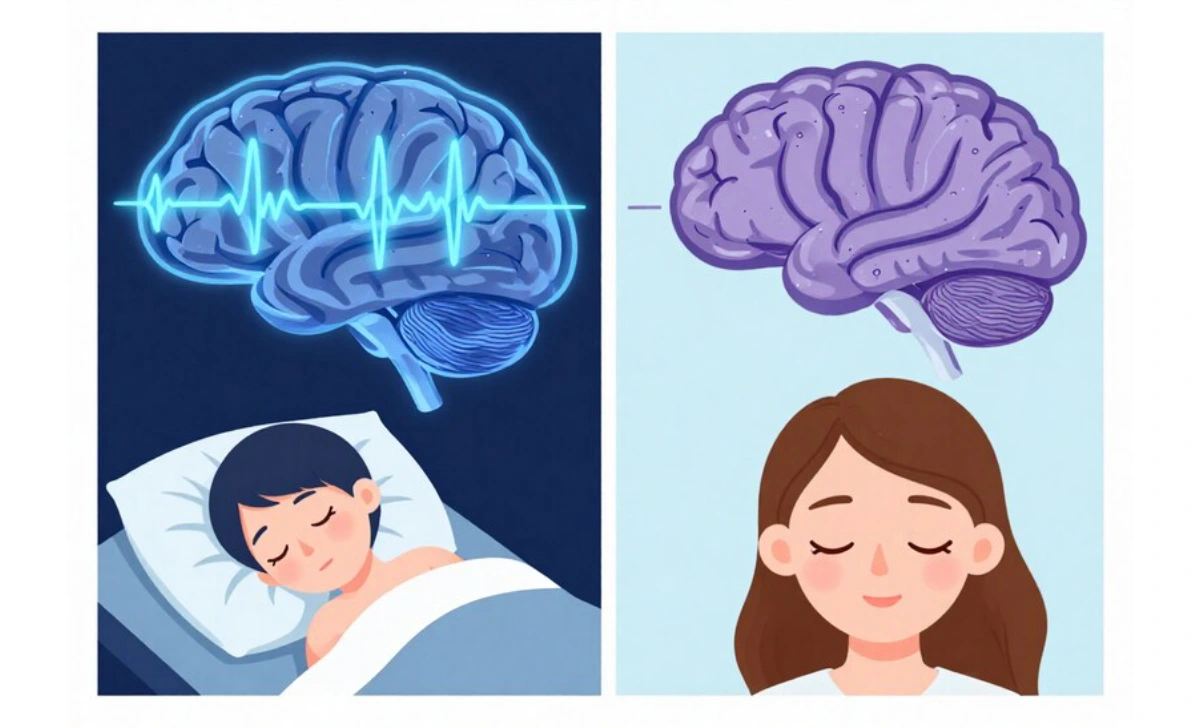
Research now supports a bidirectional relationship — sleep problems can precede and directly worsen mental health disorders, not just appear alongside them. People with chronic insomnia have roughly double the risk of developing depression compared to those who sleep well. The same pattern holds for anxiety disorders.
This matters practically. It means that treating insomnia isn’t just treating a symptom — it’s addressing a risk factor. The OASIS randomized controlled trial, run by Oxford University researchers, tested this directly: CBT-I (cognitive behavioral therapy for insomnia) not only improved sleep but also reduced symptoms of anxiety, depression, and paranoia in participants. Treating the sleep problem improved the mental health outcomes.
Obstructive sleep apnea adds another layer. It fragments sleep architecture, repeatedly drops blood oxygen levels, and appears disproportionately in people with psychiatric conditions. Left untreated, it compounds mood problems and impairs daytime functioning.
Who Is Most at Risk
Shift Workers
Around 16% of U.S. workers work outside standard daytime hours, according to Bureau of Labor Statistics data. Evening and overnight schedules force sleep at times when the body’s circadian clock is pushing wakefulness — the biological mismatch raises rates of anxiety and depression compared to day workers. Strategic light exposure, short naps before night shifts, and a consistent wind-down routine can help offset this, but the underlying risk is real and persistent.
Teenagers
Puberty shifts melatonin release by roughly two hours — teens naturally feel sleepy later and wake later. But school start times don’t adjust for this. Most adolescents need 8–10 hours; most don’t come close. Chronic sleep restriction in teens is associated with worse mood regulation, higher rates of anxiety and depression, and academic strain. The problem isn’t laziness — it’s a biological mismatch with social scheduling.
The “Mind After Midnight” Effect
Late-night wakefulness isn’t neutral. Research suggests that being awake between midnight and 6am specifically impairs judgment and lowers the threshold for impulsive or harmful decisions. Fewer social supports are available, fatigue skews risk perception, and accumulated stress from the day compounds everything. This is one reason why mental health crises are statistically more common in the early hours of the morning.
Practical Steps That Are Actually Worth Doing
There’s a short list of interventions with genuine evidence behind them, and a long list of popular tips with weak evidence. Here’s the distinction.
High-impact habits:
- Consistent wake time — This is the single most effective behavioral intervention for most people. A fixed wake time anchors your circadian rhythm even when your bedtime varies. Don’t chase a perfect bedtime; protect your wake time first.
- Get out of bed if you can’t sleep — If you’re awake after 20 minutes, leave the bed and do something quiet in low light until you feel sleepy. This prevents your brain from associating the bed with wakefulness and frustration.
- Morning light exposure — 10–30 minutes of natural light within an hour of waking helps set your circadian clock and improves sleep quality the following night.
- Cut caffeine after midday — Caffeine’s half-life is roughly 5–6 hours; a 3pm coffee is still partly active at 9pm. This is more important than most people realize.
- Limit alcohol — Alcohol helps you fall asleep faster but suppresses REM sleep and fragments the second half of the night. Net result: worse sleep quality despite easier onset.
Lower-impact but worth maintaining:
- Keep the bedroom cool (around 65–68°F / 18–20°C)
- Reduce bright screen exposure in the hour before bed (it’s the blue light and stimulation combined, not just the device)
- Regular exercise improves sleep quality — but timing matters less than consistency
Diet note: Research links diets high in saturated fat and sugar to poorer sleep quality. Higher fiber intake is associated with better sleep. This isn’t the primary lever, but it’s a real one.
Evidence-Based Treatments
CBT-I: The First-Line Treatment
Cognitive behavioral therapy for insomnia is the most effective treatment for chronic insomnia and is recommended ahead of sleep medication by most clinical guidelines, including those from the American College of Physicians.
It works by targeting the mechanisms that keep insomnia going: the hyperarousal that makes it hard to wind down, the unhelpful beliefs about sleep (“if I don’t get 8 hours I can’t function”), and the behaviors that weaken sleep drive over time. Core components include:
- Stimulus control — Rebuilding the mental link between bed and sleep
- Sleep restriction — Temporarily limiting time in bed to consolidate and deepen sleep
- Cognitive restructuring — Identifying and changing catastrophic thinking about sleep
- Relaxation techniques — Reducing physiological arousal before bed
Most people see meaningful improvement within 4–8 weeks. Effects tend to hold longer than medication because they address causes rather than symptoms.
CBT-I is available through therapists trained in behavioral sleep medicine, and increasingly through digital programs. Sleepio and Somryst are two evidence-backed digital CBT-I options that have been studied in clinical trials.
Sleep Medicine for Physical Causes
If you snore loudly, wake with headaches, or have daytime sleepiness despite adequate time in bed, get evaluated for obstructive sleep apnea. It’s common, underdiagnosed, and directly worsens mental health outcomes. CPAP therapy, when indicated, often improves mood and energy alongside sleep quality.
Home sleep tests have made this evaluation easier to access. Your primary care doctor can order one.
Medication
Sleep medications can have a role in short-term situations but are not first-line for chronic insomnia. They don’t address the underlying causes and some (especially benzodiazepines and older sedatives) carry risks around dependency and cognitive effects in older adults. If you’re currently using sleep medication and want to come off it, do so with medical supervision — CBT-I can be used alongside tapering.
How Much Sleep Do You Actually Need
The general guidance holds:
- Adults: 7–9 hours
- Teenagers: 8–10 hours
- Older adults: 7–8 hours
But the right number for you is best measured by how you function, not just how long you sleep. If you need an alarm to wake up, feel foggy before noon, or rely on caffeine to get through the afternoon, you’re probably not getting enough quality sleep — regardless of what your tracker says.
Your chronotype — whether you’re naturally an early or late sleeper — is largely biological. Fighting it creates friction. If you can, align demanding work to your alert hours and protect your natural wake time rather than forcing an early schedule that doesn’t suit you.
Wearables give useful trend data but are imprecise on specific metrics like REM time. Use them to spot patterns over weeks, not to stress about individual nights.
When to Seek Help
Consult a doctor or sleep specialist if:
- Sleep problems have persisted for more than three months
- Daytime impairment is affecting work, relationships, or safety
- You have symptoms of depression or anxiety alongside sleep problems
- You or a partner notices loud snoring, gasping, or pauses in breathing
- You’ve tried consistent sleep hygiene for several weeks without improvement
Don’t wait until things are severe. Sleep problems respond well to treatment when caught early, and early treatment reduces the downstream risk to mental health.
The Short Version
Sleep and mental health reinforce each other — in both directions. Fixing your sleep is one of the most direct, evidence-backed things you can do for your mental health, and it doesn’t require medication or a major lifestyle overhaul to start.
Pick one change from the high-impact list above. Keep your wake time consistent for two weeks and notice what changes. That single habit, done consistently, does more than most of the other interventions combined.
If you’ve been dealing with poor sleep for months, CBT-I is worth pursuing. It works, the effects last, and it’s available digitally if in-person therapy isn’t accessible.