Honest question: have you ever finished and thought, “Was that it?”
Or the opposite—felt something slow-building and layered and thought, “I’m not sure that counted, but it felt really good”?
If either of those sounds familiar, you’re probably closer to understanding Orgasamtrix than you think. This article isn’t going to re-explain what Orgasamtrix is from scratch. Instead, I want to get into the part nobody seems to write clearly: how is it actually different from a traditional orgasm, and how do you know which one you’ve had?
Let’s get into it.
What a Traditional Orgasm Actually Looks Like
Before we compare anything, it helps to be honest about what most of us were taught to expect.
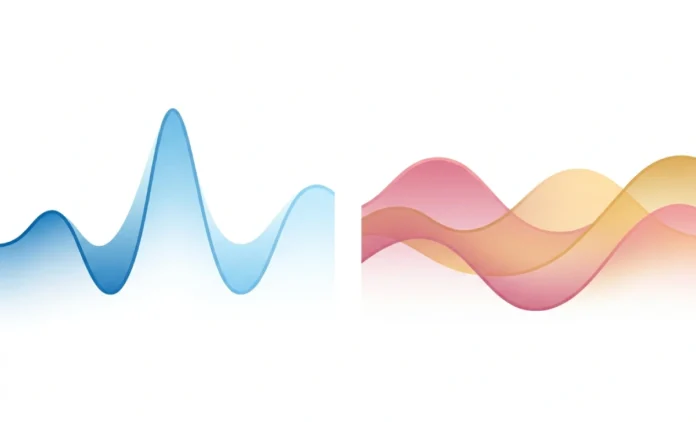
The traditional model—the one you’ll find in most health class diagrams and mainstream articles—follows what researchers call a linear arousal pattern. It goes something like this:
- Arousal builds gradually
- Tension increases
- A peak moment arrives (the “climax”)
- Release and resolution follow
That’s it. Start, climb, peak, done. It’s clean, it’s predictable, and for a lot of people it works just fine.
The problem is that this model was largely built around male physiological response patterns and then applied to everyone. And that’s where the frustration often starts—especially for people whose bodies don’t follow that script neatly.
If you’ve ever felt like you’re “doing it wrong” or like your experience didn’t quite match the description, there’s a good chance the model was just too narrow to begin with.
What Makes Orgasamtrix Different
Here’s where things get interesting.
Orgasmatrix describes a non-linear pleasure experience. Instead of a single climb and release, it’s more like overlapping waves—sensation builds, fades, returns, shifts focus, deepens, and then ripples out in ways that don’t always end at one clean point.
A few ways this shows up in real experience:
- Pleasure continues even after you expect it to stop
- Sensation moves through the body rather than concentrating in one place
- There may be multiple small peaks instead of one big one
- Emotional or mental release can happen before or separately from physical sensation
- The whole experience can feel more like a layered arousal response than a single event
To put it simply: traditional orgasm is a destination. Orgasamtrix is more like the whole journey—where the journey is the point.
Side-by-Side: The Real Differences
Sometimes the clearest way to understand something new is to put it next to what you already know. Here’s a straightforward comparison:
| Traditional Orgasm | Orgasamtrix | |
|---|---|---|
| Pattern | Linear (build → peak → release) | Non-linear (waves, pauses, layered) |
| Focus | One climax point | Multiple or diffuse sensation zones |
| End point | Clear and defined | May not have a sharp “finish” |
| Success measure | Did you “get there”? | How present and aware were you? |
| Body involvement | Often localized | Can involve the whole nervous system |
| Time | Shorter, goal-directed | Often slower, exploratory |
| Emotional layer | Sometimes present | Often a central part of the experience |
Neither column is better. They’re just different ways the body can respond—and many people experience both at different times.
Wrong Assumptions That Get in the Way
This is the part I wish someone had told me earlier.
A lot of people either dismiss Orgasamtrix entirely or feel confused by it because of assumptions they’re carrying without realising it. Here are the most common ones worth naming directly:
“If there’s no clear finish, it doesn’t count.” This one does the most damage. The idea that pleasure only “counts” if it ends in an obvious climax is a performance standard, not a physical truth. Orgasm without a peak is a real experience for many people—it’s just rarely talked about.
“That sounds like what I already do.” Maybe. Or maybe you’ve been experiencing something that fits Orgasamtrix and calling it “a weaker orgasm” because it didn’t match the traditional script. The label matters less than recognising what’s actually happening.
“This is just multiple orgasms with a new name.” Not exactly. Multiple orgasms typically refer to sequential peaks with brief recovery gaps in between. Orgasamtrix is less about quantity and more about the quality of attention—the experience of sensory pleasure patterns that are layered, extended, and less goal-focused.
“You need a really high arousal state for this.” Actually, many people find the opposite is true. Orgasamtrix-style experiences often happen when you lower the intensity and slow everything down. That runs completely counter to what most of us were taught.
The Nervous System Piece (This Is Why It Works)
Here’s a bit of the “why” behind how Orgasamtrix functions—because understanding it makes the whole thing feel less abstract.
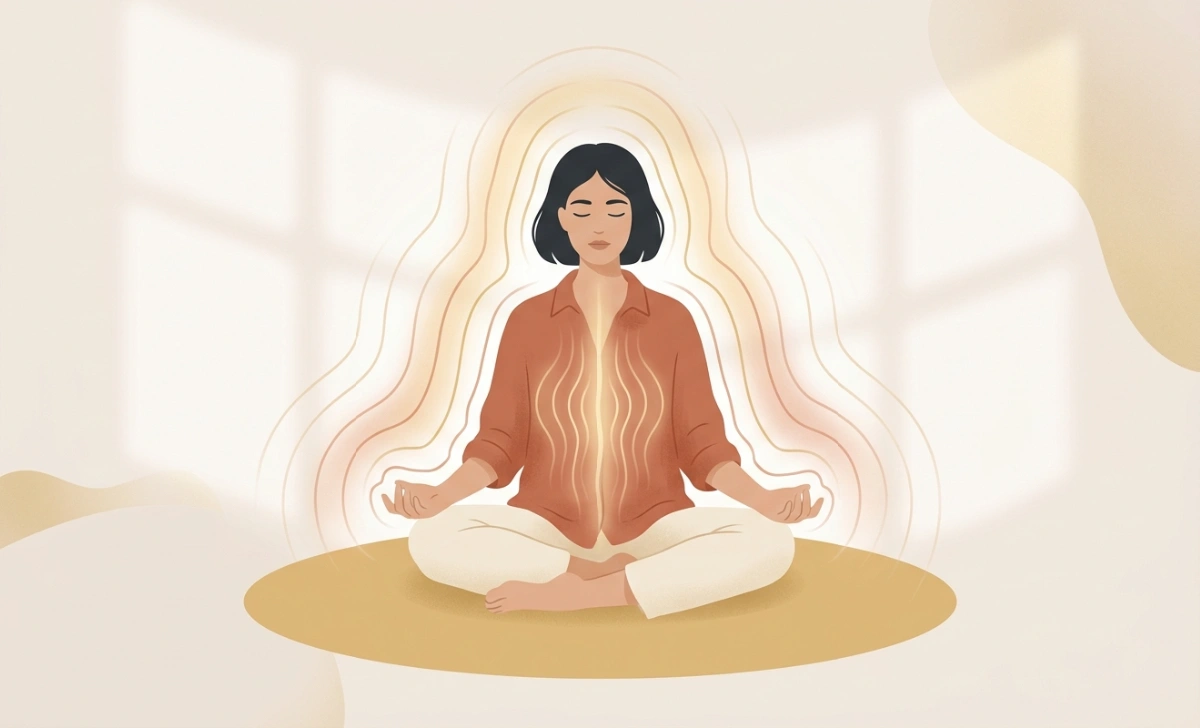
Your nervous system has two main modes: sympathetic (fight-or-flight, high alert, performance-focused) and parasympathetic (rest, digest, and—crucially—receive).
Most goal-directed sex activates the sympathetic system. You’re chasing a result, monitoring whether you’re “getting there,” maybe a little tense. That state can produce orgasm, but it tends to keep the experience narrow and localised.
Slow breathing, deliberate presence, and reduced goal-pressure shift you toward the parasympathetic state. In that mode, sensation can travel more freely through the nervous system. You notice more. Pleasure can extend, move, and layer in ways that simply aren’t accessible when you’re mentally rushing toward a finish line.
This is why extended orgasm vs traditional orgasm isn’t just a philosophical difference—it’s rooted in which part of your nervous system is running the show.
Good sleep actually plays a bigger role here than most people expect—your nervous system’s ability to shift into that receptive state is significantly affected by how rested you are. If you’re curious about that connection, this piece on sleep and mental wellness covers it well.
How to Know If You’ve Already Experienced Orgasamtrix
This is the part most articles skip over. Here’s a quick, honest checklist. If you recognise any of these, you may have already had an Orgasamtrix-type experience without having a name for it:
- ✅ Pleasure kept going after you thought it was over
- ✅ You felt waves of sensation rather than one clear peak
- ✅ You had a strong emotional release that felt separate from physical sensation
- ✅ You got close to an orgasm but stayed in that heightened state longer than usual—and it felt good, not frustrating
- ✅ Sensation moved or shifted location during the experience
- ✅ You felt more present than usual, and everything seemed more intense even at low arousal
- ✅ Afterwards, you felt deeply calm rather than just physically released
None of these requires a specific technique or partner. They’re just patterns. And noticing them is, genuinely, the first step.
Physical readiness matters too—tension in the body, especially from low activity levels or lifestyle stress, can close off a lot of these pathways. If you’ve been looking at how your environment and movement habits affect how you feel, that’s worth considering in this context as well.
The Partner Question Nobody Wants to Bring Up
You’ve read this far, and maybe you’re thinking: okay, but how do I even bring this up with a partner without it turning awkward?
Fair. Here are a few low-pressure ways to start that conversation naturally:
If you want to explain the concept: “I’ve been reading about how pleasure doesn’t always follow the usual pattern—like how it can be more wave-like instead of one clear moment. I want to explore that more and not rush things as much.”
If you want to shift how things go: “Can we try going really slowly tonight and not focus on finishing? I want to just notice what feels good.”
If a partner seems confused or takes it personally: “It’s not about anything being wrong—I’m just learning more about what my body actually responds to, and it’s different from what I expected.”
You don’t need a script. You just need to make it clear that you’re curious, not critical. Most partners respond well to that framing. And if someone makes you feel weird for wanting to understand your own body better—that’s worth noticing too.
A Few Thoughts Before You Go
Here’s the simplest version of everything above:
Traditional orgasm follows a clear path. Orgasamtrix describes what happens when you step off that path and discover there’s a whole landscape around it.
Neither is right. Neither is wrong. But if you’ve ever felt like your body was doing something the usual description didn’t cover, it probably wasn’t a malfunction. It was just more than the map accounted for.
Pay attention to what your body is actually doing—not just whether it hit the expected mark. That shift in attention, more than any technique, is what most people say changes everything.
FAQs
Can you have an Orgasamtrix experience without a final “release” feeling?
Yes, and this surprises a lot of people. Many describe it as a long plateau of deep pleasure that eventually winds down—rather than a sharp climax and drop. It can feel complete without having that clear endpoint. Some people even find it more satisfying precisely because it doesn’t end abruptly.
Is Orgasamtrix the same as multiple orgasms, or something else?
They’re related but not the same. Multiple orgasms typically mean two or more distinct peaks in one session. Orgasamtrix is broader—it describes a non-linear pleasure experience where sensation builds in layers, sometimes without clearly separate peaks at all. You could have multiple orgasms within an Orgasamtrix experience, but having multiple orgasms doesn’t automatically mean you’ve experienced Orgasamtrix.
Why does traditional orgasm advice sometimes feel frustrating or incomplete?
Mostly because the traditional model was built on a narrow physiological template and didn’t account for the wide range of ways bodies actually respond. When your experience doesn’t match the textbook description, it’s easy to assume something’s wrong with you. Usually, nothing is. The model was just incomplete.
How do I know if I’ve experienced Orgasamtrix or just a weaker orgasm?
The key difference is usually how it felt, not how intense it was. A weaker traditional orgasm often feels like a muted version of the same thing—brief, localised, slightly unsatisfying. An Orgasmatron-type experience tends to feel longer, more distributed through the body, and often emotionally fuller—even if it wasn’t particularly intense. If it felt like waves rather than a single point, that’s your clue.