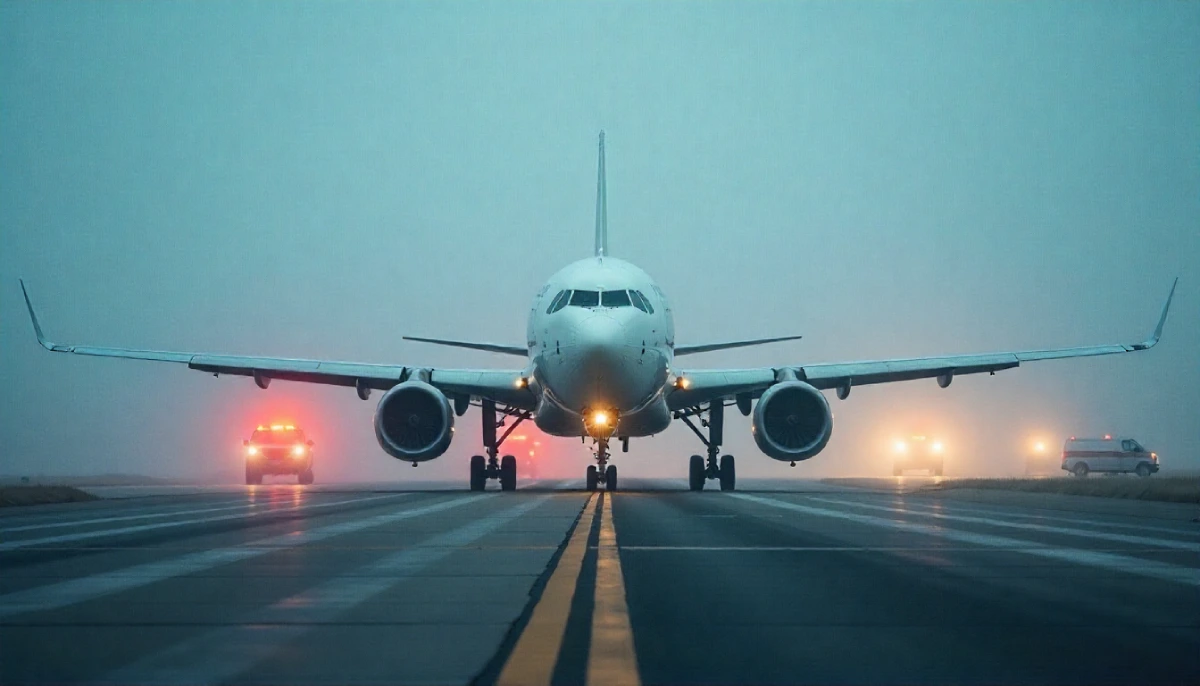
Key fact: Despite the tragedies covered here, fatal airline accidents involving large commercial jets have become statistically rare. In 2023, the aviation industry carried over 4.5 billion passengers with zero fatal accidents on Western-built jets. That record was built, in part, on the hard lessons of the disasters below.
Seven crashes. A combined death toll of more than 5,000 people. And a permanent rewriting of how the world designs, operates, and secures commercial aircraft.
The deadliest air disasters in history are not simply tragedies — they are the direct reason today’s aviation safety record is as strong as it is. Every procedural standard, cockpit design requirement, and security checkpoint you encounter as a passenger traces at least part of its origin to a specific catastrophe that exposed a gap no one had closed.
This article covers seven of the most significant aviation accidents and attacks in recorded history — what happened, what investigators from bodies like the ICAO, NTSB, and national aviation authorities found, and what concrete changes followed. It also tracks where investigations stand today, including the latest developments in the still-unresolved MH370 case.
1. Tenerife Runway Collision (1977)
- Date: March 27, 1977
- Aircraft: KLM Flight 4805 & Pan Am Flight 1736 (both Boeing 747)
- Location: Los Rodeos Airport, Tenerife, Spain
- Deaths: 583 (all 248 KLM passengers and crew; 335 of 396 on Pan Am)
- Survivors: 61 (Pan Am only)
- Status: Still the deadliest aviation accident ever recorded
No crash in aviation history has killed more people. On March 27, 1977, a bomb at Las Palmas Airport had forced hundreds of diverted flights — including KLM Flight 4805 and Pan Am Flight 1736 — to stack up at the smaller, fog-covered Los Rodeos Airport in Tenerife.
As conditions deteriorated and time pressure mounted, the KLM crew began their takeoff roll without receiving explicit air traffic control clearance to do so. The Pan Am 747 was still on the same runway, taxiing in the opposite direction through dense fog. Neither crew could see the other. The collision, at high speed, was unsurvivable for most people aboard. Fire destroyed both aircraft within minutes.
What Investigators Found
The Spanish investigation, supported by the Dutch Safety Board and the ICAO, identified a combination of factors: non-standard radio phraseology, the KLM captain’s misinterpretation of an ATC clearance as a takeoff clearance, and the crew’s reluctance to challenge a senior captain’s decision — a dynamic now studied in every airline training program in the world.
What Changed
- Standard phraseology was mandated globally — the word “takeoff” is now reserved exclusively for the moment of actual clearance
- Crew Resource Management (CRM) training became a requirement at all major airlines, teaching first officers to actively challenge captains when something is wrong
- Ground radar at busy airports was upgraded to track aircraft position on the surface, not just in the air
2. Japan Airlines Flight 123 (1985)
- Date: August 12, 1985
- Aircraft: Boeing 747-146SR
- Location: Mount Takamagahara, Gunma Prefecture, Japan
- Deaths: 520
- Survivors: 4
- Status: Deadliest single-aircraft accident ever recorded
Twelve minutes after departing Tokyo’s Haneda Airport, JAL Flight 123 suffered a catastrophic structural failure. An aft pressure bulkhead — incorrectly repaired by Boeing technicians after a tailstrike incident in 1978 — ruptured under pressurisation stress. The explosive decompression that followed blew off the vertical tail fin and destroyed all four independent hydraulic systems simultaneously.
The crew had no flight control surfaces. For 32 minutes, Captain Masami Takahama and his crew fought to steer the aircraft using differential engine thrust alone — a near-impossible task on a fully loaded 747. The aircraft eventually entered a series of uncontrollable phugoid oscillations and struck a remote mountain ridge at high speed.
The Four Survivors
All four survivors — seated in the rear of the aircraft — were women. Flight attendant Yumi Ochiai, who was riding as a passenger, later provided investigators with a firsthand account of the final minutes. Her testimony, along with the recovered flight data recorder (FDR) and cockpit voice recorder (CVR), gave investigators a detailed reconstruction of the failure sequence. The CVR recording, in which the crew is heard attempting to manage the emergency, remains one of the most studied cockpit recordings in aviation history.
What Changed
- Maintenance inspection intervals for pressure bulkheads were tightened globally
- Boeing and the FAA issued revised repair procedures for tailstrike damage
- The accident reinforced the case for hydraulic system redundancy — modern wide-body aircraft now carry four separate, physically isolated hydraulic circuits
- ICAO strengthened requirements around documenting and re-inspecting prior structural repairs
3. Charkhi Dadri Mid-Air Collision (1996)
- Date: November 12, 1996
- Aircraft: Saudi Arabian Airlines Flight 763 (Boeing 747) & Kazakhstan Airlines Flight 1907 (Ilyushin Il-76)
- Location: Near Charkhi Dadri, Haryana, India
- Deaths: 349
- Survivors: None
- Status: Deadliest mid-air collision in aviation history
Both aircraft had been assigned separate altitudes on the same airway into and out of Delhi’s Indira Gandhi International Airport. The descending Kazakhstan Airlines Il-76, whose crew had limited English language proficiency, descended below their assigned altitude — directly into the path of the climbing Saudi Boeing 747. The collision destroyed both aircraft instantly at night, scattering wreckage across a wide agricultural area.
What Investigators Found
India’s Court of Inquiry found that Delhi’s air traffic control system lacked secondary surveillance radar capable of monitoring altitudes in real time. Controllers had no way to detect that the Kazakh aircraft had deviated from its assigned level until it was too late. Language barriers in the cockpit compounded the crew’s failure to monitor and correct their altitude.
What Changed
- India accelerated investment in secondary radar for the Delhi FIR (Flight Information Region)
- ICAO strengthened its English language proficiency requirements for flight crew — formally codified in 2008 as a mandatory ICAO Language Proficiency Rating
- The accident contributed to broader ICAO pressure on states to implement Traffic Collision Avoidance Systems (TCAS II) as mandatory equipment — now required on all commercial transport aircraft worldwide
4. Turkish Airlines Flight 981 (1974)
- Date: March 3, 1974
- Aircraft: McDonnell Douglas DC-10-10
- Location: Ermenonville Forest, near Paris, France
- Deaths: 346 (335 passengers, 11 crew)
- Survivors: None
- Status: Deadliest aviation accident in French history
Minutes after departing Paris Orly Airport bound for London, a rear cargo door on the Turkish Airlines DC-10 blew open at altitude. The rapid decompression collapsed the cabin floor above the cargo hold, severing the control cables routed beneath it. With no means of controlling pitch, roll, or thrust, the aircraft dove into the Ermenonville Forest at approximately 430 knots (800 km/h).
A Known Design Flaw
This was not the first time a DC-10 cargo door had failed. In 1972, an almost identical incident on an American Airlines DC-10 over Windsor, Ontario, had narrowly avoided catastrophe. McDonnell Douglas — the aircraft’s manufacturer — had been aware of the locking mechanism’s vulnerability. A formal airworthiness directive was never issued before the Paris crash. This made Turkish Airlines Flight 981 one of the most avoidable disasters in aviation history and one of the most studied cases in aircraft certification reform.
What Changed
- McDonnell Douglas redesigned the DC-10 cargo door locking system with a positive lock indicator visible from outside the aircraft
- The U.S. Federal Aviation Administration (FAA) came under heavy criticism for not issuing a mandatory airworthiness directive after the 1972 incident — leading to reforms in how the FAA handles voluntary compliance versus mandatory orders
- Floor venting panels were introduced to prevent collapse in rapid decompression events
- The crash remains a central case study in aircraft type certification processes and the relationship between manufacturers and regulators
5. Air India Flight 182 Bombing (1985)
- Date: June 23, 1985
- Aircraft: Boeing 747-237B
- Location: North Atlantic Ocean, 190 km south of Cork, Ireland
- Deaths: 329 (280 Canadians, 27 British nationals, 22 Indians)
- Survivors: None
- Status: Canada’s deadliest mass murder; deadliest aviation terrorist attack before 9/11
A suitcase bomb, loaded onto Air India Flight 182 at Vancouver International Airport, detonated at 9,449 metres (31,000 ft) over the Atlantic Ocean as the aircraft approached Ireland. The explosion tore the aircraft apart in seconds. A second bomb, intended for another Air India flight, detonated at Tokyo’s Narita Airport the same day, killing two baggage handlers.
The bombing was carried out by members of a Sikh extremist network operating primarily in Canada. The subsequent criminal investigation lasted nearly two decades. Inderjit Singh Reyat was the only person convicted — for manslaughter rather than murder — in a case widely criticised for intelligence failures by the RCMP and CSIS.
What Changed
- Canada overhauled its airport security framework, introducing positive passenger-bag reconciliation — ensuring no bag flies unless its owner is also on board
- X-ray screening of checked baggage was accelerated internationally
- The Air India inquiry, completed in 2010, remains the most comprehensive terrorism investigation in Canadian history and led to reforms in inter-agency intelligence sharing
- The attack demonstrated that hold baggage posed an equal or greater threat than hijacking — reshaping the entire model of aviation security screening
6. Malaysia Airlines Flight MH370 (2014 — Ongoing) Updated 2026
- Date: March 8, 2014 (disappeared)
- Aircraft: Boeing 777-200ER
- Route: Kuala Lumpur to Beijing
- People on board: 239 (227 passengers, 12 crew)
- Confirmed debris: 3 wing fragments (flaperon, flap section, aileron section)
- Aircraft location: Unknown
- Latest search: Ocean Infinity — concluded January 2026, no findings
Less than an hour after departing Kuala Lumpur International Airport, Malaysia Airlines Flight MH370 stopped transmitting on air traffic control radar. Military radar tracked the aircraft making an unexplained left turn back across the Malay Peninsula before heading south over the Indian Ocean — then nothing.
What followed was the most extensive search operation in civil aviation history. Satellite data analysis by Inmarsat and the Australian Transport Safety Bureau (ATSB) narrowed a probable crash zone to the remote southern Indian Ocean, but no wreckage has been located on the seabed after multiple deep-sea campaigns.
The 2025–2026 Ocean Infinity Search
In 2025, the Malaysian government contracted Ocean Infinity — the private deep-sea technology company — to conduct a renewed search under a results-based agreement offering up to USD $70 million if the wreck was found. Using an expanded fleet of autonomous underwater vehicles (AUVs) capable of mapping deep seabed at scale, Ocean Infinity surveyed approximately 7,571 square kilometres of the southern Indian Ocean before concluding operations in January 2026. No aircraft wreckage was identified.
The Malaysian government’s contract framework extends through June 2026. Families of those aboard continue to advocate for further search operations. The cause of the disappearance — whether mechanical failure, deliberate act, or something else entirely — remains officially undetermined.
Confirmed Debris
More than 30 pieces of suspected aircraft debris have been recovered along the coastlines of East Africa and islands in the western Indian Ocean since 2015. Of these, three have been officially confirmed as originating from MH370: a flaperon found on Réunion Island in 2015, and two additional wing components recovered from Mozambique and Tanzania.
What Changed
- GADSS (Global Aeronautical Distress and Safety System): ICAO adopted this standard requiring aircraft to transmit autonomous distress tracking data — including position every minute — during an emergency. New aircraft delivered after 2021 are required to comply.
- Underwater locator beacon battery life requirements were extended from 30 to 90 days for flight recorders on new long-range aircraft
- ICAO recommended real-time flight tracking over oceanic regions (at minimum 15-minute intervals under normal operations), replacing the previous system under which aircraft could go hours without a position update over remote oceanic regions
- MH370 remains the only modern wide-body jetliner to disappear without its primary wreckage being located
7. September 11, 2001 Terrorist Attacks
- Date: September 11, 2001
- Aircraft: American Airlines Flight 11, United Airlines Flight 175, American Airlines Flight 77, United Airlines Flight 93
- Victims killed: 2,977 (not including the 19 hijackers)
- Locations: World Trade Center (NYC), The Pentagon (Virginia), Shanksville (Pennsylvania)
- Status: Deadliest terrorist attack in history; largest single-day loss of life in U.S. history since the Civil War
On the morning of September 11, 2001, 19 al-Qaeda operatives hijacked four commercial airliners departing from Boston, Newark, and Washington Dulles. Two aircraft were deliberately flown into the Twin Towers of the World Trade Center in New York, collapsing both structures. A third struck the Pentagon in northern Virginia. The fourth — United Flight 93 — was retaken by passengers who overwhelmed the hijackers; it crashed in a field near Shanksville, Pennsylvania, apparently headed for Washington, D.C.
In total, 2,977 people were killed — not counting the 19 hijackers. The dead included office workers, first responders, passengers, and crew across all four aircraft, and military personnel at the Pentagon.
What Changed
- Cockpit doors were reinforced and made lockable from the inside — in most cases, they can no longer be opened by force from the cabin
- The U.S. Transportation Security Administration (TSA) was created, federalising airport security screening across all U.S. commercial airports
- Passenger screening expanded to include shoe removal, liquid restrictions, and full-body imaging technology
- The Federal Air Marshal Service was expanded dramatically, placing plainclothes officers on domestic and international routes
- Intelligence-sharing between agencies — a major pre-9/11 failure — was restructured through the creation of the Department of Homeland Security and the Director of National Intelligence office
- The 9/11 Commission Report, published in 2004, remains one of the most detailed post-incident government investigations ever conducted and continues to inform counterterrorism policy globally
Safety Outcomes: What Each Disaster Changed
Each of the accidents and attacks above produced concrete, traceable changes to aviation regulation, aircraft design, or security policy. The table below maps the key outcomes.
| Incident | Key Regulatory / Design Change | Implemented By | Year |
|---|---|---|---|
| Tenerife (1977) | Standardised ATC phraseology; mandatory CRM training | ICAO / Airlines worldwide | 1978–1981 |
| JAL 123 (1985) | Revised bulkhead repair procedures; tightened maintenance inspection cycles | Boeing / FAA / JTSB | 1985–1987 |
| Charkhi Dadri (1996) | Mandatory TCAS II on all commercial transport aircraft; ICAO language proficiency standards | ICAO | 2000 / 2008 |
| Turkish Airlines 981 (1974) | DC-10 cargo door redesign; FAA mandatory AD reform | McDonnell Douglas / FAA | 1974–1975 |
| Air India 182 (1985) | Positive passenger-bag reconciliation; expanded hold baggage X-ray screening | Transport Canada / ICAO | 1985–1988 |
| MH370 (2014) | GADSS distress tracking standard; extended ULB battery life; oceanic position reporting | ICAO | 2016–2021 |
| September 11 (2001) | Reinforced cockpit doors; TSA creation; Federal Air Marshal expansion | FAA / U.S. Government | 2001–2002 |
How Aviation Safety Has Changed Since These Disasters
The cumulative effect of the investigations and reforms that followed these disasters is measurable. In the 1970s, fatal aviation accidents involving Western-built commercial jets occurred several times per year. By the 2010s and 2020s, they had become rare enough to generate global news coverage when they happened.
The improvements came in three areas that the disasters above exposed as weak points:
- Human factors: CRM training (post-Tenerife) addressed the systemic problem of crew members not challenging poor decisions
- Mechanical integrity: Enhanced maintenance inspection regimes (post-JAL 123, post-Turkish Airlines 981) reduced in-flight structural failures
- Security: Baggage reconciliation (post-Air India 182) and cockpit hardening (post-9/11) closed the two most exploited vulnerabilities in commercial aviation
Understanding how black boxes — specifically the flight data recorder (FDR) and cockpit voice recorder (CVR) — work is essential context for most of these investigations. Without them, the causes of the JAL 123, Turkish Airlines 981, and Tenerife disasters would have taken far longer to establish definitively.
FAQs
What is the deadliest aviation accident in history?
The deadliest aviation accident in history is the 1977 Tenerife runway collision, in which two Boeing 747s collided at Los Rodeos Airport in Spain, killing 583 people. It remains the only aviation disaster with a death toll above 500 from a single event not involving an attack or bombing.
Was Malaysia Airlines Flight MH370 ever found?
No. As of early 2026, the main wreckage of MH370 has not been found. A renewed search by Ocean Infinity concluded in January 2026 without locating the aircraft. Only three wing fragments have been officially confirmed as MH370 debris, recovered from the western Indian Ocean and East African coastlines.
How did the September 11 attacks change aviation security?
The most lasting changes were reinforced, locked cockpit doors that cannot be forced open from the cabin; the creation of the U.S. Transportation Security Administration (TSA); expanded passenger and baggage screening procedures; and a large increase in Federal Air Marshals on commercial flights. These changes were adopted or mirrored by aviation authorities worldwide within two years of the attacks.
What is a flight data recorder, and why does it matter?
A flight data recorder (FDR) — part of what is colloquially called the “black box” — continuously records aircraft parameters including altitude, airspeed, heading, and control surface positions. Paired with a cockpit voice recorder (CVR), it gives investigators the evidence needed to reconstruct an accident sequence. In several disasters covered here, including JAL 123 and Turkish Airlines 981, the FDR was the key to confirming the exact point of failure.
What is the deadliest single-aircraft accident ever?
Japan Airlines Flight 123, which crashed on August 12, 1985, remains the deadliest accident involving a single aircraft. Of the 524 people on board, 520 were killed. Only four passengers — all women, seated toward the rear — survived.
Final Thoughts
Every safety standard a modern airline passenger benefits from — standardised radio calls, CRM training, TCAS collision avoidance, reinforced cockpit doors, baggage reconciliation, and real-time oceanic tracking — exists because of a specific disaster that proved the old standard was not good enough.
That is the deeply uncomfortable truth at the centre of aviation safety history: the system improves, but primarily in response to catastrophe. The incidents covered here were not inevitable. Several were preventable, given the knowledge that already existed. What separates them from being footnotes is that investigators, regulators, and manufacturers used each one to close a gap that had been left open.
MH370 is the open case — the one disaster where investigators still cannot close that loop because the primary wreckage has never been found. Until it is, the question of what happened on March 8, 2014, remains the most significant unanswered question in modern aviation.