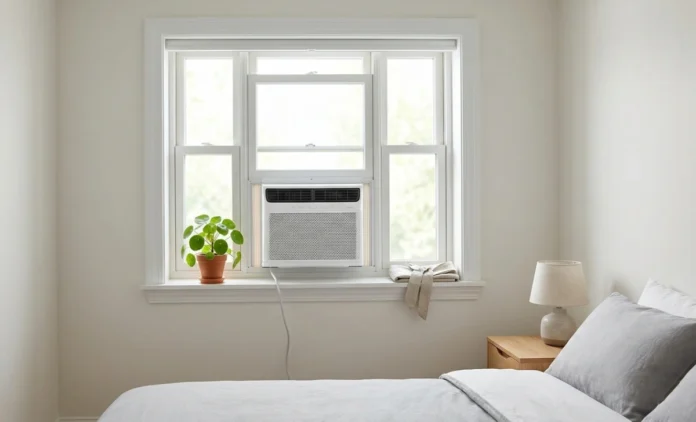
The AKW 06CR4 is a basic 6,000 BTU window air conditioner made by Arctic King (a Midea brand), designed for rooms up to 250 square feet. At its price point, it offers solid energy efficiency with an EER of around 11.0, straightforward installation, and quiet-enough operation for bedrooms and home offices. What it won’t give you is Wi-Fi control, a variable-speed compressor, or premium features you’d find in units costing twice as much.
If you need reliable cooling for a single small room without any of the bells and whistles, this unit delivers. If you’re expecting a smart, app-connected, ultra-quiet experience from a budget buy, you’ll be disappointed. This review gives you the full picture—performance, real noise levels, honest efficiency numbers, installation tips, and what happens after year one.
What the AKW 06CR4 Actually Is (and Isn’t)
Let me be direct: this is a no-frills, budget window AC. Arctic King is Midea’s value sub-brand, and the AKW 06CR4 reflects that positioning. No Wi-Fi. No voice assistant compatibility. No inverter or variable-speed compressor. Single-speed operation, basic remote, and a mechanical feel to the controls.
Some competitor reviews describe features this unit simply doesn’t have. That kind of over-promising hurts buyers who end up returning a product they wouldn’t have bought with accurate information. The AKW 06CR4 is a solid budget unit—and that’s enough for most people shopping in this category.
If you’re a renter, a first-time AC buyer, or someone dealing with one hot bedroom each summer, this model makes practical sense. Go in with the right expectations, and it won’t let you down.
Cooling Performance: What 6,000 BTUs Actually Covers
The 6,000 BTU rating works well for rooms between 150 and 250 square feet. For a standard bedroom or home office with average insulation and ceiling height, this unit cools the space down reliably within 15–20 minutes.
What it won’t do is efficiently handle a room above 250 square feet, a sunlit room with poor insulation, or a space with high ceilings that trap heat. In those situations, the unit runs longer cycles to compensate, which drives up your electricity use and wears the compressor harder over time.
Placement matters more than most buyers realize. Keeping it away from direct afternoon sun and sealing gaps around the window frame with foam weatherstripping both meaningfully improve how hard the unit has to work. Something buyers often overlook: your lighting setup contributes to room heat more than expected. Switching to lower-heat bulbs or repositioning fixtures can reduce the load on your AC noticeably—worth reading about if you want to optimize your room’s temperature before reaching for the thermostat. A properly sealed installation in a correctly sized room performs noticeably better than an oversized room with a leaky window setup.
The cooling itself is steady rather than aggressive. Expect gradual temperature drops rather than instant cold-blast performance. For most people, sleeping or working in a small room is perfectly fine.
How Quiet Is It Really?
At its lowest fan speed, the AKW 06CR4 runs at roughly 42–45 dBA. At high fan speed with the compressor running, expect around 52–55 dBA. To give that context: a quiet library sits around 40 dBA, and normal conversation runs about 60 dBA.
For most people, the low setting works fine for sleeping. Light sleepers may notice the compressor cycling on and off throughout the night, which is a single-speed unit’s biggest drawback. Without a variable-speed compressor, the system can’t modulate—it either runs or it doesn’t.
If you’ve previously used an older, rattling window AC from 10+ years ago, this unit will feel noticeably quieter. If you’re coming from a modern inverter model, it will sound comparatively louder. Knowing that distinction going in saves a lot of frustration.
The sleep mode does reduce fan speed and gradually adjusts the temperature set point over a few hours—a useful feature for those who prefer a slightly cooler room when falling asleep versus a warmer one during deep sleep.
Energy Efficiency: The Real Numbers
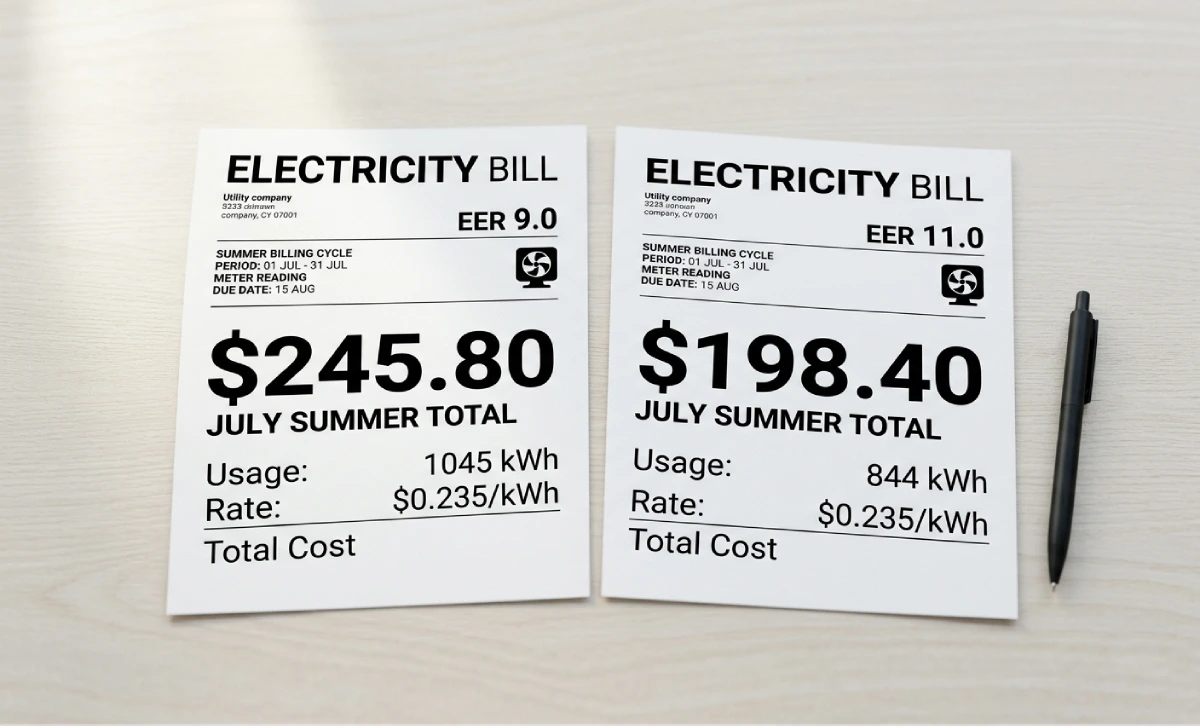
The AKW 06CR4 carries an EER (Energy Efficiency Ratio) of approximately 11.0. For reference, EER measures cooling output in BTUs divided by power draw in watts. A higher number means more cooling per watt consumed.
An EER of 11.0 puts this unit solidly in the energy-efficient category. Older window units from a decade ago typically ran at EER 8–9. Modern Energy Star-certified units typically start at EER 11+, so this model qualifies.
What does that mean in real money? Running a 6,000 BTU unit at EER 11.0 for eight hours a day at a rate of $0.15 per kWh costs roughly $0.65–$0.70 per day. Over a 90-day summer, that’s around $60–$63 in electricity. Compared to a less efficient unit at EER 9.0, you’d spend closer to $77 for the same usage—a $15–$17 seasonal savings that compounds across multiple summers.
If reducing your home’s overall energy draw is a priority, pairing an efficient window AC with a renewable source like solar is worth the research. This breakdown of solar panel costs and real-world performance puts the math in plain terms. These numbers assume consistent use. If you’re running the AC only at night or using the timer to cut unnecessary hours, your actual cost drops further.
Installation: What They Don’t Tell You
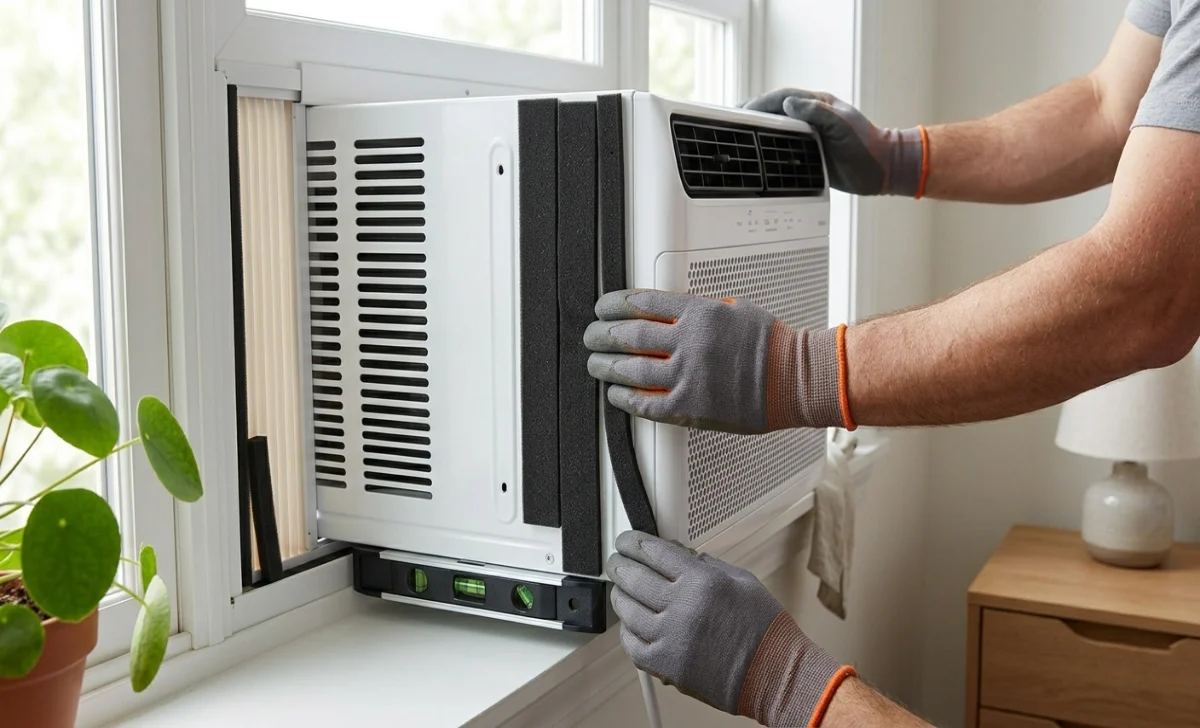
Most installation guides make it sound simple. For standard double-hung windows between 23 and 36 inches wide, it genuinely is. The included kit comes with side accordion panels and hardware, and two people can mount it in under 30 minutes.
The less-discussed part: condensation drainage. The AKW 06CR4 drains water through the rear of the unit. For that to work properly, the unit needs a slight outward tilt—usually around a quarter inch lower at the back than the front. Without that tilt, condensation can collect inside the unit and eventually drip into the room. Most installations use window sill supports or foam wedges to achieve the right angle.
Odd-sized windows below 23 inches wide won’t fit this unit without custom framing. Windows above 36 inches wide require additional side panel extensions or foam sealing to close the gap. If your windows are old, warped, or drafty, that’s a separate problem worth addressing before buying any AC— this guide on window replacement costs walks through what to expect if you’re weighing that option.
For renters: check your lease before drilling anything. Many installations can be done with tension-mounted brackets that require no permanent hardware.
Long-Term Reality: Year Two and Beyond
Most reviews only cover the first few weeks of ownership. Real durability shows up in years two and three.
The most common long-term complaint with budget window units in this class is compressor noise increasing after 18–24 months of heavy use. This shows up as a louder cycling hum and occasionally a rattling sound when the compressor kicks on. Keeping the filter clean reduces strain on the system and extends this timeline considerably—a dirty filter forces the compressor to work harder, which accelerates wear.
The filter on the AKW 06CR4 is washable and reusable. Clean it every two weeks during heavy summer use. Pull it out, rinse it under lukewarm water, and let it dry completely before reinstalling. Takes about five minutes.
For winter storage, remove the unit if possible. Cold air entering through the back panel when stored in the window through winter is a minor efficiency drain and can contribute to seal deterioration over time. If removal isn’t practical, a fitted AC cover for the exterior reduces this significantly.
The one-year warranty covers manufacturing defects but not wear from regular use. Keep your purchase receipt and registration on file.
Who Should Buy This—and Who Shouldn’t
Buy the AKW 06CR4 if: you have a room between 150–250 square feet, you’re on a budget, you don’t need app control, and you want a reliable unit that cools without a complicated setup.
Skip it if: you need to cool a room above 250 square feet, absolute silence is non-negotiable, or you want smart home integration. For those needs, an inverter-based unit in the $300–$450 range will serve you better.
For first-time window AC buyers who want solid performance without paying for features they’ll never use, this model sits in a comfortable spot. It does the core job well.
Final Verdict
The AKW 06CR4 is a dependable budget window AC that does what a 6,000 BTU single-speed unit should do—cool a small room reliably, install without a headache, and run efficiently enough to keep your electricity bill reasonable. Treat the filter well, seal your window properly, and it’ll serve you through multiple summers without issue.
Don’t buy it expecting premium performance. Do buy it if you want honest value for a specific, well-matched room.
FAQs
How many square feet can the AKW 06CR4 really cool?
Rooms up to 250 square feet with standard insulation and ceiling height. Rooms with high sun exposure or poor insulation may feel underpowered at peak heat.
Is it quiet enough for sleeping?
For most people, yes—on low fan speed. Light sleepers may notice the compressor cycling on and off. If you’re sensitive to intermittent sounds, this single-speed unit may disturb your sleep.
How energy efficient is it—does it actually save on bills?
With an EER of around 11.0 and Energy Star certification, it’s more efficient than older non-certified units. Running it 8 hours daily through the summer costs roughly $60–$65 total at average electricity rates.
Can one person install it alone?
Technically, yes, but having a second person to support the weight while positioning the unit in the window makes the process safer and faster.
What are the most common complaints?
Compressor noise that increases after heavy use in year two, limited coverage for larger or poorly insulated rooms, and no smart connectivity features.
Does it come with a remote?
Yes. A basic remote is included for controlling temperature, fan speed, and modes from across the room.