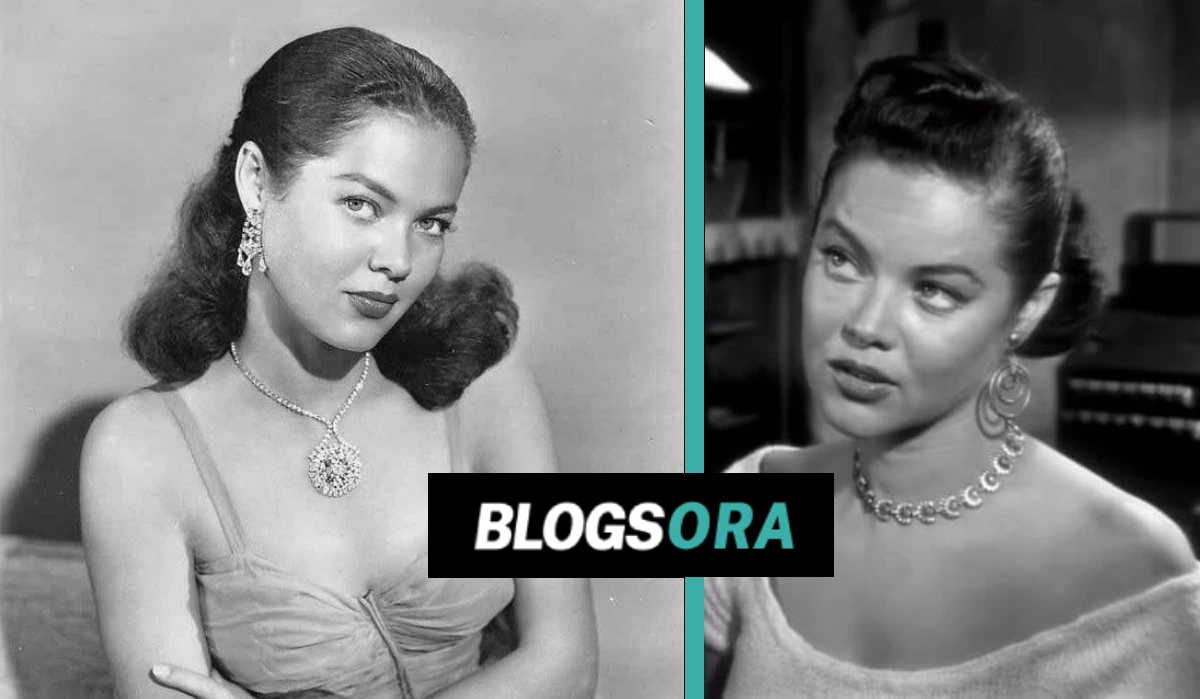
She was born into one of Hollywood’s most glamorous households. Her mother, Dona Drake, was a singer and actress whose name appeared on marquees across the country. Her father, William Travilla, designed the dress Marilyn Monroe wore when the wind caught it — one of the most iconic images in cinema history. Nia Novella Travilla had every reason to chase fame.
She chose differently.
Nia Novella Travilla (1951–2002) was an American veterinarian and dog breeder, born in California to actress Dona Drake and Hollywood costume designer William Travilla. Despite her famous parents, she pursued a career in small animal veterinary medicine rather than entertainment, training at UC Davis and working until her death in October 2002.
Early Life: Born Into Hollywood Royalty
Nia Novella Travilla was born on August 16, 1951, in California, the only child of actress Dona Drake and renowned Hollywood costume designer William “Travilla” Travilla. Growing up in that world meant dinner conversations about film sets and film stars, a home shaped by creativity and performance.
Dona Drake — born Eunice Westmoreland — was a Cuban American actress who navigated a complex path in an era when Hollywood’s racial expectations were rigid and unforgiving. She appeared in dozens of films throughout the 1940s and 1950s, known for her vivacity and musical talent. William Travilla, meanwhile, dressed some of the biggest names in cinema — Marilyn Monroe chief among them — earning eight Academy Award nominations over his career.
Nia grew up attending Santa Monica High School, where, by most accounts, she was a student of quiet determination rather than public aspiration. The glamour of her parents’ world didn’t appear to leave much of a mark on her own ambitions. What did leave a mark was a deep, abiding love for animals.
A Deliberate Turn Away From the Spotlight
There is a particular kind of courage in rejecting what you were born into — especially when what you were born into is Hollywood royalty. Nia Novella Travilla made that choice with apparent clarity.
Rather than pursue acting, modeling, or any path adjacent to her parents’ celebrity, she pursued veterinary medicine. It was a field that demanded years of rigorous scientific training, early mornings, long hours, and the emotional weight of caring for animals who could not speak for themselves.
She attended the UC Davis School of Veterinary Medicine — one of the most respected veterinary programs in the United States — where she earned the credentials to practice. UC Davis’s veterinary program is among the oldest and most competitive in the country, admitting a small class each year from a pool of highly qualified applicants. That Nia trained there speaks to both her intellectual ability and her commitment.
After graduating, she built a career as a small animal veterinarian and also became known as a dedicated dog breeder — specifically of Miniature Schnauzers, a breed recognized for its intelligence and loyalty. For Nia, this wasn’t a hobby alongside her work. It was an extension of the same ethic: careful, attentive care for animals who depended on humans to look after them.
Personal Life: Quiet and Private
Nia’s personal life was deliberately understated. She married Jose L. Ariza in 1971, though the marriage ended in divorce in 1973. The relationship was brief, and she did not remarry. She had no children.
There is little else on the public record about her personal relationships or social life. This was, by all appearances, intentional. She seems to have constructed a life insulated from the celebrity machinery her parents inhabited — a private practice, a community of animals and their owners, and a world far removed from premieres and press.
A Controversy Worth Noting
Historical completeness requires acknowledging a less flattering chapter. In 1982, Nia Novella Travilla was convicted of mail fraud, according to a report published by UPI in the Auburn Journal that year. The article documented formal charges and her age at the time. The details of the case are limited in the public record, and it would be irresponsible to speculate beyond what primary sources confirm. What can be said is that this chapter of her life has been conspicuously absent from most biographical summaries — an omission that doesn’t serve readers who are genuinely trying to understand her full story.
She appeared to move past this period and continued her veterinary work.
The Legacy She Left Behind
Nia Novella Travilla died on October 1, 2002. She was 51 years old. The cause of death has not been publicly disclosed, and no verified obituary has surfaced to clarify the circumstances. Several sources have speculated on details, but none can be confirmed with primary evidence.
What has been claimed — though it requires a note of caution — is that her passing inspired two legacy initiatives:
The Nia Travilla Memorial Scholarship at the UC Davis School of Veterinary Medicine, reportedly established to support aspiring veterinary students, particularly those from underrepresented backgrounds.
Nia’s Second Chance, described as a program supporting animal rescue funding — continuing, in spirit, the work she had devoted her life to.
These programs, if fully realized as described, would represent a meaningful extension of her values: access to veterinary education, and second chances for animals who need them most.
One honest caveat: as of this writing, neither initiative has been independently verified through official UC Davis records or published announcements. If you’re looking to support either program or verify its current status, contacting UC Davis’s veterinary school development office directly is the most reliable route.
Why Nia Novella Travilla’s Story Still Matters
Stories about the children of celebrities tend to fall into predictable categories: the one who followed in their parents’ footsteps, or the one who fell apart under the pressure. Nia’s story doesn’t fit either template.
She was a woman who grew up adjacent to immense cultural power and used none of it for self-promotion. She chose a profession defined by service, not status. She worked with animals — creatures entirely dependent on human patience and expertise — and apparently did so with skill and dedication across decades.
Her parents gave Hollywood its most iconic images. She gave something quieter: care, consistency, and a life spent improving the wellbeing of living things who couldn’t thank her for it.
That’s a legacy worth knowing.
Frequently Asked Questions
Who was Nia Novella Travilla?
Nia Novella Travilla (1951–2002) was an American veterinarian and dog breeder, and the only child of Golden Age Hollywood actress Dona Drake and costume designer William Travilla.
What did Nia Travilla do for a living?
She worked as a small animal veterinarian and Miniature Schnauzer breeder. She reportedly trained at the UC Davis School of Veterinary Medicine.
Who were Nia Travilla’s parents?
Her mother was Dona Drake, a Cuban American actress and singer active in Hollywood from the 1940s onward. Her father was William Travilla, a celebrated costume designer who dressed Marilyn Monroe and received eight Academy Award nominations.
When did Nia Novella Travilla die?
She died on October 1, 2002, at age 51. The cause of death has not been made public.
Did Nia Travilla have children?
No. She was briefly married to Jose L. Ariza (1971–1973) but had no children.
Is the Nia Travilla Memorial Scholarship real?
Several sources mention a scholarship in her name at UC Davis’s veterinary school, but this has not been independently verified through official university records. Anyone wishing to confirm its status should contact UC Davis directly.
A Final Word
Nia Novella Travilla lived at the intersection of two worlds — Hollywood’s golden mythology and the unglamorous, essential work of animal medicine. She chose the latter without apparent regret.
Her story is incomplete in places: gaps in the historical record, unverified claims about legacy programs, a death without a published cause. But what is documented is compelling enough. A woman who rejected the obvious path. Who turned expertise toward service. Who measured her life not in marquee credits, but in the animals she treated and the students her memory may continue to support.
If you’re interested in animal welfare, consider supporting your local veterinary school or rescue organization. Nia’s story is a reminder that some of the most meaningful contributions happen quietly, away from the cameras.